
Theft & Burglary Defense Lawyers in Atlanta
Protect your record with skilled theft and burglary defense lawyers in Atlanta, GA. Challenge property crime charges, shoplifting, and felony burglary in court. Strategic defense counsel explores diversion programs and works to suppress unlawful search evidence. Explore our directory below to consult an attorney today.

R. David Botts, Attorney at Law - Atlanta, GA

Conaway & Strickler P.C. - Atlanta, GA

Rafus Law - Sandy Springs, GA

Torris J. Butterfield & Associates, P.C. - Atlanta, GA

The Law Offices of Aaron N. Freedman - Atlanta, GA

Parmer Law - Atlanta, GA
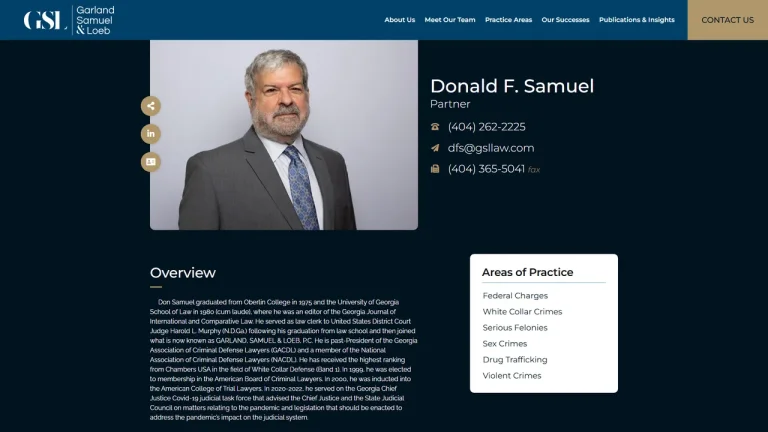
Garland, Samuel & Loeb, P.C. - Atlanta, GA

Bixon Law - Atlanta, GA

The Hames Law Firm LLC - Atlanta, GA
Fleming Law PC - Atlanta, GA

The Chouhan Law Firm, LLC - Atlanta, GA

Thomas C. Nagel Attorney at Law - Sandy Springs, GA

Sara Stewart Law - Atlanta, GA
Atlanta Criminal Defense Team | Sabbak & Izmaylova, P.C. - Atlanta, GA

Rothman Law - Atlanta, GA

Williams Law Group of Georgia, LLC - Atlanta, GA

The Law Offices of Bruce S. Harvey - Atlanta, GA

Ghanouni Teen & Young Adult Defense Firm - Atlanta, GA

The Steel Law Firm, P.C. - Atlanta, GA

Ghanayem and Rayasam, LLC - Atlanta, GA

Weintraub & Alper Legal - Atlanta, GA
Kyle H. Jarzmik Law - Atlanta, GA

Henrickson and Sereebutra - Atlanta, GA

Property Crime Defense Across Atlanta and Fulton County
Property crime allegations in Atlanta encompass a wide spectrum of charges, from retail shoplifting at commercial centers in Buckhead to residential burglary allegations in Inman Park and motor vehicle break-ins in Midtown. The prosecuting authorities in Fulton and DeKalb counties pursue property offenses tenaciously, frequently seeking substantial prison terms and mandatory restitution.
Misdemeanor theft charges may originate in the Atlanta Municipal Court on Garnett Street or the Fulton County State Court, whereas felony grand theft, entering an auto, and residential burglary are adjudicated directly in the Fulton County Superior Court at the Lewis R. Slaton Courthouse. Each forum operates under distinctive local procedures and evidentiary requirements.
Retaining an experienced Atlanta theft and burglary defense attorney ensures your rights are protected immediately following an arrest. Counsel examines police search warrants, investigates surveillance camera reliability, and identifies opportunities for pre-trial diversion or dismissal under Georgia statutory frameworks.
Atlanta Theft & Burglary Legal Defense Rates
| Case Scenario | Fee Structure | Estimated Cost (USD) | Key Cost Determinants |
|---|---|---|---|
| Misdemeanor Shoplifting / Theft under $1,500 | Flat Fee | $1,500 - $3,500 | Retail value alleged, prior criminal history, diversion program eligibility. |
| Felony Theft by Taking ($1,500 to $25,000) | Fixed Retainer | $3,500 - $9,000 | Restitution demands, bank records analysis, grand jury indictment stage. |
| First-Degree Residential Burglary Defense | Fixed Retainer | $6,000 - $16,000 | Occupied dwelling allegations, intent elements, forensic fingerprint/DNA evidence. |
| Entering Auto & Serial Property Allegations | Hourly / Retainer | $5,000 - $15,000+ | Number of counts, cell tower data tracking, co-defendant statements. |
Critical Legal Deadlines & Statutes in Georgia
Georgia property crime prosecutions are governed by codified statutory definitions, value tiers, and procedural deadlines:
Theft Classifications: Theft by taking is codified under O.C.G.A. § 16-8-2. Under the sentencing parameters of O.C.G.A. § 16-8-12, theft is punished as a misdemeanor if the property value is $1,500 or less. If the property value exceeds $1,500, the offense is elevated to a felony carrying one to ten or more years in prison depending on the total valuation.
Burglary Degrees: Under O.C.G.A. § 16-7-1, burglary in the first degree involves entering an occupied or unoccupied dwelling with the intent to commit a theft or felony, carrying a mandatory prison term upon subsequent convictions. Burglary in the second degree applies to non-residential commercial buildings.
Entering an Automobile: Entering an automobile or motor vehicle with the intent to commit theft or a felony is punished as a distinct felony under O.C.G.A. § 16-8-18, carrying one to five years in state prison.
Georgia First Offender Act: Defendants with no prior felony convictions may petition for sentencing under the Georgia First Offender Act pursuant to O.C.G.A. § 42-8-60, allowing charges to be completely discharged without a conviction upon successful completion of probation.
Statute of Limitations: Under O.C.G.A. § 17-3-1, misdemeanor theft charges carry a two-year statute of limitations, while felony theft and burglary charges must be indicted within four years.
Magistrate Civil Limits vs. Superior Court Criminal Defense
While small civil disputes over unreturned property or debts under $15,000 can be addressed in the Fulton County Magistrate Court under O.C.G.A. § 15-10-2, criminal property allegations carry life-altering criminal penalties and permanent records.
In criminal court, a conviction for theft or burglary impairs future employment, housing eligibility, and professional licensing. Self-representation in criminal proceedings leaves defendants vulnerable to complex evidentiary rules, such as constructive possession doctrines and co-conspirator declarations. An Atlanta defense lawyer negotiates restitution resolutions, enters clients into the Fulton County Pretrial Intervention (PTI) program, or utilizes First Offender sentencing to ensure your criminal record remains clear.
Red Flags When Hiring an Atlanta Property Crime Lawyer
- Treating a felony property charge as a simple civil debt negotiation without scrutinizing the state's chain of custody.
- Firms that do not explain the long-term career consequences of a theft conviction on background checks and professional licensing.
- Lack of familiarity with the diversionary programs offered in the Atlanta Municipal Court versus the Fulton County Superior Court.
- Attorneys who fail to challenge vehicle search validity or contest unlawful inventory searches during entering-auto investigations.
Frequently Asked Questions
What is the felony theft threshold in Georgia?
Under Georgia law, theft is classified as a felony if the value of the property taken exceeds $1,500. Property valued at $1,500 or less is treated as a misdemeanor, subject to maximum penalties of up to 12 months in jail.
What is the difference between first-degree and second-degree burglary?
First-degree burglary involves entering a residential dwelling house with intent to commit a theft or felony. Second-degree burglary involves entering commercial, business, or other non-residential buildings with unlawful intent.
Can a first-time theft charge be dismissed in Atlanta?
Yes. First-time offenders are often eligible for pretrial diversion programs or conditional discharge. Successful completion of community service, restitution, and educational courses results in formal dismissal of the charges.
How does the Georgia First Offender Act work for theft cases?
Under the Georgia First Offender Act, an eligible defendant can plead guilty or nolo contendere without an adjudication of guilt. Upon successful completion of probation, the case is completely discharged without a felony conviction on record.
Is entering an automobile always considered a felony in Georgia?
Yes. Entering an automobile with the intent to commit a theft or felony is codified as a separate felony offense under Georgia statute, regardless of the actual cash value of the items taken.