
Car Accident Lawyers in Hawaii
Consulting an experienced Hawaii car accident attorney safeguards your rights under the state's modified no-fault and tort threshold insurance laws. Dedicated personal injury lawyers work to negotiate full policy recoveries and out-of-court settlements to avoid prolonged litigation stress. Browse our verified directory below to arrange a free case evaluation with reputable local advocates.

Shaheen & Gordon, P.A. - Honolulu, HI
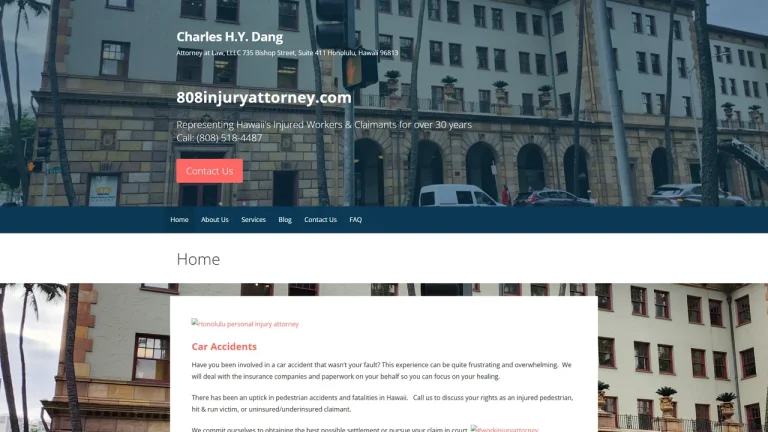
Dang Charles H Y - Honolulu, HI

Fonseca & Ching - Honolulu, HI

Edmunds Verga & Omonaka - Honolulu, HI
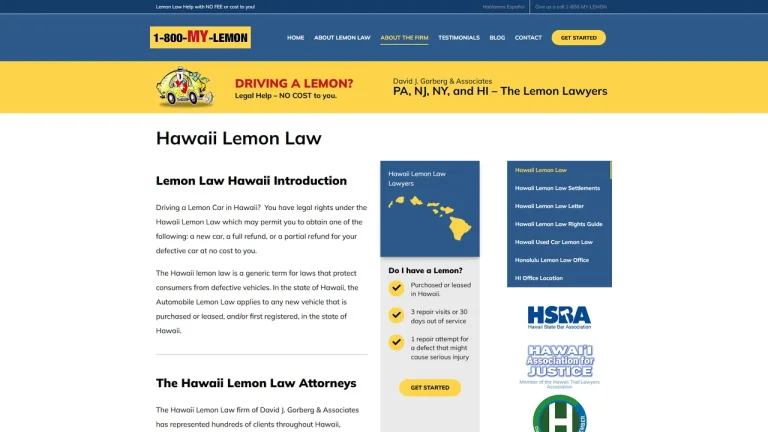
David J. Gorberg & Associates - Lemon Law Attorneys - Honolulu, HI
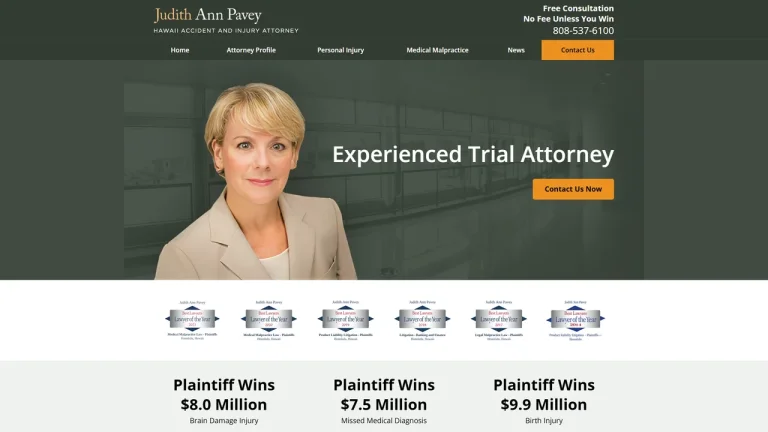
Judith Ann Pavey, Attorney at Law - Honolulu, HI
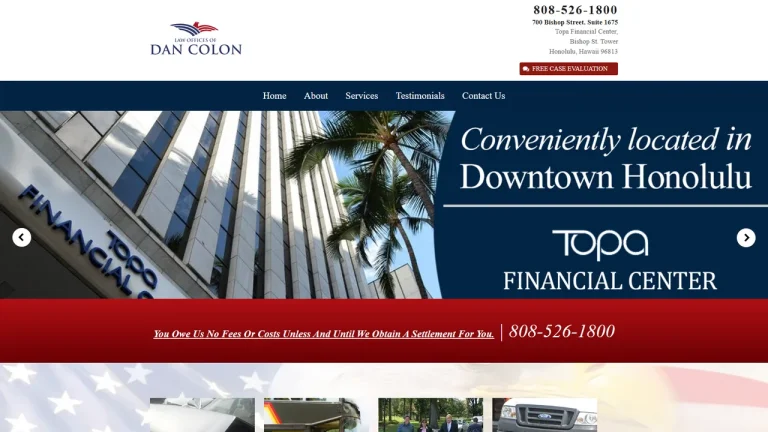
Law Offices of Dan A. Colon, A Law Corp. - Honolulu, HI

HEW & BORDENAVE A Limited Liability Law Partnership LLP - Honolulu, HI

King & King Attorneys-At-Law - Honolulu, HI

Lemon Law Hawaii - Honolulu, HI

Charles H. Brower and Associates, A Law Corporation - Honolulu, HI

Trecker Fritz & Williams, Attorneys at Law - Honolulu, HI
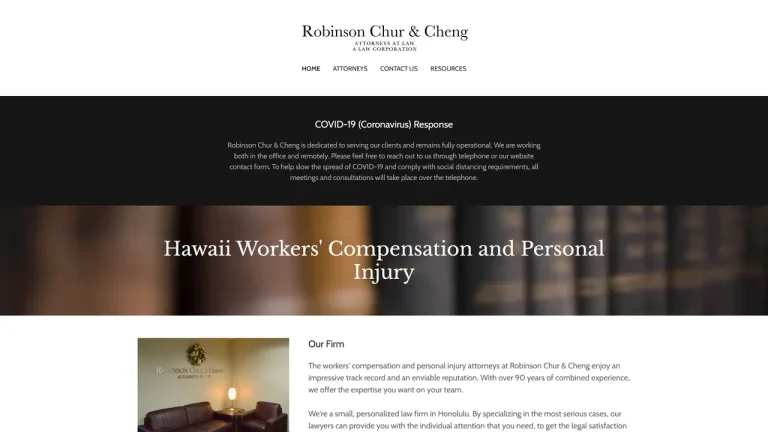
Robinson Chur and Cheng Attorneys at Law - Honolulu, HI
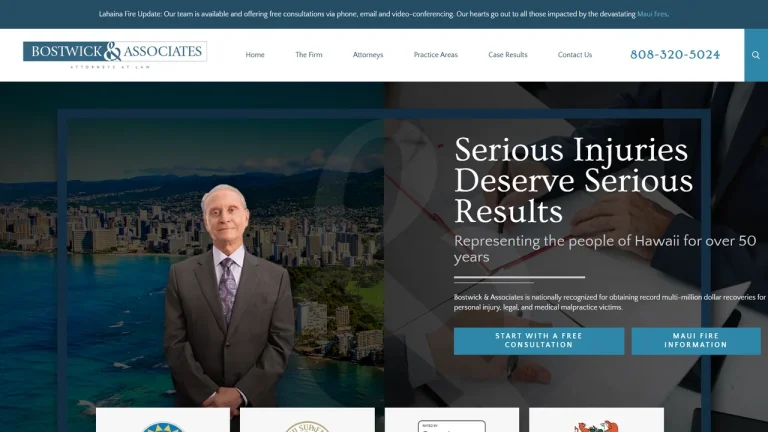
Bostwick & Associates Honolulu, HI

Leavitt, Yamane and Soldner - Honolulu, HI

Turbin Chu Heidt Attorneys at Law - Honolulu, HI
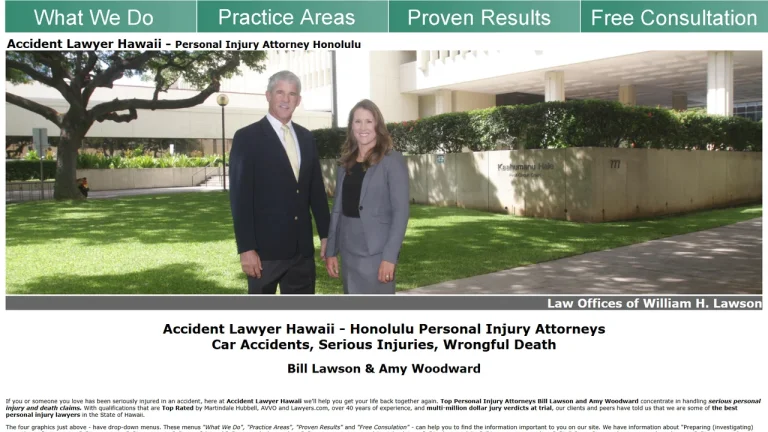
Law Offices of William H. Lawson - Honolulu, HI
Harrison Law Center, A Law Corporation - Honolulu, HI
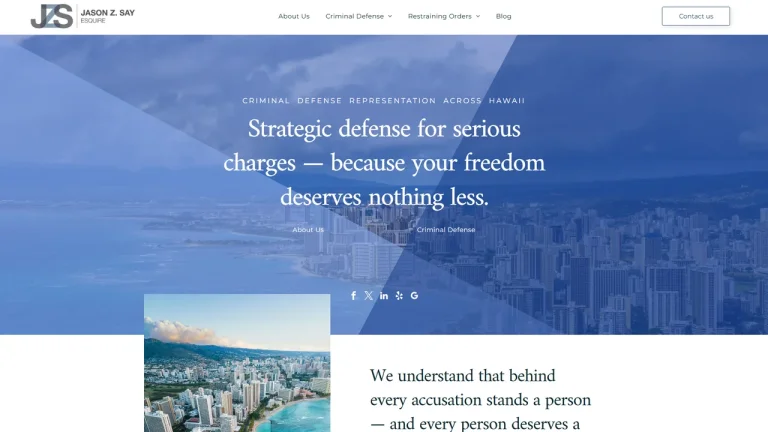
Law Office of Jason Z. Say, LLLC - Honolulu, HI

Law Offices of Alex M. Sonson - Honolulu, HI
Law Offices of Jan M. Weinberg - Honolulu, HI

Richard D Gronna Attorney At Law - Honolulu, HI
Rosenberg McKay Hoffman - Honolulu, HI
Navigating Hawaii Car Accident Claims and Circuit Court Jurisdictions
Securing fair compensation following a motor vehicle collision in Hawaii requires a thorough understanding of the state modified no-fault insurance framework. Whether an accident occurs on congested Honolulu thoroughfares such as Interstate H-1 and Nimitz Highway, or along rural island routes like the Queen Kaahumanu Highway on Hawaii Island or Kuihelani Highway on Maui, injured motorists face strict statutory requirements before pursuing third-party compensation.
Under Hawaii law, every registered motor vehicle must carry mandatory Personal Injury Protection (PIP) coverage to pay for initial medical expenses. When catastrophic injuries surpass statutory medical thresholds or result in permanent impairment, claimants are entitled to file formal personal injury lawsuits against the at-fault driver. Lawsuits are adjudicated in the Hawaii Circuit Courts, including the First Circuit Court in Honolulu, the Second Circuit Court in Wailuku, the Third Circuit Court in Hilo and Kona, and the Fifth Circuit Court in Lihue.
Personal injury practitioners admitted to the Hawaii State Bar Association regularly leverage the Hawaii Court Annexed Arbitration Program (CAAP) to resolve contested vehicular claims efficiently. Retaining dedicated local legal counsel ensures that insurance claims are properly presented, medical liens are negotiated, and complete financial recovery is pursued through aggressive negotiation or formal trial advocacy.
Compensation Scenarios and Contingency Fee Structures in Hawaii
| Case Scenario | Fee Structure | Estimated Cost (USD) | Key Cost Determinants |
|---|---|---|---|
| Uncontested Settlement Meeting Tort Threshold | Contingency Fee | 33.33% of Recovery | Medical billing documentation, policy limits, clarity of liability, absence of lien disputes. |
| Disputed Liability with Serious Bodily Injury | Contingency Fee | 33.33% - 40% of Recovery | Accident reconstruction reports, medical expert testimony, comparative negligence defense. |
| Court Annexed Arbitration Program (CAAP) Matter | Contingency Fee | 33.33% - 40% of Recovery | Arbitration hearing preparation, discovery depth, witness depositions, award finality. |
| Circuit Court Jury Trial for Catastrophic Harm | Contingency Fee | 40% of Recovery | Multi-week courtroom trial, vocational economic assessments, life care plans, appellate preservation. |
Critical Legal Deadlines & Statutes in Hawaii
Hawaii auto accident claims are controlled by strict statutory limitation periods and threshold prerequisites enacted under the Hawaii Revised Statutes:
- Statute of Limitations for Motor Vehicle Torts: Under Haw. Rev. Stat. § 431:10C-315, personal injury actions arising from motor vehicle accidents must be filed within two years from the date of the accident, or within two years after the date of the last payment of no-fault (PIP) benefits, whichever is later.
- Statutory Tort Threshold Requirement: Pursuant to Haw. Rev. Stat. § 431:10C-306, a victim cannot sue an at-fault driver for non-economic damages unless medical expenses exceed $5,000, or the injury results in substantial permanent loss of bodily function, permanent serious disfigurement, or death.
- Modified Comparative Fault Standard: Under Haw. Rev. Stat. § 663-31, Hawaii follows a modified comparative negligence rule with a 51% bar; an injured party can recover damages only if their percentage of fault is 50% or less, with recovery reduced in direct proportion to their fault.
- Mandatory Personal Injury Protection: Every motor vehicle policy in Hawaii must carry a minimum of $10,000 in no-fault medical coverage per person, as codified in Haw. Rev. Stat. § 431:10C-103.5.
Small Claims Limitations vs. Circuit Court Tort Litigation
The Small Claims Division of the Hawaii District Court operates under Haw. Rev. Stat. § 633-27 with a strict jurisdictional cap of $5,000. While small claims proceedings can assist in recovering minor property damages or towing fees without attorney assistance, they are legally barred from adjudicating bodily injury tort claims governed by the Hawaii no-fault insurance system.
Personal injury claims involving hospitalizations, surgery, ongoing rehabilitation, or lost earning capacity must be pursued in the Hawaii Circuit Courts. The Circuit Courts manage pre-trial discovery, deposition subpoenas, and mandatory participation in the Court Annexed Arbitration Program for claims valued up to $150,000. Retaining seasoned personal injury counsel ensures that your damages are fully calculated and defended against aggressive insurance adjusters.
Red Flags When Selecting a Hawaii Auto Injury Lawyer
- Unsolicited Direct Solicitation: Steer clear of runners or representatives who approach you uninvited at medical facilities or accident scenes; direct solicitation violates Hawaii legal ethics rules.
- Pressure for Premature Settlements: Be wary of attorneys who urge accepting rapid insurance payouts before you have reached Maximum Medical Improvement (MMI) or before total PIP liens have been determined.
- Lack of Local Courtroom Experience: Inquire whether the attorney regularly litigates in the Hawaii Circuit Courts and is an active member in good standing with the Hawaii State Bar Association.
- Hidden Litigation Expense Markups: Ensure your contingency agreement clearly delineates between legal fees and administrative costs, such as medical records procurement and expert witness expenses.
Frequently Asked Questions
How does Hawaii's no-fault auto insurance system work?
Hawaii is a modified no-fault state. Regardless of who caused the accident, your own auto insurance policy's Personal Injury Protection (PIP) pays your immediate medical bills up to policy limits (minimum $10,000). You cannot pursue a bodily injury claim against the at-fault driver unless your medical expenses exceed $5,000 or you suffer serious, permanent bodily injury.
How long do I have to file a car accident lawsuit in Hawaii?
Under Hawaii Revised Statutes Section 431:10C-315, you generally have two years from the date of the collision to file a lawsuit, or two years from the date of the final no-fault (PIP) payment made by your insurance carrier, whichever occurs later.
What happens if I was partially at fault for the crash in Hawaii?
Hawaii applies a modified comparative negligence system under Section 663-31. You can still recover compensation as long as your share of fault is 50% or less. Your total financial award will be decreased by your percentage of responsibility. If you are found 51% or more at fault, you are barred from recovery.
How do car accident lawyers charge for representation in Hawaii?
Most Hawaii personal injury lawyers represent car accident victims on a contingency fee basis. This means there are no upfront legal fees, and the attorney collects an agreed-upon percentage (typically 33.33% for pre-trial settlements and up to 40% if the matter proceeds to formal litigation) only if financial compensation is successfully obtained.
What is the Court Annexed Arbitration Program (CAAP) in Hawaii?
The Court Annexed Arbitration Program (CAAP) is a mandatory alternative dispute resolution process in Hawaii Circuit Courts for tort claims valued at $150,000 or less. It provides an expedited, cost-effective hearing before an appointed volunteer arbitrator to resolve claims without a full trial, though parties retain the right to appeal for a trial de novo.