
Domestic Violence Lawyers in Hawaii
Connect with experienced Hawaii domestic violence lawyers to resolve protective orders, emergency hearings, and related Family Court proceedings statewide. Qualified legal representation helps protect your personal safety or defend your civil rights during contested evidentiary hearings. Browse our comprehensive directory below to consult an experienced Hawaii attorney immediately.

Sheila Vierra, Attorney at Law, LLLC - Honolulu, HI
The Law Office of Richard H.S. Sing - Honolulu, HI

Mitsuyama & Rebman LLLC - Honolulu, HI

JAW LEGAL Honolulu, HI
Law Office of Jason Z. Say, LLLC - Honolulu, HI

Louis J. Markee, Attorney at Law - Honolulu, HI
Legal Aid Society of Hawai'i - Honolulu, HI
Smith & Sturdivant LLLC - Honolulu, HI

M Cora Avinante Law Offices - Honolulu, HI
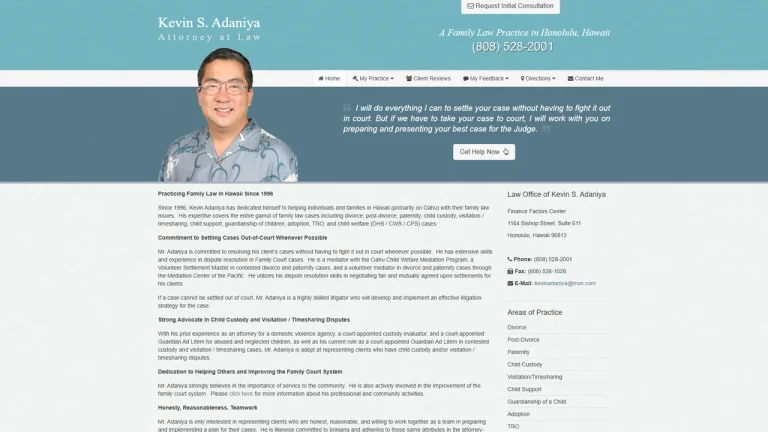
Kevin S. Adaniya, Attorney at Law - Honolulu, HI

The Law Office of Victor Bakke, ALC - Honolulu, HI
Office of the Public Defender - State of Hawaii - Honolulu, HI

Law Office of Emma Littman Baker - Honolulu, HI

Richard D Gronna Attorney At Law - Honolulu, HI
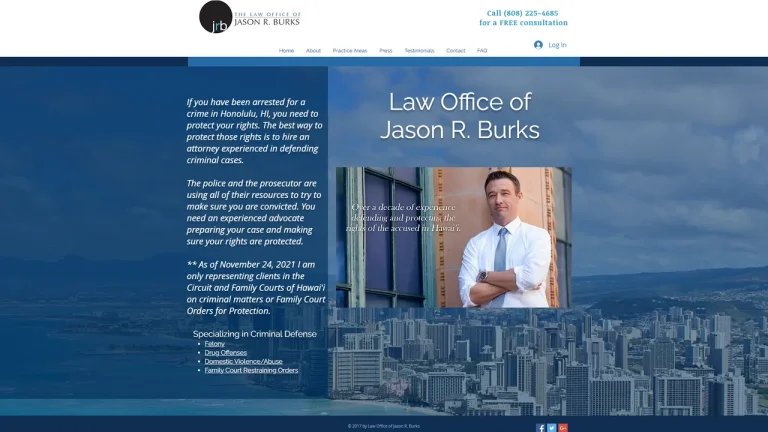
Law Office of Jason R. Burks - Honolulu, HI

Hawaii Family Court System and Domestic Violence Jurisdiction
Domestic violence and protective order proceedings in Hawaii require strict adherence to state family and penal statutes. Legal actions involving family or household members fall under the specialized authority of the Hawaii Family Court system, which operates across all judicial circuits spanning Oahu, Maui County, Hawaii County, and Kauai.
Hearings are conducted in primary municipal facilities including the First Circuit Family Court in Kapolei and Honolulu, the Second Circuit Court in Wailuku, the Third Circuit Courts in Hilo and Kona, and the Fifth Circuit Court in Lihue. Case records and court filings are managed electronically via the Judiciary Electronic Filing System (JEFS). Concurrently, criminal misdemeanor and felony offenses are prosecuted by local county prosecuting attorneys in Honolulu, Maui, Hawaii, and Kauai counties.
Attorneys handling domestic abuse matters must be admitted to practice by the Hawaii State Bar Association (HSBA). Experienced local counsel understands the sensitive dynamics of Family Court judges, managing emergency petitions, evidentiary presentations, and child custody interactions under Hawaii law.
Hawaii Domestic Violence Legal Representation Costs
| Case Scenario | Fee Structure | Estimated Cost (USD) | Key Cost Determinants |
|---|---|---|---|
| Emergency TRO Hearing Representation | Flat Fee or Retainer | $1,500 - $3,500 | Number of witness testimonies, text message evidence review, and 14-day show-cause preparation. |
| Contested Multi-Day Protective Order Hearing | Hourly Rate | $3,000 - $7,500 | Subpoenaing medical and police records, formal witness depositions, and child custody disputes. |
| Misdemeanor Domestic Abuse Defense | Flat Fee or Hourly | $2,500 - $6,500 | Mandatory 48-hour no-contact periods, negotiation with county prosecutors, and pre-trial motion practice. |
| Felony Physical Abuse or Strangulation Trial | Retainer + Hourly Rate | $7,500 - $20,000+ | Class C felony allegations, forensic expert witnesses, jury selection, and full trial litigation. |
Critical Legal Deadlines & Statutes in Hawaii
Domestic abuse legal actions in Hawaii are governed primarily by Chapter 586 of the Hawaii Revised Statutes. Under HRS § 586-3, an individual who has suffered domestic abuse may petition the Family Court for an Order for Protection. When an ex parte Temporary Restraining Order (TRO) is granted under HRS § 586-4, it remains in effect for up to 180 days or until a full evidentiary hearing is conducted.
Under HRS § 586-5, a show-cause hearing must generally be scheduled within fourteen days after a petition is granted or served. Following this hearing, the court may enter a final Order for Protection under HRS § 586-5.5 for a fixed duration or an indefinite period deemed necessary to protect the petitioner.
In the criminal realm, abuse of family or household members is penalized under HRS § 709-906. When an arrest occurs, the statute enforces a mandatory forty-eight-hour stay-away period. Furthermore, under HRS § 134-7, anyone subject to a domestic violence protective order or convicted of domestic abuse is legally prohibited from owning, possessing, or controlling firearms and ammunition.
Self-Petitioning vs. Retaining Private Legal Counsel
The Hawaii Judiciary provides self-help forms and court facilitators to assist victims in obtaining an initial ex parte TRO without cost. Individuals seeking emergency relief from impending violence can submit petitions directly to the Family Court clerk in their respective circuit.
However, when the matter advances to the formal evidentiary hearing required under HRS § 586-5, having a skilled attorney becomes critical. Evidentiary rules govern the admissibility of digital messages, medical records, and hearsay statements. Protective orders directly impact parental rights, child visitation schedules under HRS § 571-46, and professional licenses. Whether seeking protection or defending against unfounded claims, an attorney preserves the record, cross-examines witnesses, and protects fundamental rights.
Red Flags When Hiring a Hawaii Domestic Violence Lawyer
- Guaranteed Dismissal Promises: Avoid attorneys who promise immediate case dismissals; county prosecutors in Hawaii enforce strict no-drop domestic violence policies.
- Encouraging Direct Communication: Never hire a lawyer who advises reaching out to an adverse party while a valid TRO or 48-hour order under HRS § 709-906 remains active.
- Unfamiliarity with Family Court Rules: Ensure your attorney regularly appears before Family Court judges, as procedure differs substantially from general civil trial practice.
- Disregarding Custody Ramifications: Steer clear of legal counsel who fails to address how domestic violence findings impact ongoing child custody proceedings under Hawaii law.
Frequently Asked Questions
What is the difference between a TRO and a Protective Order in Hawaii?
An ex parte TRO under HRS § 586-4 is an emergency short-term order issued without a hearing, whereas a final Order for Protection under HRS § 586-5.5 is issued after an evidentiary hearing and can remain in effect for years.
What happens during the mandatory 48-hour period under HRS § 709-906?
Under HRS § 709-906, law enforcement officers order an arrested individual to have zero contact with the alleged victim and stay away from the residence for forty-eight hours, with violations constituting a misdemeanor offense.
Does a protective order affect gun ownership rights in Hawaii?
Yes. Under HRS § 134-7, anyone subject to a domestic abuse protective order must immediately surrender all firearms and ammunition to the county police department.
Can a victim drop domestic violence charges in Hawaii?
No. In Hawaii criminal cases, only the county prosecuting attorney has the legal authority to dismiss criminal charges, even if the alleged victim requests that the matter be dropped.
How does domestic abuse affect child custody determinations in Hawaii?
Pursuant to HRS § 571-46, there is a statutory presumption that awarding custody to a parent who has committed family violence is detrimental to the best interests of the child.