
Family Immigration Lawyers in Hawaii
Securing lawful permanent residency for relatives in Hawaii requires navigating rigorous federal petitions and strict statutory deadlines. Working with a dedicated immigration attorney ensures your family documentation is correctly filed while preventing procedural denials. Browse our directory below to connect with verified legal professionals across the Hawaiian Islands.

Law Office of Carmen Di Amore-Siah and Associates - Honolulu, HI

Law Offices of Manuel Q. Diones LLLC - Honolulu, HI
Kathy M Kim Law Office - Honolulu, HI

M Cora Avinante Law Offices - Honolulu, HI

Amanda S Chang Law Office - Honolulu, HI
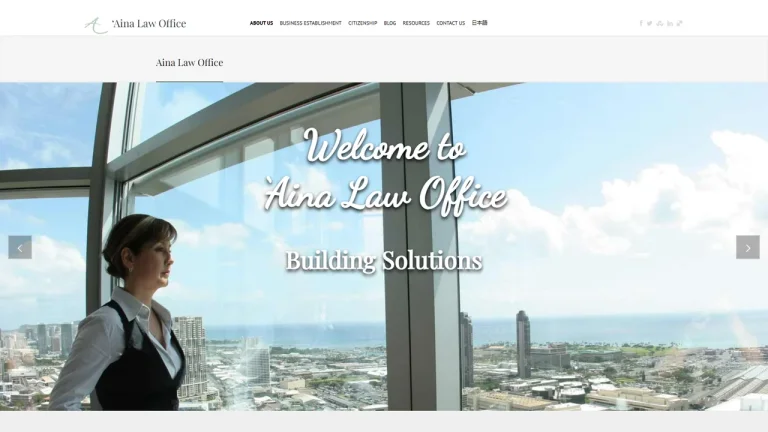
Aina Law Office LLC - Honolulu, HI
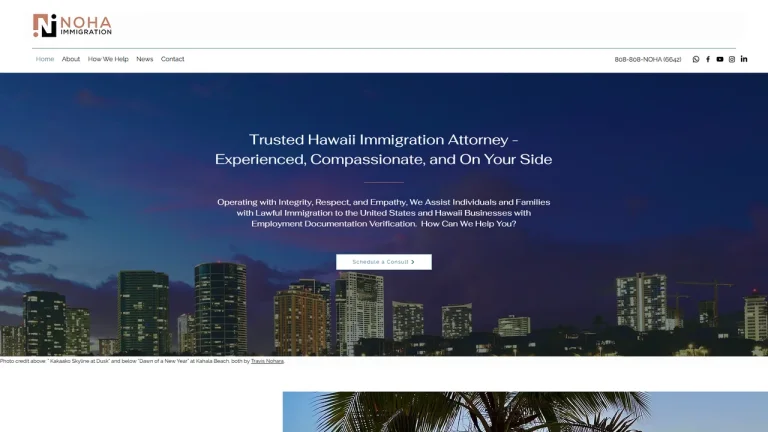
Noha Immigration Law - Honolulu, HI

Aloha Immigration Law Firm Honolulu, HI
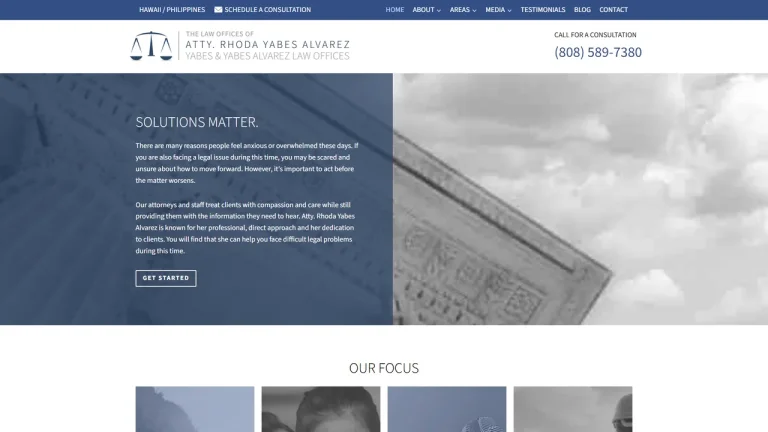
The Law Offices of Rhoda Yabes Alvarez, LLC - Honolulu, HI

Maile M. Hirota, Esq. at Hirota & Associates, LLLC - Honolulu, HI

Hui Lin Dong Attorney At Law - Honolulu, HI
Daryl S. Takeno, Esq. - Honolulu, HI
Law Office of Wen Sheng Gao, LLLC - Honolulu, HI
Elton S. Kagimoto, Attorney at Law - Honolulu, HI
Law Office of Tea H. Kim LLLC - Honolulu, HI
Valar Immigration - Honolulu, HI

Love The Foreigner - Honolulu, HI
Law Offices of KahBo Dye-Chiew - Honolulu, HI
Akina Global LLLC - Honolulu, HI
Migration Counsel, LLLC - Honolulu, HI
Law Offices of Alan W.C. Ma - Honolulu, HI
Navigating Family Immigration Law Across the Hawaiian Islands
Family reunification matters across the State of Hawaii operate under rigorous federal oversight administered locally through the United States Citizenship and Immigration Services (USCIS) Honolulu Field Office. Located at the Prince Jonah Kūhiō Kalanianaʻole (PJKK) Federal Building on Ala Moana Boulevard in Honolulu, this office conducts mandatory adjustment of status interviews, naturalization ceremonies, and biometrics processing for island residents.
Petitioners residing on Oahu, Maui County, Kauai County, and Hawaii County must account for distinct logistical challenges when managing family-based petitions. Travel coordination for consular processing, mandatory field office appearances, and civil surgeon medical examinations require comprehensive advance preparation. Engaging a lawyer licensed through the Hawaii State Bar Association (HSBA) guarantees local familiarity with federal agency workflows and administrative standards.
Retaining dedicated legal counsel ensures that immigrant petitions are properly substantiated from the outset. Experienced practitioners proactively assemble bona fide relationship evidence, draft conclusive declarations, and resolve prior status issues. Professional representation minimizes the risk of prolonged separation or administrative rejections from immigration authorities.
Hawaii Family Immigration Legal Fee Overview
| Case Scenario | Fee Structure | Estimated Cost (USD) | Key Cost Determinants |
|---|---|---|---|
| Immediate Relative Petition (Form I-130) | Flat Fee | $1,500 - $3,200 | Beneficiary foreign residency status, consular processing coordination, and vital record translation requirements. |
| Concurrent Adjustment of Status (Forms I-130 & I-485) | Flat Fee | $2,800 - $6,000 | Lawful entry documentation, public charge evaluation, background discrepancies, and interview preparation. |
| Removal of Conditions (Form I-751 Joint or Waiver) | Flat Fee or Hourly | $2,000 - $4,500 | Marital cohabitation evidence strength, divorce finality, or domestic hardship waiver complexity. |
| Provisional Unlawful Presence Waiver (Form I-601A) | Retainer + Hourly | $4,000 - $8,500 | Qualifying relative extreme hardship documentation, medical records, and detailed financial affidavits. |
Critical Legal Deadlines & Statutes in Hawaii
Family-based immigration procedures adhere to unyielding statutory timetables established under federal authority. Under 8 U.S.C. § 1151, immediate relatives of U.S. citizens enjoy exempt status from numerical visa quotas, yet adjustment applications require strict evidentiary compliance under 8 C.F.R. § 204.1. Spouses granted conditional permanent residency must file Form I-751 within the mandatory 90-day window preceding their two-year green card expiration date pursuant to 8 U.S.C. § 1186a.
Failure to meet agency deadlines results in catastrophic consequences, including automatic revocation of lawful status or issuance of a Notice to Appear. Official Requests for Evidence (RFEs) issued by the Honolulu Field Office under 8 C.F.R. § 103.2(b)(8) mandate complete responses within statutory timeframes ranging from 30 to 87 days, with no extensions granted. Additionally, appeals of adverse administrative determinations must reach the Board of Immigration Appeals within 30 calendar days under 8 C.F.R. § 1003.38.
Self-Filing Hazards vs. Professional Legal Representation
In local civil matters, the Small Claims Division of the District Court of the First Circuit in Honolulu adjudicates minor monetary disputes capped at $5,000 under Haw. Rev. Stat. § 633-27. In that venue, self-representation is routine and accessible. Conversely, federal family immigration petitions do not accommodate pro se missteps. Minor omissions on USCIS documentation can result in allegations of willful misrepresentation, immediate forfeiture of filing fees, and initiation of removal proceedings.
Professional legal representation provides vital protection against procedural pitfalls. Immigration attorneys analyze prior immigration entries, address potential unlawful presence bars, and compile conclusive joint-asset documentation required for marriage petitions. An attorney prepares spouses for probing questions during mandatory Honolulu Field Office interviews, ensuring constitutional and regulatory safeguards are fully upheld throughout the adjudicative process.
Red Flags When Selecting an Immigration Attorney
- Unlicensed consultants or self-styled notarios falsely advertising legal authority to manage USCIS petitions.
- Promises of guaranteed green card approvals or expedited USCIS scheduling outside established federal mechanisms.
- Attorneys unwilling to provide a formal written fee agreement itemizing legal retainers and government disbursements.
- Practitioners lacking demonstrable standing or good standing records with the Hawaii State Bar Association.
Frequently Asked Questions
Where are family immigration interviews conducted in Hawaii?
All family-based green card and naturalization interviews within the state take place at the USCIS Honolulu Field Office, located in the Prince Jonah Kūhiō Kalanianaʻole Federal Building at 300 Ala Moana Boulevard in Honolulu.
Can neighbor island residents attend biometrics appointments locally?
USCIS operates an Application Support Center (ASC) in Honolulu and schedules periodic mobile biometrics processing on Maui, Kauai, and Hawaii County to accommodate outer island petitioners.
What happens if an applicant fails to file Form I-751 on time?
Missing the 90-day statutory window under 8 U.S.C. § 1186a results in the automatic termination of conditional resident status and places the foreign national at immediate risk of removal proceedings.
Does marriage to a U.S. citizen automatically forgive unlawful presence?
Under 8 U.S.C. § 1255(c), unlawful presence may be forgiven during an immediate relative adjustment of status only if the applicant originally entered the United States through lawful inspection or parole.
What is the financial sponsorship requirement for family petitions?
Petitioners must execute Form I-864 showing an annual household income exceeding 125% of the federal poverty guidelines under 8 U.S.C. § 1183a, with specialized higher thresholds applying specifically to Hawaii.