
Debt Relief Lawyers in Honolulu
Retaining an experienced debt relief lawyer in Honolulu allows consumers to challenge aggressive collection lawsuits and negotiate structured debt settlements. Local legal counsel leverages Hawaii statutory limits and consumer protection laws to resolve balances and stop garnishments outside of court. Explore our verified directory below to connect with an established Oahu debt attorney today.
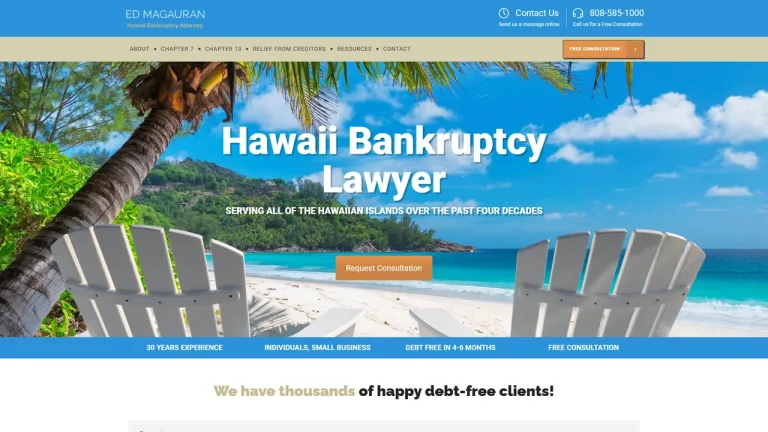
Ed Magauran, Hawaii Bankruptcy Attorney - Honolulu, HI
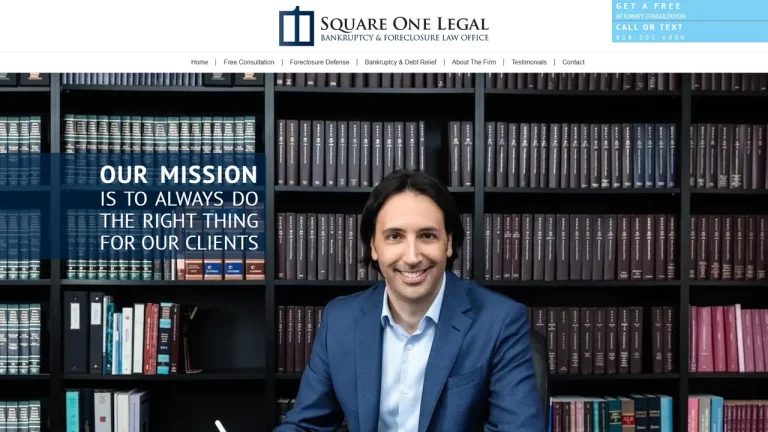
Square One Legal - Honolulu, HI
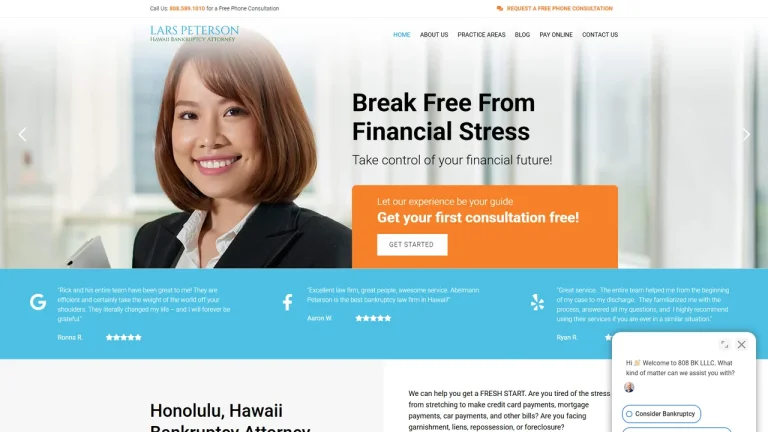
Lars Peterson Hawaii Bankruptcy Attorney - Honolulu, HI

The Law Office of Jean Christensen LLLC - Honolulu, HI
Summit Real Estate Law Firm - Honolulu, HI

Law Offices of Paul D. Schmeding - Honolulu, HI
Hawaii Debt Solutions - Honolulu, HI
Legal Aid Society of Hawai'i - Honolulu, HI
Law Office of Damon Senaha - Honolulu, HI
Greg Dunn - Honolulu, HI

Blake Goodman, PC, Bankruptcy & Debt Settlement Attorneys - Honolulu, HI
Debt Defense & Creditor Litigation in Honolulu
Managing consumer debt in Honolulu is intensified by island economic conditions, elevated housing expenses, and high living costs. Across Oahu-including Downtown Honolulu, Kakaako, Ala Moana, Kalihi, Pearl City, and Kailua-unmanageable credit card balances, personal signature loans, and medical debts frequently turn into aggressive collection lawsuits filed by national debt purchasers.
Debt collection lawsuits in the City and County of Honolulu are primarily filed in the District Court of the First Circuit at Kauikeaouli Hale (1111 Alakea Street) for claims up to $40,000, or in the First Circuit Court at Kaahumanu Hale (777 Punchbowl Street) for larger disputes. Debt collectors routinely initiate actions against consumers hoping for an automatic default judgment.
Working with a licensed Hawaii debt relief attorney provides critical legal defense. Unlike out-of-state debt settlement telemarketers who cannot represent you in court, a local attorney files pleadings electronically through the Hawaii Judiciary Electronic Filing and Service System (JEFS), challenges the standing of third-party debt buyers, and negotiates enforceable settlement agreements that eliminate lingering liabilities.
Debt Settlement & Defense Legal Fee Structures
| Case Scenario | Fee Structure | Estimated Cost (USD) | Key Cost Determinants |
|---|---|---|---|
| Direct Creditor Settlement Negotiation | Contingency on Debt Savings | 15% - 25% of settled savings | Lump-sum settlement capital, balance volume, and original lender versus third-party assignee. |
| First Circuit District Court Lawsuit Defense | Flat Legal Fee | $850 - $2,800 | Filing an Answer in JEFS, motion practice, challenging chain of title, and court hearings. |
| Post-Judgment Wage Garnishment Motion to Modify | Flat Fee / Hourly Hybrid | $650 - $1,800 | Filing an affidavit to reduce garnishment under Hawaii statutory wage calculation limits. |
| Federal FDCPA Creditor Harassment Claim | Contingency / Fee-Shifting | $0 upfront (statutory recovery) | Documented abusive calls, threats, unlawful third-party disclosures, and statutory damages. |
Critical Legal Deadlines & Hawaii Debt Statutes
Time limits for pursuing consumer debts in Hawaii are governed by state contract statutes. Under Haw. Rev. Stat. § 657-1, the statute of limitations for actions on debt, contracts, and obligations founded upon any contract or liability is six years from the date of default or last payment.
If you are served with a lawsuit in the District Court of the First Circuit, you must appear or file an answer by the return date designated on the court summons, typically within 20 to 30 days. Failing to respond results in immediate default judgment. Post-judgment wage garnishments are restricted under Haw. Rev. Stat. § 652-1, which limits deductions to 5 percent of the first $100 of monthly income, 10 percent of the second $100, and 20 percent of amounts over $200 per month, subject to federal garnishment caps under 15 U.S. Code § 1673. Debt collection agencies are also prohibited from using deceptive or abusive practices under Haw. Rev. Stat. § 480-2 and federal law under 15 U.S. Code § 1692.
Small Claims Court vs. Retaining Licensed Debt Counsel
The Small Claims division of the District Court of the First Circuit is restricted to claims up to $5,000 under Haw. Rev. Stat. § 633-27. While unrepresented defendants sometimes attempt pro se responses, collection agencies routinely file in regular District Court under Haw. Rev. Stat. § 604-5 to secure default judgments.
A licensed Hawaii debt attorney demands proof of standing, interrogates chain of title assignments, and exposes inadmissible hearsay affidavits. Retaining counsel prevents immediate wage garnishment orders and creates substantial leverage for discounted lump-sum settlements.
Red Flags in Commercial Debt Relief Programs
- Out-of-state debt settlement call centers demanding upfront program fees before settling accounts, in violation of the Hawaii Uniform Debt-Management Services Act (Haw. Rev. Stat. § 489M-1 et seq.).
- Advisors telling you to ignore court summonses from the First Circuit District Court, which results in automatic default judgments.
- Guarantees to erase 100 percent of your debts or repair credit scores overnight.
- Representatives who are not licensed by the Hawaii State Bar Association and cannot represent you in Hawaii state courts.
Frequently Asked Questions
What is the statute of limitations on credit card debt in Hawaii?
Under Haw. Rev. Stat. § 657-1, the statute of limitations for consumer debt, contracts, and credit card accounts in Hawaii is six years from the date of the last payment or default.
How long do I have to respond to a debt lawsuit in Honolulu?
You must respond on or before the return date stated on the District Court summons, typically within 20 to 30 days of service. Missing this court date results in a default judgment entered against you.
How much can be garnished from my wages in Hawaii?
Under Haw. Rev. Stat. § 652-1 and 15 U.S. Code § 1673, wage garnishment is calculated using a formula capping deductions at 20 percent of monthly earnings over $200, or federal caps protecting basic disposable earnings.
What should I do if a collection agency calls my employer or family?
Under 15 U.S. Code § 1692, third-party debt collectors are prohibited from discussing your debt with third parties or harassing you, which allows you to pursue statutory damages up to $1,000 plus attorney fees.
How does hiring a Hawaii attorney differ from using an online debt settlement company?
Licensed Hawaii attorneys can file legal answers in the First Circuit Court, defend against lawsuits, provide attorney-client confidentiality, and enforce statutory protections, whereas out-of-state companies cannot represent you in court.