
Immigration Lawyers in Hawaii
Securing trusted representation from a Hawaii immigration attorney is essential for navigating federal visa petitions and deportation defense. Dedicated legal counsel helps prevent costly application delays and represents your interests before local immigration authorities. Browse our statewide directory to connect with a qualified immigration practitioner today.
Noha Immigration Law - Honolulu, HI
Elton S. Kagimoto, Attorney at Law - Honolulu, HI

Hui Lin Dong Attorney At Law - Honolulu, HI

Law Offices of Alan W.C. Ma - Honolulu, HI

Maile M. Hirota, Esq. at Hirota & Associates, LLLC - Honolulu, HI
Law Office of Gary G. Singh - Honolulu, HI
Valar Immigration - Honolulu, HI

M Cora Avinante Law Offices - Honolulu, HI

Love The Foreigner - Honolulu, HI
Law Offices of Manuel Q. Diones LLLC - Honolulu, HI

Akina Global LLLC - Honolulu, HI
Damon Key Leong Kupchak Hastert - Honolulu, HI
Migration Counsel, LLLC - Honolulu, HI
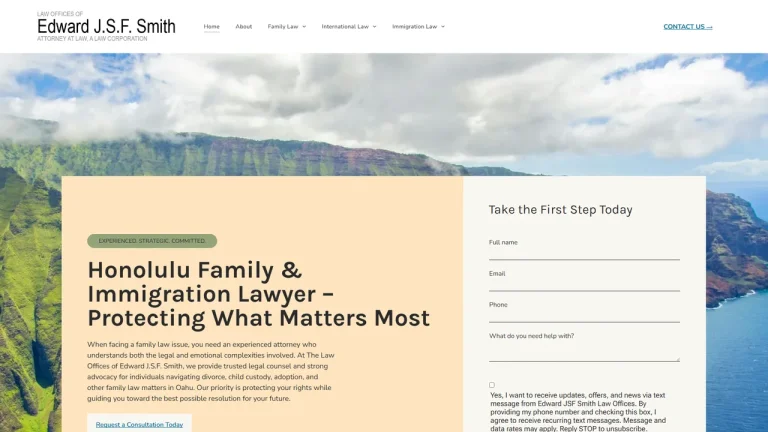
The Law Office of Edward Smith - Honolulu, HI

Law Office of Wen Sheng Gao, LLLC - Honolulu, HI
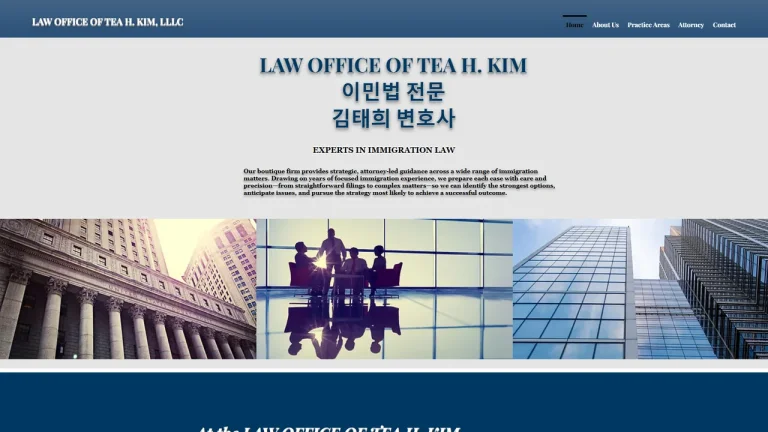
Law Office of Tea H. Kim LLLC - Honolulu, HI
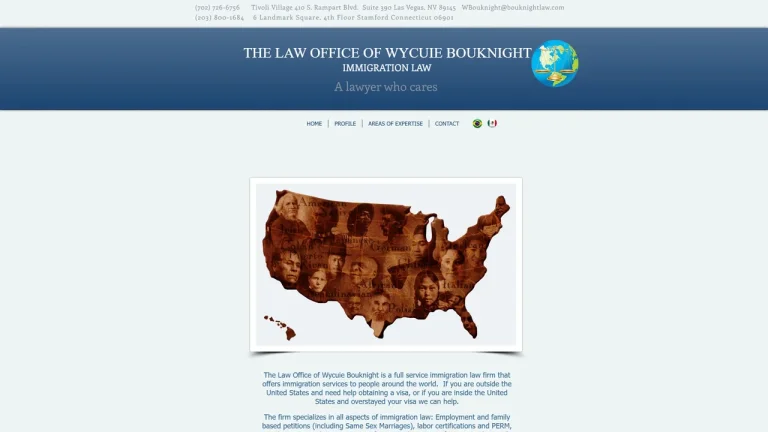
The Law Office of Wycuie Bouknight - Honolulu, HI

Law Office of Carmen Di Amore-Siah and Associates - Honolulu, HI

Amanda S Chang Law Office - Honolulu, HI
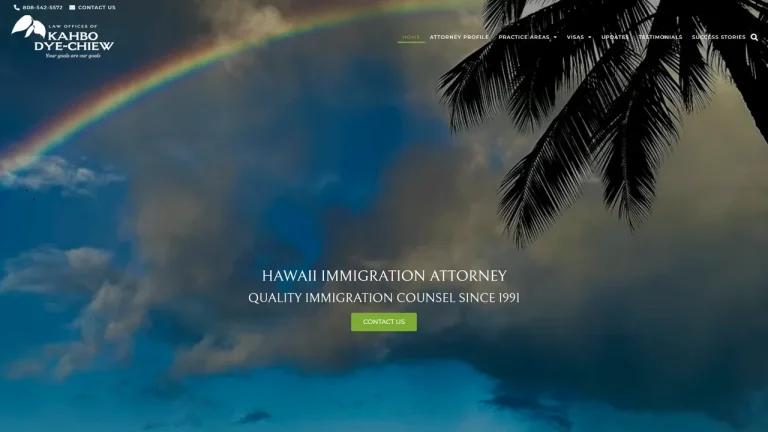
Law Offices of KahBo Dye-Chiew - Honolulu, HI
Kathy M Kim Law Office - Honolulu, HI
Lena Nevsky, Esq. - Honolulu, HI

Aloha Immigration Law Firm Honolulu, HI
Federal Immigration Practice Across Hawaii's Island Communities
Immigration proceedings across the Hawaiian islands are governed by federal statutes administered through dedicated regional government facilities in Honolulu on Oahu. The primary venue for removal proceedings, bond determinations, and defensive asylum hearings is the Honolulu Immigration Court, operating under the Executive Office for Immigration Review (EOIR) inside the Prince Jonah Kūhiō Kalanianaʻole (PJKK) Federal Building. This court exercises jurisdiction over cases originating on Oahu, Maui, Kauai, and Hawaii Island.
Affirmative petitions, naturalization interviews, and adjustment of status applications are handled through the U.S. Citizenship and Immigration Services (USCIS) Honolulu Field Office. Immigration practitioners licensed through the Hawaii State Bar Association represent multinational corporations, agricultural employers, tourism operators, and families seeking legal permanent residency, employment-based nonimmigrant visas, or humanitarian relief across the Pacific.
Working with an attorney based in Hawaii ensures prompt physical representation at interviews before local USCIS adjudicators and during master calendar or merits hearings at the Honolulu Immigration Court. Local legal counsel coordinates documentation, ensures adherence to federal administrative guidelines, and provides immediate representation if a family member is detained or issued a Notice to Appear.
Common Hawaii Immigration Legal Services & Estimated Costs
| Case Scenario | Fee Structure | Estimated Cost (USD) | Key Cost Determinants |
|---|---|---|---|
| Family Adjustment of Status (I-130 & I-485) | Flat Fee | $2,500 - $5,500 | Lawful entry documentation, affidavit of support sufficiency, prior immigration history |
| Naturalization & Citizenship (Form N-400) | Flat Fee | $1,200 - $3,000 | Continuous residency continuity, background record disclosures, tax compliance reviews |
| Defensive Asylum & Removal Proceedings | Retainer / Stage-Based ($250 - $500/hr) | $6,000 - $15,000+ | Number of EOIR court appearances, expert witness reports, country condition evidence |
| Employment & Investor Visas (H-1B, H-2A/B, E-2) | Flat Fee / Retainer | $3,500 - $10,000 | Department of Labor prevailing wage determinations, business plan reviews, investor capital auditing |
Critical Legal Deadlines & Statutes in Hawaii
Navigating federal immigration law involves rigorous statutory deadlines where procedural defaults result in severe consequences. Under 8 U.S. Code § 1158, individuals seeking asylum must formally submit Form I-589 within 1 year of arriving in the United States, unless they demonstrate extraordinary circumstances or materially changed country conditions.
Individuals subject to removal proceedings governed by 8 U.S. Code § 1229a must attend all scheduled hearings at the Honolulu Immigration Court indicated on their Notice to Appear (NTA). Failing to appear results in an immediate in absentia removal order. If an Immigration Judge issues an adverse ruling, a notice of appeal must be filed with the Board of Immigration Appeals (BIA) within 30 calendar days pursuant to 8 C.F.R. § 1003.38.
Applications for adjustment of status are governed by 8 U.S. Code § 1255, while statutory physical presence and continuous residency thresholds for naturalization are codified under 8 U.S. Code § 1427. Failure to respond to a Request for Evidence (RFE) issued by the USCIS Honolulu Field Office within the specified window-generally 30 to 87 days-results in an automatic denial of the underlying petition without right to administrative extension.
Routine Agency Filings vs. Professional Immigration Representation
Immigration matters fall strictly under federal administrative jurisdiction and cannot be resolved in Hawaii state courts or the Small Claims division under Haw. Rev. Stat. § 633-27. Certain procedural steps, such as submitting an address change (Form AR-11) or filing an initial green card renewal (Form I-90), can be handled independently by applicants through online USCIS service portals.
However, when a case involves removal proceedings, criminal history disclosures, unlawful presence waivers, or consular processing denials, legal representation is indispensable. Under 8 U.S. Code § 1229a, the federal government is represented by experienced trial attorneys from Immigration and Customs Enforcement (ICE). Having an experienced immigration lawyer protects against procedural errors, ensures compliance with Ninth Circuit case law, and presents an organized evidentiary record to safeguard your lawful status.
Red Flags When Choosing a Hawaii Immigration Lawyer
- Relying on unlicensed "notarios," travel agency operators, or document preparers who claim authorization to provide immigration legal advice or represent clients before USCIS.
- Promises of guaranteed green card approvals, expedited processing times, or secret relationships with local Honolulu Immigration Court judges.
- Attorneys who refuse to provide a written legal agreement outlining attorney fees, government filing costs, and additional expenses for interpretation or translation.
- Lawyers who fail to attend physical adjustment or naturalization interviews at the USCIS Honolulu Field Office in person.
Frequently Asked Questions
Where are immigration court hearings held in Hawaii?
Immigration court proceedings for individuals across all Hawaiian islands take place at the Honolulu Immigration Court, located within the Prince Jonah Kūhiō Kalanianaʻole (PJKK) Federal Building in Honolulu, under the Executive Office for Immigration Review (EOIR).
What is the one-year asylum deadline under federal law?
Under 8 U.S. Code § 1158, asylum applicants must file their application within one year of their physical arrival in the United States. Missing this deadline restricts available relief to withholding of removal or protection under the Convention Against Torture, unless an exception applies.
What happens if I miss an immigration court hearing in Honolulu?
Under 8 U.S. Code § 1229a, failing to appear for a scheduled hearing at the Honolulu Immigration Court results in the judge issuing an in absentia removal order, barring you from various forms of immigration relief for ten years.
Can a past criminal conviction in Hawaii impact my immigration status?
Yes. Even minor criminal offenses under the Hawaii Penal Code can trigger deportation, inadmissibility, or denial of naturalization under federal immigration law. An immigration lawyer must evaluate your record to assess potential immigration consequences.
How long do I have to appeal a decision by a Honolulu Immigration Judge?
Pursuant to 8 C.F.R. § 1003.38, a Notice of Appeal must be received by the Board of Immigration Appeals (BIA) within 30 calendar days of the date the Immigration Judge issues an oral decision or mails a written order.