
Probate Lawyers in Hawaii
Retain trusted Hawaii probate attorneys to navigate estate administration, settle creditor claims, and facilitate prompt asset distribution to beneficiaries. Local legal representation streamlines proceedings in Circuit Court and expedites uncontested filings without unnecessary litigation. Explore our directory below to schedule a case review with trusted local professionals.
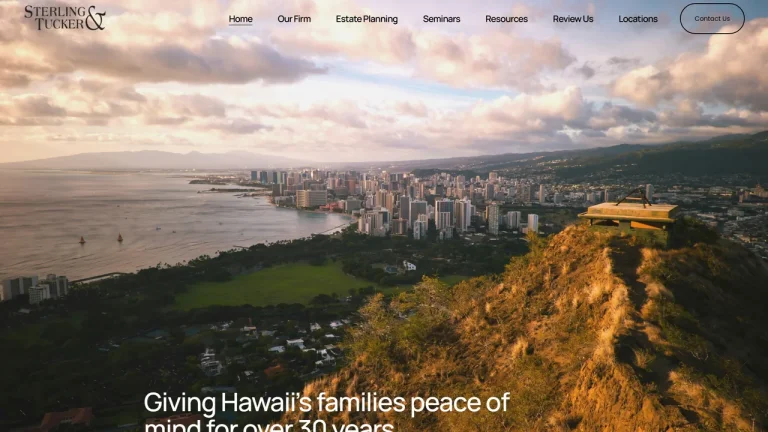
Sterling & Tucker, LLP - Honolulu, HI

Law Office of Keoni Souza LLC Honolulu, HI

Okura & Associates - Honolulu, HI

Law Offices of Curtis B. K. Yuen - Honolulu, HI
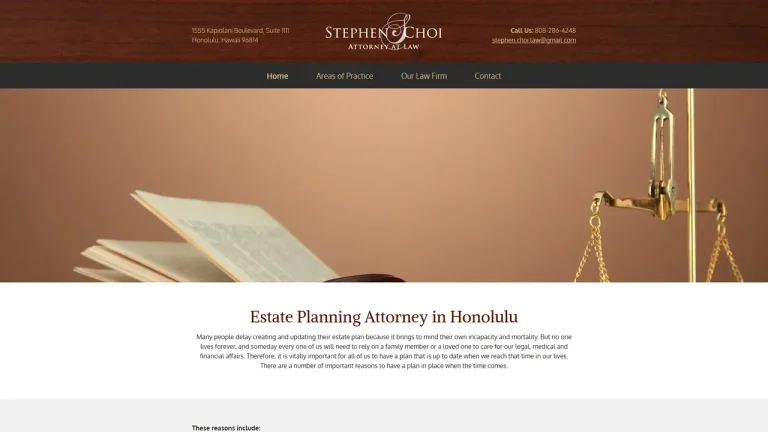
Stephen S. Choi Attorney At Law - Honolulu, HI

Tongg & Tongg - Honolulu, HI

Estate Planning of Honolulu - Honolulu, HI

Law Offices of Neil T Nakamura & Associates - Honolulu, HI
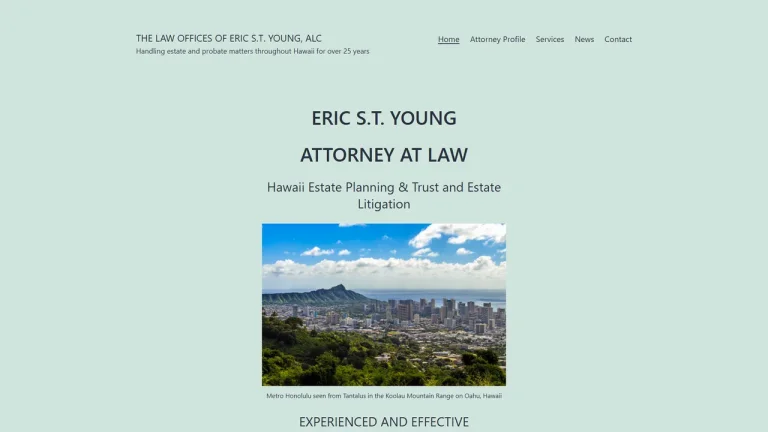
Eric Young Law Office - Honolulu, HI
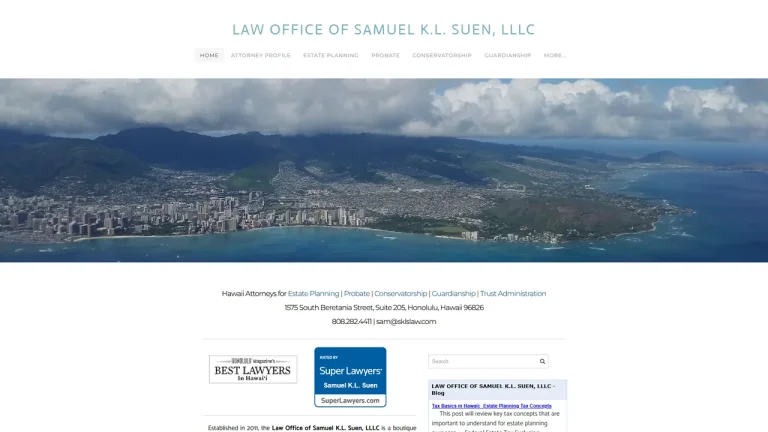
Law Office of Samuel K.L. Suen - Honolulu, HI

Miki Lee T - Honolulu, HI
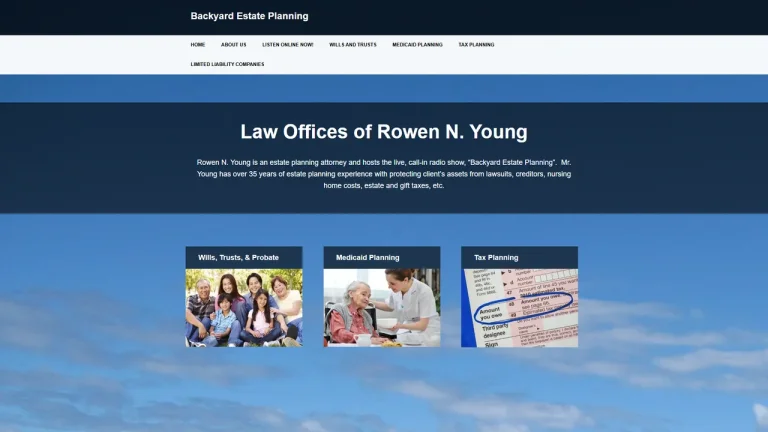
Law Office of Rowen Young - Honolulu, HI

HawaiiDeed LLC - Honolulu, HI

Hawaii Estate Law and Planning Honolulu, HI
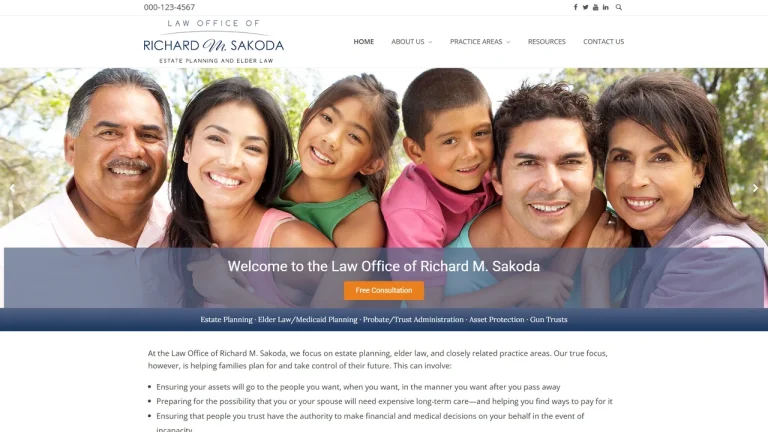
Richard M. Sakoda - Honolulu, HI

Estate Planning Group - Honolulu, HI

Maximum Legal Services Corporation - Honolulu, HI

Amphay Champathong, JD Estate Planning Group - Honolulu, HI
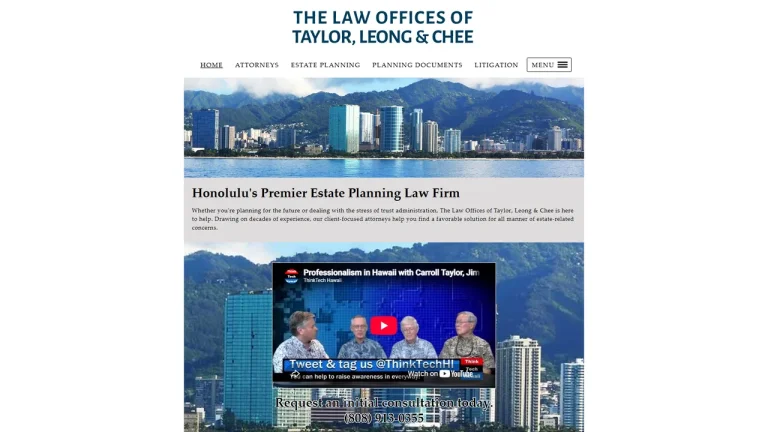
The Law Offices of Taylor, Leong and Chee - Honolulu, HI
Kawata Mark S - Honolulu, HI

The Law Offices of Brandee J.K. Faria, LLLC - Honolulu, HI

Estate Planning Partners - Honolulu, HI

3FG Law - Honolulu, HI

The Role of Local Counsel in Hawaii Probate Administration
Administering a decedent's estate in Hawaii requires strict compliance with the Hawaii Uniform Probate Code and local court rules across the island circuits. Probate proceedings fall under the jurisdiction of the Circuit Courts of Hawaii, including the First Circuit Court in Honolulu on Oahu, the Second Circuit Court in Wailuku on Maui, the Third Circuit Court serving Hilo and Kona on Hawaii Island, and the Fifth Circuit Court in Lihue on Kauai.
A personal representative is tasked with marshalling assets, publishing notices to creditors in approved county publications, inventorying real and personal property, and submitting accountings via the Hawaii Judiciary Electronic Filing and Service System (JEFS). Because Hawaii retains complex real property recording requirements split between the Land Court and the Regular System at the Bureau of Conveyances, transferring real property out of an estate requires meticulous legal drafting.
Attorneys affiliated with the Hawaii State Bar Association guide personal representatives through informal, formal, and supervised probate tracks. Dedicated counsel protects fiduciaries against personal liability, resolves family disagreements before litigation begins, and ensures prompt distribution to heirs.
Hawaii Probate Legal Fees and Administration Cost Breakdown
| Case Scenario | Fee Structure | Estimated Cost (USD) | Key Cost Determinants |
|---|---|---|---|
| Small Estate Affidavit Administration | Flat Fee | $800 - $2,000 | Personal property value under statutory limits pursuant to Haw. Rev. Stat. § 560:3-1201 without real estate controversy. |
| Uncontested Informal Probate | Flat Fee / Hourly | $3,500 - $7,500 | Valid will, consenting beneficiaries, published creditor notices, and prompt inventory filing through the JEFS portal. |
| Formal Supervised Probate | Hourly Rate ($350 - $600/hr) | $7,500 - $20,000+ | Complex business interests, real estate sales requiring court approval, or disputes over personal representative appointment. |
| Contested Probate & Will Contest Litigation | Hourly Rate ($400 - $700/hr) | $15,000 - $50,000+ | Claims of undue influence, lack of testamentary capacity, creditor actions, or fiduciary accounting disputes in Circuit Court. |
Critical Legal Deadlines & Statutes in Hawaii
Hawaii probate procedures follow strict statutory deadlines. Under Haw. Rev. Stat. § 560:3-108, probate proceedings must generally be commenced within three years of the decedent's death, after which the estate cannot be informally or formally probated except under narrow statutory exceptions.
Creditor notice deadlines are especially rigid. Pursuant to Haw. Rev. Stat. § 560:3-803, creditors must present their claims within four months after the date of first publication of notice in a newspaper of general circulation in the county, or within sixty days of direct written notice. If no notice is published, claims are barred after eighteen months from the decedent's death. Furthermore, personal representatives must prepare and file an inventory of estate property within ninety days of appointment under Haw. Rev. Stat. § 560:3-706.
Small Claims Limits vs. Circuit Court Probate Jurisdiction
Under Haw. Rev. Stat. § 633-27, Hawaii Small Claims Division jurisdiction is capped at $5,000 and is strictly limited to monetary actions. The Small Claims Division has no authority to settle estates, clear title to real estate, or interpret testamentary documents.
Under Haw. Rev. Stat. § 560:1-301, the Circuit Court retains exclusive subject-matter jurisdiction over all probate and estate affairs. While small estates involving personal property valued at $100,000 or less can avoid formal court administration via an affidavit under Haw. Rev. Stat. § 560:3-1201, estates involving real estate or contested claims require formal or informal Circuit Court filings where experienced legal representation is essential.
Red Flags to Avoid When Selecting a Hawaii Probate Attorney
- Lawyers who demand a percentage fee of the gross estate value rather than billing a clear hourly rate or negotiated flat fee.
- Firms with no demonstrated experience using the Hawaii Judiciary Electronic Filing and Service System (JEFS), which can create lengthy processing delays.
- Guarantees of concluding probate in under two months, which ignores the mandatory four-month creditor claim period required by state statute.
- Failure to explain the Bureau of Conveyances title recording procedures necessary to transfer decedent real estate to surviving beneficiaries.
Frequently Asked Questions
How long does the probate process take in Hawaii?
An uncontested informal probate in Hawaii typically requires six to twelve months to complete. This timeline allows for the statutory four-month creditor notice period under Haw. Rev. Stat. § 560:3-803, asset liquidation, tax clearances, and final distribution approval.
What qualifies as a small estate in Hawaii?
Under Haw. Rev. Stat. § 560:3-1201, an estate qualifies for affidavit transfer if the total gross value of the decedent's personal property does not exceed $100,000, excluding motor vehicles. Estates with real property do not qualify for this simplified affidavit procedure.
Does an executor have to reside in Hawaii?
A personal representative does not have to be a Hawaii resident, but non-resident executors must submit to the jurisdiction of the Hawaii Circuit Court and often appoint a resident agent for service of process under the Hawaii Uniform Probate Code.
Who pays the attorney fees in a Hawaii probate case?
Reasonable attorney fees incurred by the personal representative for estate administration are considered administrative expenses and are paid directly from estate funds before assets are distributed to beneficiaries under Haw. Rev. Stat. § 560:3-720.
Can a will be contested after probate opens in Hawaii?
Yes, interested parties may challenge a will by filing a formal petition in the Circuit Court. Typical grounds include lack of testamentary capacity, undue influence, fraud, or failure to meet the statutory execution standards under Haw. Rev. Stat. § 560:2-502.