
Trusts Lawyers in Hawaii
Establishing a trust with an experienced Hawaii attorney safeguards your assets, bypasses costly public probate, and preserves multi-generational wealth. Experienced trust counsel structures revocable, irrevocable, and land trusts tailored to Hawaii statutory protections while facilitating smooth administrative transitions. Review our directory below to consult with reputable estate planning professionals throughout Hawaii.
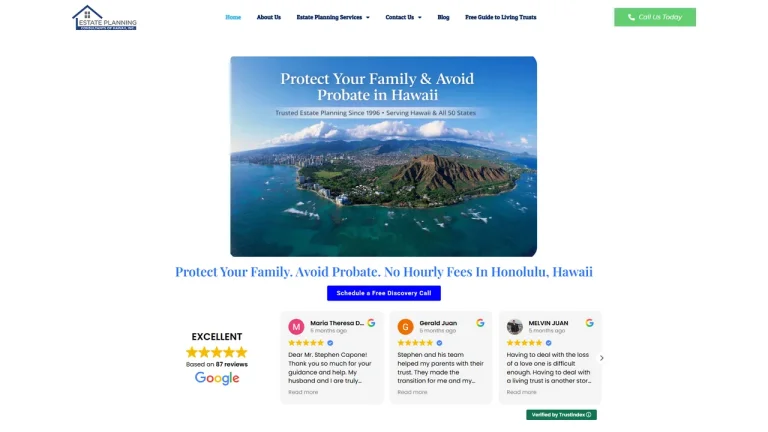
Estate Planning Consultants of Hawaii Inc. - Honolulu, HI

Law Offices of Curtis B. K. Yuen - Honolulu, HI

Yim & Yempuku Law - Honolulu, HI

Estate Planning of Honolulu - Honolulu, HI

Infinity Estate Law Group - Honolulu, HI

The Law Offices of Taylor, Leong and Chee - Honolulu, HI

Estate Planning Group - Honolulu, HI

Richard M. Sakoda - Honolulu, HI

Stephen S. Choi Attorney At Law - Honolulu, HI

Maximum Legal Services Corporation - Honolulu, HI

Okura & Associates - Honolulu, HI
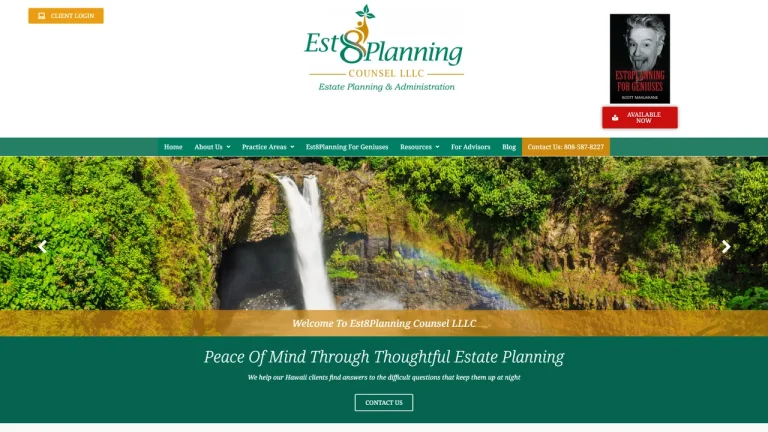
Est8Planning Counsel LLLC - Honolulu, HI

Ng and Niebling-A Limited Liability Law Company - Honolulu, HI
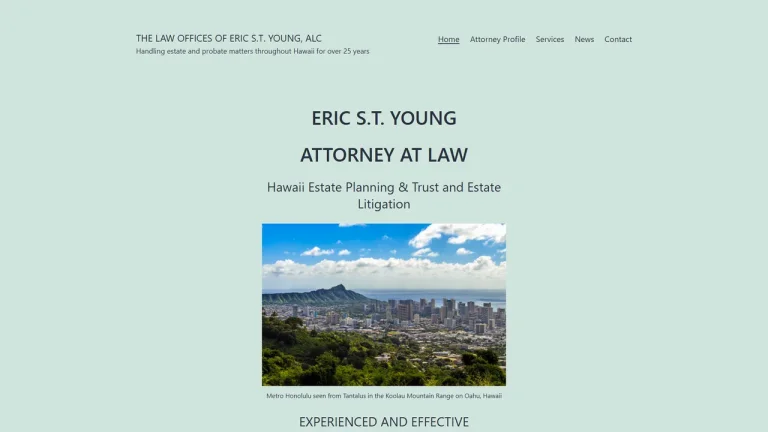
Eric Young Law Office - Honolulu, HI
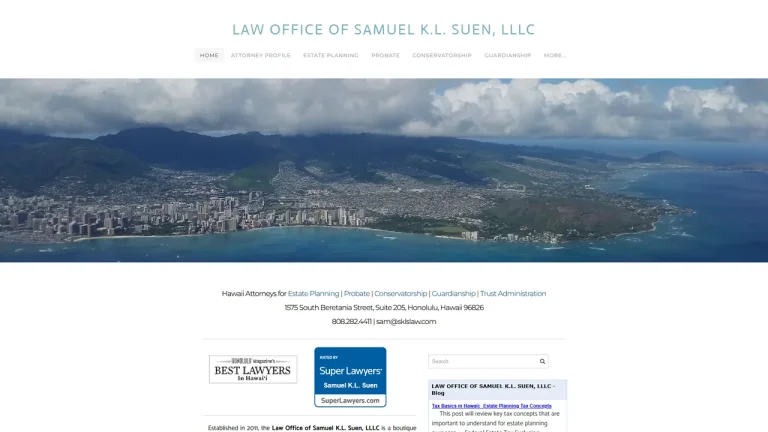
Law Office of Samuel K.L. Suen - Honolulu, HI

Wong Eric M K - Attorney at Law, a Law Corporation - Honolulu, HI
Estate Planning America, LLLC - Honolulu, HI

Law Office of Keoni Souza LLC Honolulu, HI

Hawaii Estate Law and Planning Honolulu, HI

Hunter Jon Thomas - Honolulu, HI

3FG Law - Honolulu, HI

Estate Planning Partners - Honolulu, HI

Law Offices of Neil T Nakamura & Associates - Honolulu, HI

Structuring and Administering Trusts Under Hawaii Jurisprudence
Trust planning in Hawaii serves as the primary mechanism for preserving wealth, safeguarding multi-generational island real estate, and bypassing the public probate process. The administration of revocable living trusts, irrevocable asset protection trusts, and special needs trusts is governed by the Hawaii Uniform Trust Code across all islands, including Oahu, Maui, Hawaii Island, and Kauai.
When trust administration disputes, fiduciary accounting conflicts, or beneficiary petitions arise, they are adjudicated in the Hawaii Circuit Courts, such as the First Circuit Court at Kaʻahumanu Hale in Honolulu, the Second Circuit Court in Wailuku, the Third Circuit Court in Hilo and Kona, or the Fifth Circuit Court in Lihue. Engaging an experienced trust lawyer ensures that trust instruments are structured with ironclad fiduciary controls and dispute mitigation terms.
Hawaii trust practice requires sophisticated knowledge of local land registration systems. Attorneys must ensure trust property is appropriately deeded and recorded through the Hawaii Bureau of Conveyances, whether under the Regular System or the Land Court (Torrens) system. Local counsel also guides trustees regarding state General Excise Tax (GET) compliance and Hawaii estate tax thresholds administered by the Hawaii Department of Taxation.
Legal Fee Structures for Hawaii Trust Planning & Administration
| Case Scenario | Fee Structure | Estimated Cost (USD) | Key Cost Determinants |
|---|---|---|---|
| Revocable Living Trust Package | Flat Fee | $2,000 - $5,500 | Number of properties, pour-over wills, deeds to trust, powers of attorney, healthcare directives. |
| Hawaii Land Trust Creation | Flat Fee | $1,500 - $3,500 | Bureau of Conveyances recording, Land Court approvals, beneficiary agreement structuring. |
| Irrevocable Asset Protection Trust | Flat Fee / Hourly | $5,000 - $15,000 | Medicaid planning complexity, tax structuring, independent trustee provisions, asset types. |
| Trust Dispute & Fiduciary Litigation | Hourly with Retainer | $7,500 - $35,000+ | Breach of fiduciary duty claims, accounting discovery, motions to remove trustee, Circuit Court trials. |
Critical Legal Deadlines & Statutes in Hawaii
Trust formation, trustee obligations, and trust litigation are subject to precise statutory timeframes codified under Hawaii law:
- Revocable Trust Contest Deadline: Under Haw. Rev. Stat. § 554D-604, a judicial proceeding to contest the validity of a revocable trust must be commenced within one year after the settlor's death, or within 120 days after the trustee sends a copy of the trust instrument and notice of trust administration.
- Trustee Breach of Duty Claims: Pursuant to Haw. Rev. Stat. § 554D-1005, a beneficiary must commence a proceeding against a trustee for breach of trust within one year after the date the beneficiary was sent a report that adequately disclosed the potential claim, or within five years after trust termination.
- Duty to Inform and Report: Under Haw. Rev. Stat. § 554D-813, trustees must keep qualified beneficiaries reasonably informed and provide annual reports regarding trust property, liabilities, receipts, and disbursements.
- Hawaii Land Trust Authority: The creation and recording of land trusts conferring real property legal and equitable title upon a trustee are strictly governed by Haw. Rev. Stat. § 558-1.
DIY Trust Software vs. Retaining Dedicated Hawaii Trust Counsel
Many individuals consider generic online templates or DIY software to establish a living trust, attempting to avoid legal fees. However, DIY trusts frequently fail in Hawaii because automated programs cannot properly fund island real estate into the trust. Unfunded trusts force surviving families into the exact Hawaii Circuit Court probate proceeding they intended to avoid, resulting in unnecessary administrative delays and costly court fees.
Furthermore, transferring Hawaii real property requires compliance with specific state conveyance taxes and correct recording with either the Regular System or Land Court at the Hawaii Bureau of Conveyances. The Small Claims Division of the District Court lacks statutory authority to order trustee accountings, reform ambiguous trust language, or adjudicate equitable title. Engaging a qualified Hawaii trust lawyer ensures comprehensive deed conveyance, custom successor provisions, and airtight tax minimization under state law.
Red Flags When Choosing a Hawaii Trust Attorney
- High-Pressure Trust Mills: Beware of non-attorney seminar presenters or high-volume firms marketing cookie-cutter living trusts without analyzing your specific family dynamics, tax liabilities, or real estate holdings.
- Failure to Complete Trust Funding: Refuse representation that only drafts trust paperwork but leaves the recording of real estate deeds with the Hawaii Bureau of Conveyances entirely up to the client.
- Bundled Financial Product Sales: Avoid legal practitioners who use trust planning as an excuse to cross-sell indexed annuities, insurance products, or third-party financial investments.
- Unverified State Bar Credentials: Always confirm that your attorney maintains active licensure and compliance with the Hawaii Supreme Court through the Hawaii State Bar Association (HSBA) member directory.
Frequently Asked Questions
What is the primary benefit of a revocable living trust in Hawaii?
The primary advantage of a revocable living trust in Hawaii is avoiding the public and often protracted probate court process. Assets properly titled in the name of the trust transfer immediately to named beneficiaries upon the settlor's death under private administration, without requiring Circuit Court approval.
What is a Hawaii Land Trust and why is it used?
A Hawaii Land Trust, established under Hawaii Revised Statutes Chapter 558, is a specialized legal arrangement where real estate title is held by a trustee while full management rights and privacy are retained by the beneficiary. It prevents individual owner names from appearing on public land records and simplifies multi-party real estate ownership.
How much does it cost to set up a living trust in Hawaii?
Comprehensive estate plans featuring a revocable living trust, pour-over wills, real estate deed conveyances, and healthcare directives typically range from $2,000 to $5,500 in flat fees across Hawaii law firms, depending on the number of real properties and complexity of distribution terms.
Does placing Hawaii real estate into a revocable trust trigger conveyance tax?
No, transfers of real property into a revocable trust where the grantor remains the primary beneficiary are generally exempt from Hawaii conveyance tax under state statutory exemptions, provided proper exemption codes are declared during Bureau of Conveyances recording.
Can a trust be contested in Hawaii after the grantor passes away?
Yes, interested parties can contest a trust in Hawaii Circuit Court on grounds such as lack of mental capacity, undue influence, fraud, or improper execution. Under Hawaii Revised Statutes Section 554D-604, contests must be filed within one year of death or 120 days after receiving formal statutory notice.