
Accident & Injury Lawyers in Idaho
Partnering with an experienced Idaho accident lawyer protects your rights against aggressive insurance carriers under state comparative fault laws. Skilled personal injury attorneys negotiate comprehensive settlements to cover medical bills, lost wages, and rehabilitation, resolving most claims without prolonged court battles. Explore our directory below to connect with verified Idaho attorneys ready to review your case.

Strong Law Accident & Injury Attorneys - Boise, ID

Clear River Legal, LLC Boise, ID

Marcus Law Offices - Boise, ID
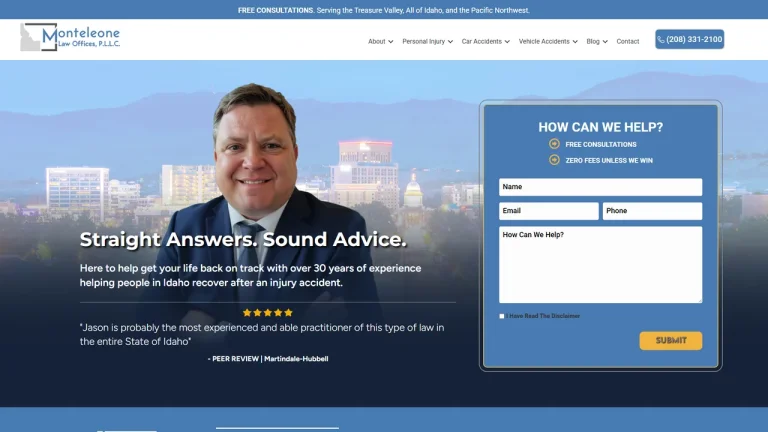
Monteleone Law Offices - Boise, ID

Morgan Law Firm - Meridian, ID
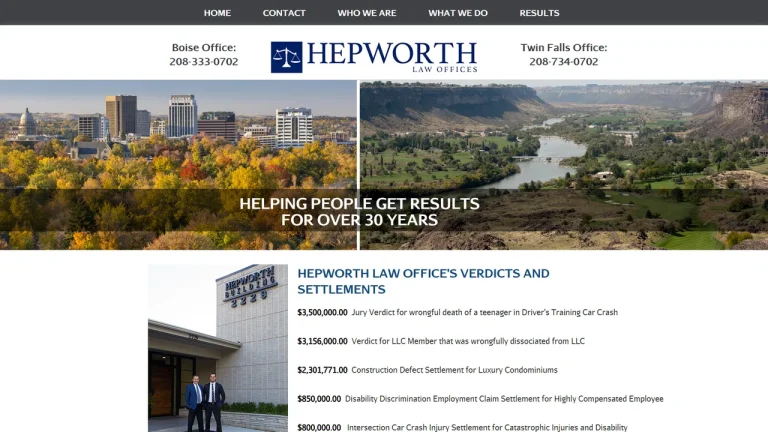
Hepworth Law Offices - Boise, ID
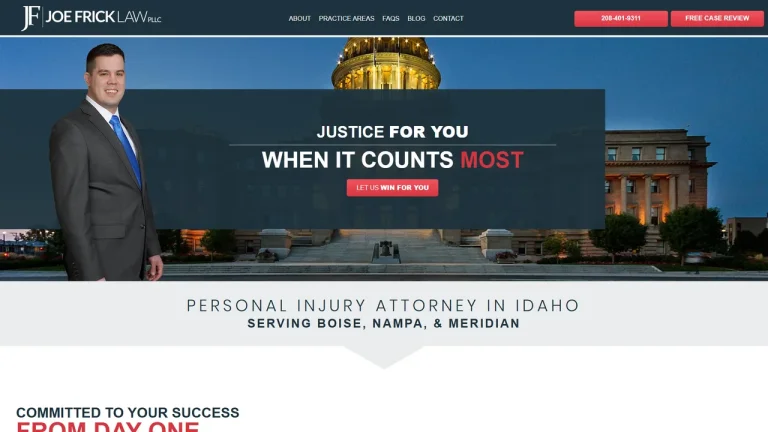
Joe Frick Law, PLLC - Meridian, ID

Storer and Steen - Boise, ID

William H Wellman - Attorney at Law - Nampa, ID

Davis and Sanchez - Boise, ID
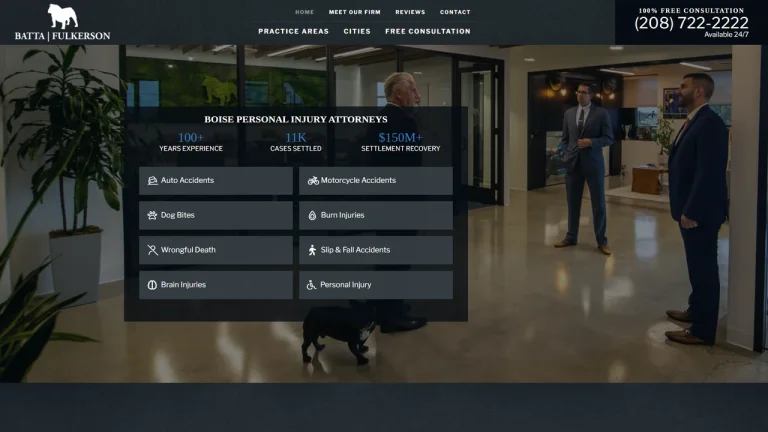
Batta Fulkerson Law Firm Boise, ID

Goicoechea Law Offices - Nampa, ID
Bradford S. Eidam, PLLC - Boise, ID
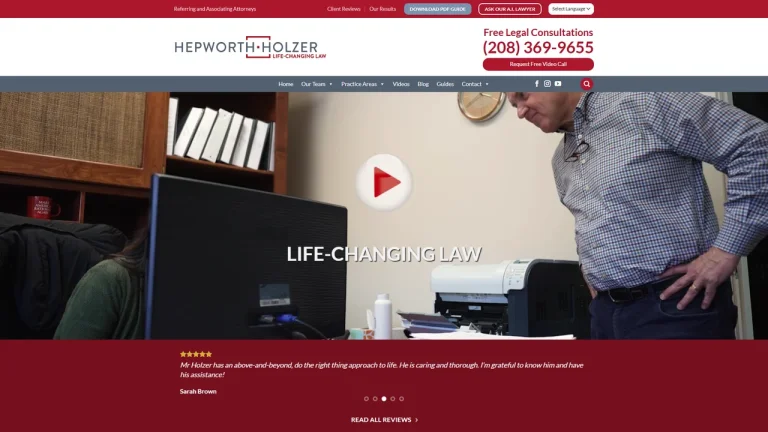
Hepworth Holzer, LLP - Boise, ID
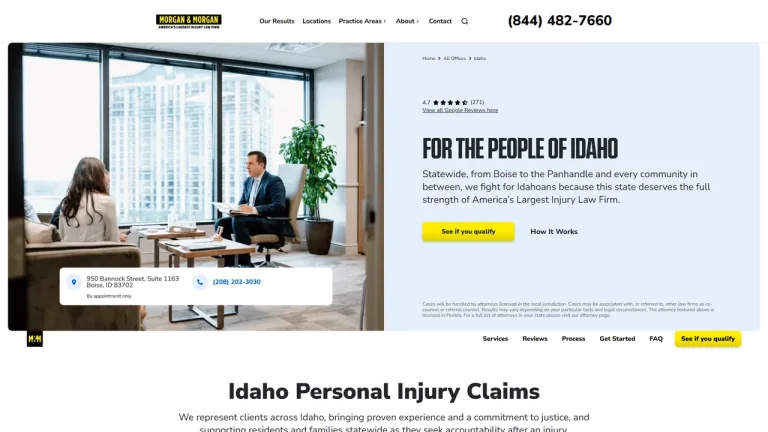
Morgan & Morgan - Boise, ID
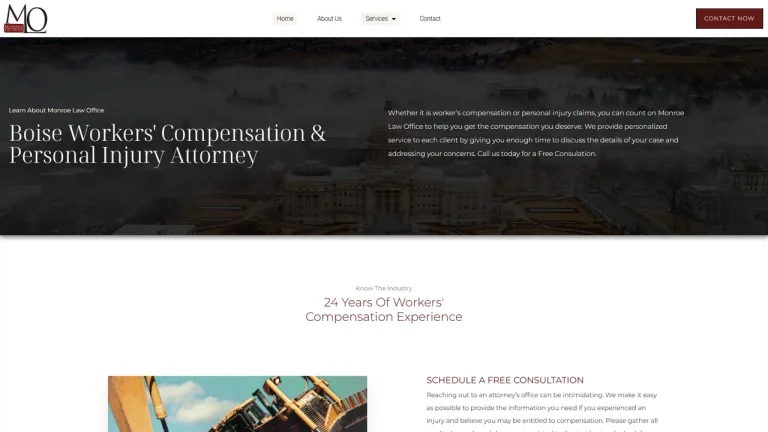
Monroe Law Office - Boise, ID
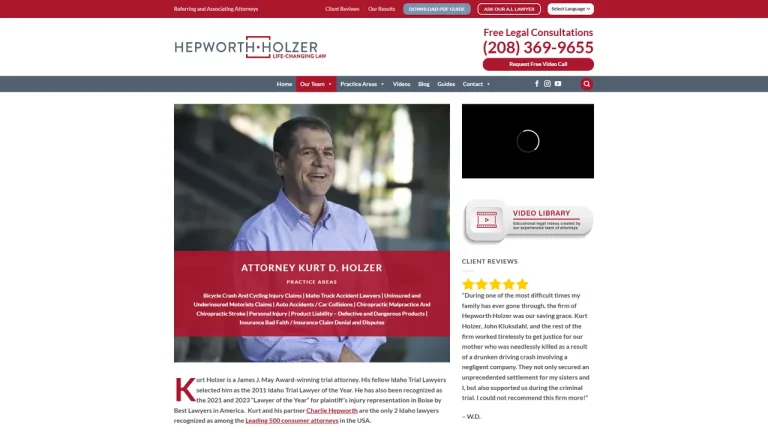
Kurt Holzer Personal Injury Attorney - Boise, ID

Mahoney Law PLLC Boise, ID

Johnson & Lundgreen - Meridian, ID

The Advocates - Boise, ID

Caldwell Law Group - Boise, ID
Kramer Law Group - Meridian, ID
Andrew Injury Law PC - Meridian, ID

Protecting Injured Idahoans Across State Judicial Districts
Sustaining an unexpected injury in a motor vehicle collision, commercial trucking crash, or catastrophic workplace accident creates severe emotional and financial turmoil. In Idaho, pursuing accountability requires navigating a judicial system rooted in comparative fault principles and formal civil court procedures designed to balance liability fairly.
Idaho's civil judicial infrastructure is structured into seven judicial districts encompassing forty-four counties. Major trial litigation is centered in prominent regional venues including Ada County (Boise) and Canyon County (Caldwell and Nampa) in the Third and Fourth Judicial Districts, Kootenai County (Coeur d'Alene) in the First Judicial District, and Bonneville County (Idaho Falls) in the Seventh Judicial District. For federal claims or diverse parties, the United States District Court for the District of Idaho convenes in Boise, Coeur d'Alene, and Pocatello.
Navigating insurance company defense tactics demands representation from an attorney admitted to the Idaho State Bar. Skilled local trial lawyers utilize the statewide iCourt electronic filing portal to manage litigation, depose eyewitnesses, collaborate with medical specialists, and seek full financial compensation before District Court judges and juries.
Idaho Personal Injury Case Scenarios and Fee Structures
| Case Scenario | Fee Structure | Estimated Cost (USD) | Key Cost Determinants |
|---|---|---|---|
| Passenger Vehicle Collision Settlement | Contingency Fee (33.33%) | $0 Upfront (No Recovery, No Fee) | Clarity of police crash reports, extent of soft tissue and orthopedic treatment, and bodily injury insurance policy limits. |
| Commercial Semi-Truck Collision Litigation (I-84 / I-15) | Contingency Fee (33.33% - 40%) | $0 Upfront ($20,000+ Advanced Costs) | Electronic logging device data extraction, federal motor carrier safety regulation violations, and multi-vehicle accident reconstruction. |
| Premises Liability & Slip-and-Fall Injury | Contingency Fee (33.33% - 40%) | $0 Out-of-Pocket to Client | Notice of hazardous condition on commercial property, surveillance video preservation, and defense comparative negligence claims. |
| Catastrophic Injury & Wrongful Death Trial | Contingency Fee (40%) + Advanced Costs | $0 Upfront ($35,000+ Advanced Costs) | Economic loss projections, life care planning assessments, non-economic damages cap calculations, and District Court trial length. |
Critical Legal Deadlines & Statutes in Idaho
Injured individuals must act promptly to protect their legal rights under Idaho's strict statutory timeframes. Pursuant to Idaho Code § 5-219(4), the statute of limitations for personal injury actions mandates that a lawsuit must be filed within two years from the date the accident occurred. This two-year filing period also governs wrongful death actions resulting from fatal accidents under the same statute. Failing to file before the two-year deadline permanently bars your claim from court.
If an injury involves a state, county, or municipal government entity, such as a city transit vehicle or county road maintenance truck, the Idaho Tort Claims Act imposes a stringent administrative requirement: a formal notice of claim must be presented within 180 days under Idaho Code § 6-905 and Idaho Code § 6-906. In terms of fault, Idaho applies a modified comparative fault standard under Idaho Code § 6-801, barring an injured plaintiff from recovering any damages if their comparative negligence is fifty percent or greater. Additionally, non-economic damages for pain and suffering are subject to statutory caps under Idaho Code § 6-1603.
Magistrate Small Claims vs. District Court Injury Representation
In Idaho, the Small Claims Department of the Magistrate Division maintains jurisdiction over civil claims for money damages where the controversy does not exceed $5,000 pursuant to Idaho Code § 1-2301. By statutory mandate, attorneys are not permitted to represent parties during small claims hearings, and the small claims court is expressly barred from awarding damages for pain and suffering or punitive damages.
While small claims court offers an affordable option for unrepresented individuals resolving minor property damage disputes, bodily injury claims require professional litigation in Idaho District Courts. Personal injury recovery involves documenting medical liens, projecting lost earning capacity, and quantifying physical impairment. Retaining experienced legal counsel ensures that claims are backed by medical expert testimony and negotiated effectively against institutional insurance carriers.
Red Flags When Selecting an Idaho Accident Attorney
- Out-of-state law firms that advertise heavily on regional media but lack a physical office in Idaho or attorneys licensed with the Idaho State Bar.
- Attorneys who demand non-refundable upfront cash retainers to investigate or manage a standard personal injury contingency claim.
- Practitioners who guarantee exact financial settlement amounts before obtaining complete medical records or assessing liability under comparative fault statutes.
- Law firms that assign your case entirely to non-attorney staff without direct, regular communication with your lead counsel.
Frequently Asked Questions
How does Idaho's modified comparative negligence law affect my injury recovery?
Under Idaho Code § 6-801, you can recover damages as long as your share of fault is less than fifty percent. Your total financial compensation is reduced proportionally by your percentage of fault; however, if you are found fifty percent or more at fault, you are legally barred from recovering any damages.
What is the statutory deadline for filing an accident lawsuit in Idaho?
Most personal injury lawsuits must be filed within two years from the accident date pursuant to Idaho Code § 5-219(4). However, if your claim involves a government entity, you must file a tort claim notice within 180 days under Idaho Code § 6-905.
Does Idaho place a statutory cap on personal injury compensation?
Yes. Under Idaho Code § 6-1603, Idaho caps non-economic damages, which include pain, suffering, and emotional distress, subject to annual index adjustments. Economic damages, such as past and future medical expenses and lost wages, have no statutory cap.
How do contingency fees work for personal injury cases in Idaho?
Idaho personal injury attorneys work on a contingency fee arrangement, meaning you pay zero upfront legal fees. The attorney advances all case investigation costs and collects an agreed-upon percentage of the recovery only if your case results in a settlement or trial verdict.
What should I do immediately after being injured in a collision in Idaho?
Seek immediate medical care, file a formal collision report with local law enforcement, take photographs of the scene and damage, refrain from providing recorded statements to insurance adjusters, and consult an attorney admitted to the Idaho State Bar.