
Business & Work Visa Lawyers in Idaho
Retaining an Idaho business and work visa lawyer ensures corporate petitions satisfy rigorous federal Department of Labor and USCIS immigration standards. Skilled immigration counsel helps regional employers secure specialized talent through structured filings, avoiding costly operational interruptions and administrative denials. Explore our directory below to connect with leading corporate immigration attorneys in Idaho.

Pérez Law PLLC - Nampa, ID
Franco Legal, PLLC - Meridian, ID
Wilner and O'Reilly Immigration Lawyers - Boise, ID
Law Offices of Nicole Derden - Meridian, ID

Ramirez-Smith Law - Nampa, ID

Anderson Law Offices - Nampa, ID
Foor Law PC - Meridian, ID

Salazar Law - Nampa, ID
Levesque Law PLLC - Meridian, ID
Penton Law Offices, PLLC - Boise, ID
Givens Pursley LLP - Boise, ID
Barrera Legal Group Idaho - Meridian, ID

Boise Immigration Lawyer | Mills Law - Boise, ID
Solare Legal PLLC - Boise, ID
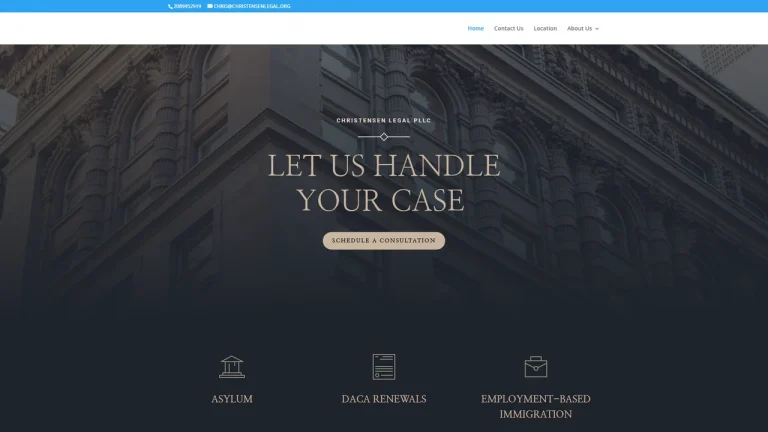
Christensen Legal PLLC - Boise, ID

Idaho Corporate Immigration & Employment Visa Framework
Securing employment-based nonimmigrant visas and lawful permanent residency for foreign talent in Idaho requires navigating intricate federal regulations tailored to regional economic demands. From rapidly growing technology firms in the Boise and Treasure Valley tech corridor to agricultural, dairy, and manufacturing enterprises in Twin Falls, Pocatello, and Idaho Falls, local businesses depend on timely visa approvals to maintain operations. Immigration attorneys admitted to the Idaho State Bar assist employers in meeting stringent compliance mandates while minimizing procedural delays.
Corporate immigration matters fall under federal jurisdiction, governed by United States Citizenship and Immigration Services (USCIS) and the United States Department of Labor (DOL). While nonimmigrant worker petitions (Form I-129) and immigrant petitions for alien workers (Form I-140) are adjudicated at regional USCIS service centers, local adjustments of status and corporate compliance inquiries are administered through the USCIS Boise Field Office. Furthermore, disputes involving federal administrative procedures or employer sanctions may be litigated before the U.S. District Court for the District of Idaho, with divisions in Boise, Pocatello, and Coeur d'Alene.
Professional legal representation is vital for navigating modern employment immigration programs, including H-1B specialty occupation petitions, L-1 intracompany transferees, TN professional status for Canadian and Mexican professionals, and permanent labor certification (PERM). A skilled Idaho business immigration attorney ensures that wage determinations, recruitment documentation, and corporate tax records align precisely with statutory requirements before submission.
Idaho Business & Work Visa Legal Fee Guidelines
| Case Scenario | Fee Structure | Estimated Cost (USD) | Key Cost Determinants |
|---|---|---|---|
| H-1B Specialty Occupation Petition | Flat Legal Fee | $3,000 - $6,500 | Degree equivalency evaluations, DOL prevailing wage determination, USCIS Request for Evidence (RFE) responses. |
| PERM Labor Certification Process | Flat Legal Fee | $4,500 - $8,500 | Prevailing wage processing times, mandatory newspaper and digital recruitment tracking, audit file defense. |
| EB-2 / EB-3 Immigrant Petition (Form I-140 & I-485) | Staged Flat Fee | $5,000 - $10,000 | Concurrent filings, derivative family applications, National Interest Waiver (NIW) evidentiary briefs. |
| TN Status / L-1 Intracompany Transferee | Flat Legal Fee | $3,500 - $7,000 | Cross-border port of entry packets, specialized knowledge documentation, qualifying corporate entity ownership proofs. |
Critical Legal Deadlines & Statutes in Federal Employment Immigration
Corporate sponsorship requires strict compliance with statutory timelines governed by federal immigration and labor codes. For specialty occupation professionals, nonimmigrant status is established under 8 U.S. Code § 1101(a)(15)(H) and detailed within 8 C.F.R. § 214.2. Employers must participate in the annual electronic H-1B registration lottery, typically opened by USCIS for a brief window each March. Selected registrants face a strict 90-day filing period to submit completed Form I-129 petitions accompanied by certified Labor Condition Applications (LCAs).
Permanent labor certification applications are governed by 8 U.S. Code § 1182(a)(5)(A) and Department of Labor regulations codified at 20 C.F.R. § 656.17. Employers must complete mandatory recruitment efforts at least 30 days, but no more than 180 days, before filing an electronic Form ETA-9089. Under 20 C.F.R. § 656.30, an approved PERM labor certification expires exactly 180 calendar days after the date of approval, during which the employer must file the Form I-140 petition with USCIS under 8 U.S. Code § 1153(b). Missing this deadline renders the labor certification invalid.
When USCIS issues a Request for Evidence (RFE) or a Notice of Intent to Deny (NOID), employers generally have between 30 and 87 days to file a complete substantive rebuttal. Failure to meet these unyielding deadlines leads to immediate petition denial, loss of filing fees, and potential loss of the foreign employee underlying legal status.
Direct Employer Filing vs. Professional Immigration Counsel
Human resources departments sometimes contemplate filing work visa applications directly through USCIS portals to minimize upfront expenditures. While standard government portals accommodate self-filing, employment-based immigration involves stringent administrative compliance. A single oversight-such as utilizing an incorrect occupational code, misstating prevailing wages, or failing to maintain a Public Access File under federal labor standards-can trigger severe government audits, civil fines, and petition rejections.
Retaining an experienced Idaho business immigration attorney safeguards the employer against corporate liability and ensures that complex petitions-such as L-1 intra-company transfers or EB-2 National Interest Waivers-are backed by robust technical evidence. Professional counsel prepares comprehensive employer support letters, structures corporate restructuring documents, and defends the business against costly federal compliance reviews.
Red Flags When Retaining an Idaho Business Immigration Attorney
- Promising Guaranteed H-1B Lottery Selection: The annual H-1B lottery is an automated random selection conducted by USCIS; any representative claiming guaranteed selection is engaging in unethical practices.
- Failure to Provide Transparent Fee Schedules: Professional corporate counsel provides clear written agreements distinguishing attorney legal fees from USCIS premium processing and filing costs.
- Neglecting Form I-9 Employer Compliance: A competent business immigration firm evaluates wider workforce compliance, including Form I-9 employment eligibility audits and remote employee verification.
- Unfamiliarity with Idaho Regional Industry Needs: Ensure counsel has demonstrated experience handling visa categories relevant to your sector, whether agricultural H-2A guest worker programs or tech sector H-1B specialty roles.
Frequently Asked Questions
What is the role of the USCIS Boise Field Office in work visa applications?
The USCIS Boise Field Office primarily conducts in-person interviews for employment-based green card applicants (Form I-485 adjustment of status) and corporate naturalization petitions, while initial nonimmigrant worker petitions (Form I-129) are adjudicated at regional USCIS service centers.
What is a Labor Condition Application (LCA) in an H-1B petition?
An LCA is an electronic filing submitted to the Department of Labor where the employer certifies that the foreign worker will receive the prevailing wage and that hiring them will not adversely affect existing working conditions.
How long is an approved PERM labor certification valid?
Under 20 C.F.R. § 656.30, an approved PERM certification expires exactly 180 days after its issuance date. Employers must file the immigrant visa petition (Form I-140) within this 180-day window.
Can Canadian professionals obtain work authorization in Idaho without an H-1B?
Yes, qualified Canadian citizens can seek TN professional status under the USMCA trade agreement, which allows designated professionals to work in Idaho without undergoing the annual H-1B lottery process.
Can an employer require the foreign worker to pay for the PERM process?
No. Under federal labor regulations, employers are legally required to pay all attorney fees and advertising costs associated with the PERM labor certification process; passing these expenses onto the employee is strictly prohibited.