
Accident & Injury Lawyers in Illinois
Retaining an experienced Illinois accident and injury lawyer protects your right to full financial compensation under strict state personal injury statutes. Dedicated legal advocates frequently resolve contested liability and insurance disputes through settlement negotiations, avoiding prolonged courtroom trials. Browse our statewide directory to connect with a verified personal injury attorney in Illinois today.

Albarran & Mennie, P.C. - Waukegan, IL

Kevin Boyne Injury Law - Belleville, IL
Bennett Law Offices - Aurora, IL

The Law Offices of Peter F. Ferracuti, P.C. - Bloomington, IL

The Law Offices of Joseph G. Howard - Chicago, IL

Sklare Law Group, LTD. - Chicago, IL
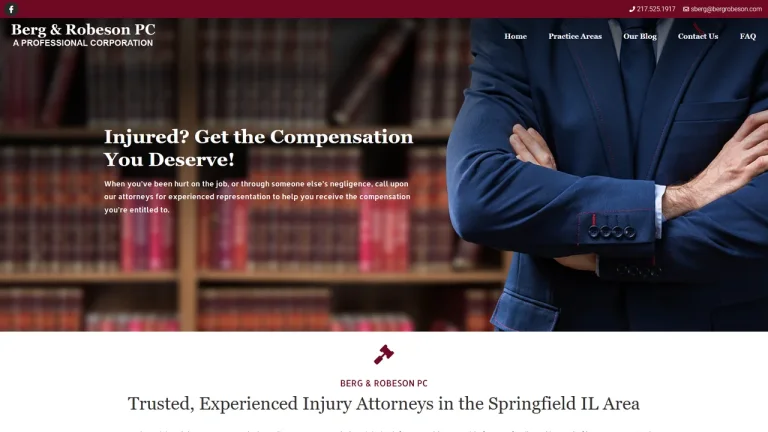
Berg and Robeson PC - Springfield, IL


Law Offices Of Michael J. Nykaza - Evanston, IL

Law Office of Steven C. Haney - Joliet, IL

Powell and Pisman Injury Lawyers Chicago - Chicago, IL
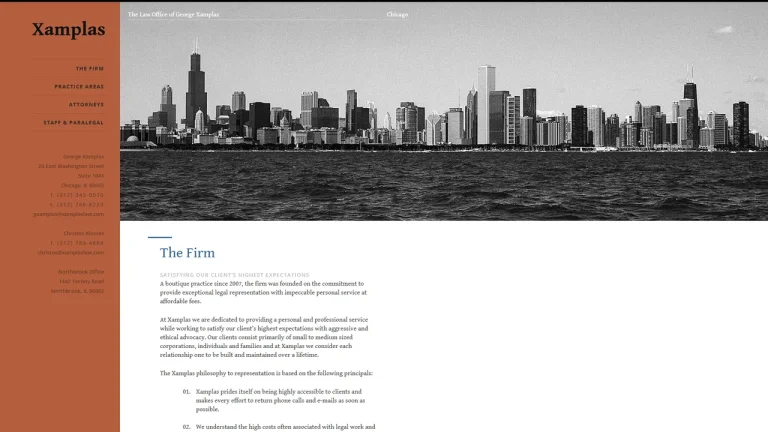
George C Xamplas Law Office - Chicago, IL
Pioletti Pioletti & Nichols - Bloomington, IL

The Kryder Law Group, LLC Accident and Injury Lawyers - Aurora, IL
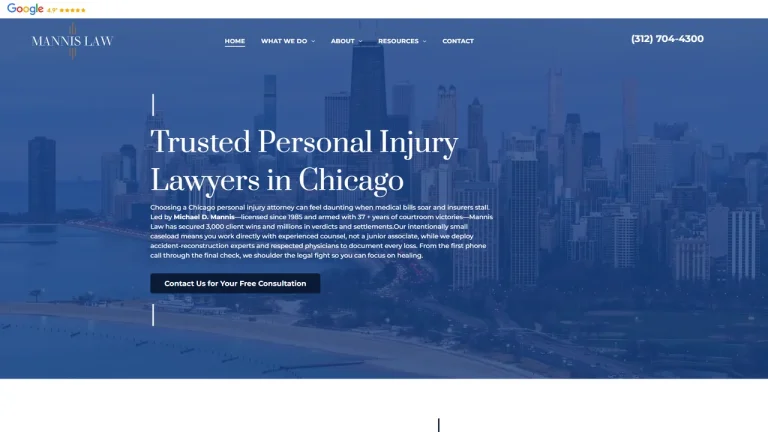
Michael D. Mannis, Ltd. - Chicago, IL

Law Firm of Tan D. Nguyen - Orland Park, IL
Saulter Law P.C. - Tinley Park, IL

Law Office of Joseph Q. Lou, LLC - Chicago, IL

Crosby Law Firm - Rockford, IL
Dempsey Scott - Champaign, IL
Jeep, Hauck and Associates - Waukegan, IL

Miranda L. Soucie - Champaign, IL
Michalski & Gubernat, P.C. - Des Plaines, IL

Navigating Illinois Personal Injury Jurisdictions & Circuit Courts
Securing financial recovery following a catastrophic accident in Illinois requires an in-depth understanding of the state's tort liability statutes, judicial districts, and trial court procedures. Civil personal injury claims are adjudicated within Illinois Circuit Courts, with high-value actions litigated in specialized divisions such as the Law Division of the Circuit Court of Cook County at the Richard J. Daley Center in Chicago. Major civil caseloads are also managed across collar-county venues, including the 18th Judicial Circuit in DuPage County, the 19th Judicial Circuit in Lake County, the 12th Judicial Circuit in Will County, and downstate jurisdictions in Sangamon, Peoria, and St. Clair counties.
Personal injury practitioners licensed by the Illinois Supreme Court and regulated by the Attorney Registration and Disciplinary Commission (ARDC) manage cases through the state's mandatory electronic filing system, eFileIL. Whether an accident occurs on major interstate corridors like I-90, I-55, and I-94, or involves industrial incidents in regional distribution hubs, local attorneys understand the procedural nuances, motion calls, and judicial expectations of local courtrooms.
Engaging a dedicated personal injury lawyer ensures that critical evidentiary material-including commercial black box data, traffic surveillance, and safety audit reports-is preserved immediately. Skilled counsel communicates directly with aggressive insurance carriers, defends against comparative fault accusations, and navigates complex statutory medical liens to maximize the net financial recovery delivered to injured clients.
Typical Illinois Injury Case Scenarios & Contingency Fees
| Case Scenario | Fee Structure | Estimated Cost (USD) | Key Cost Determinants |
|---|---|---|---|
| Motor Vehicle Accident & Soft-Tissue Injury | Contingency Fee (33.33%) | $0 Upfront ($5,000 - $35,000 Recovery) | Insurance policy limits, duration of therapy, objective medical documentation |
| Commercial Trucking & Severe Trauma | Contingency Fee (33.33% - 40%) | $0 Upfront ($150,000 - $2,000,000+ Recovery) | Electronic logging data, multi-party corporate liability, life care plan costs |
| Premises Liability & Slip-and-Fall Claims | Contingency Fee (33.33% - 40%) | $0 Upfront ($15,000 - $175,000 Recovery) | Notice of hazardous condition, video footage availability, degree of claimant fault |
| Medical Malpractice & Wrongful Death | Contingency Fee (33.33%) | $0 Upfront ($250,000 - $3,000,000+ Recovery) | Section 2-622 physician certificate of merit, multiple medical experts, trial duration |
Critical Legal Deadlines & Statutes in Illinois
Illinois establishes strict statutory timelines for seeking judicial relief following an injury. Under 735 ILCS 5/13-202, an action for damages for personal injury must be commenced within 2 years from the date the cause of action accrued. For fatal accidents, the Illinois Wrongful Death Act codified at 740 ILCS 180/2 also enforces a 2-year filing deadline from the date of death.
A critical statutory exception applies when the injury involves a local public entity, public transit authority, or municipal employee. Under the Local Governmental and Governmental Employees Tort Immunity Act (745 ILCS 10/8-101), the statute of limitations is reduced to just 1 year from the date of injury. Missing this compressed 1-year window permanently bars any claim against city, county, or municipal defendants.
Illinois operates under a modified comparative fault rule set forth in 735 ILCS 5/2-1116. Under this statute, an injured plaintiff is barred from recovering damages if their share of contributory fault exceeds 50 percent. Furthermore, medical liens asserted against personal injury recoveries are strictly governed by the Illinois Health Care Services Lien Act (770 ILCS 23/10), which limits total healthcare provider liens to no more than 40 percent of the total verdict or settlement.
Small Claims Limits vs. Professional Personal Injury Representation
Under Ill. Sup. Ct. R. 281, civil actions in Illinois where the amount claimed does not exceed $10,000 are classified as small claims. While unrepresented individuals frequently use this informal forum to pursue minor vehicle property damage repairs or small out-of-pocket medical bills, bodily injury claims are unsuited for small claims litigation.
Insurance defense counsel routinely invoke comparative fault defenses under 735 ILCS 5/2-1116 or dispute the medical necessity of treatment to reduce settlement amounts. Personal injury attorneys operate on a contingency fee basis-meaning no legal fees are paid unless compensation is secured-and possess the resources required to depose negligent parties, hire accident reconstruction experts, and challenge unlawful hospital liens under 770 ILCS 23/10.
Red Flags When Hiring an Illinois Injury Lawyer
- Unsolicited contact from individuals or third-party runners at hospitals or tow yards, which violates the professional conduct rules enforced by the Illinois ARDC.
- Lawyers demanding upfront retainers or out-of-pocket administrative payments for standard negligence or auto accident claims.
- Failure of counsel to investigate potential municipal liability immediately, risking the irreversible expiration of the 1-year limitation under 745 ILCS 10/8-101.
- High-volume settlement mills that avoid the courtroom and pressure clients to accept initial lowball offers from insurance adjusters.
Frequently Asked Questions
What is the statute of limitations for personal injury in Illinois?
Under 735 ILCS 5/13-202, the standard statute of limitations for personal injury claims is 2 years from the date of the injury. However, if the injury involves a municipal entity or public employee, 745 ILCS 10/8-101 reduces the deadline to 1 year.
How does comparative negligence work in Illinois accident cases?
Illinois follows a modified comparative fault rule codified at 735 ILCS 5/2-1116. If you are found to be 50 percent or less at fault, your compensation is reduced by your fault percentage. If you are found to be more than 50 percent at fault, you are barred from recovering any damages.
What is a physician certificate of merit in Illinois medical malpractice cases?
Under 735 ILCS 5/2-622, a plaintiff filing a medical malpractice lawsuit must attach an affidavit and a written report from a qualified health professional certifying that there is a reasonable and meritorious cause for filing the action.
Can medical providers take my entire injury settlement in Illinois?
No. The Illinois Health Care Services Lien Act (770 ILCS 23/10) protects plaintiffs by capping the total amount all healthcare providers and professionals can recover at no more than 40 percent of the final settlement or judgment.
How are personal injury lawyer fees structured in Illinois?
Illinois personal injury attorneys work on a contingency fee basis, typically receiving 33.33 percent of the settlement recovered prior to trial, with fees and litigation costs deducted only after a favorable settlement or jury verdict is achieved.