
Business Litigation Lawyers in Chicago
Retaining an accomplished Chicago business litigation attorney protects your company's financial interests and commercial reputation during complex corporate disputes. Experienced trial counsel resolves high-stakes contract conflicts, shareholder disagreements, and trade secret claims through aggressive advocacy and strategic mediation. Explore our verified directory below to schedule a consultation with leading business litigators in Chicago.

Kulis Law Police Brutality Lawyers - Chicago, IL
The Hansford Firm - Chicago, IL

Jenner & Block LLP - Chicago, IL

Sheppard Mullin - Chicago, IL

Downey & Lenkov LLC - Chicago, IL
Burhanuddin Law LLC - Chicago, IL
Greenberg Traurig, LLP - Chicago, IL

Kasan Law - Chicago, IL

Washington Law Offices - Chicago, IL

Law Office of Alexis Hart McDowell - Chicago, IL
The Real Property Law Group, P.C. - Chicago, IL
Kenneth A. Henry, Attorney at Law - Chicago, IL

Bradley Daniel Birgé, P.C. - Attorney at Law - Chicago, IL
Knight, Morris & Reddick Law Group - Chicago, IL
Law Offices of Ivan Puljic, Ltd. - Chicago, IL

McAndrews - Chicago, IL

Ocean Law Group - Chicago, IL

Law Office of Edgar A Vega - Chicago, IL

Craig B. Hammond, Ltd. - Chicago, IL

The Marques Eason Law Group - Chicago, IL
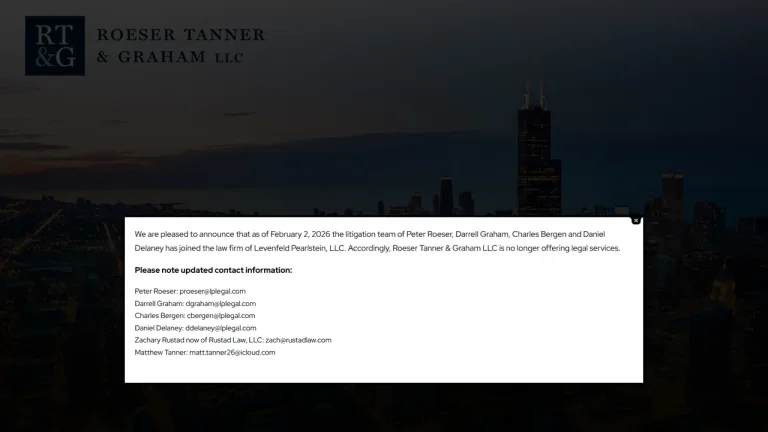
Roeser Tanner & Graham LLC - Chicago, IL
Lysinski & Associates PC - Chicago, IL

The Coleman Law Office LLC - Chicago, IL

Commercial Litigation in Cook County & Federal Courts
Commercial disputes in Chicago are litigated primarily within the Circuit Court of Cook County, specifically before the Commercial Calendar of the Law Division or within the Chancery Division at the Richard J. Daley Center in the heart of Downtown Chicago. These specialized judicial calendars manage complex breach of contract claims, corporate dissolutions, emergency injunctions, and partnership split-ups across Cook County.
For matters involving diversity of citizenship or federal statutory claims, litigation frequently proceeds across Dearborn Street at the Everett McKinley Dirksen United States Courthouse, home to the U.S. District Court for the Northern District of Illinois, Eastern Division. These legal venues serve businesses operating across the Loop, the Fulton Market Innovation District, River North, and the broader Chicago metropolitan economy.
Engaging a seasoned Chicago business litigator ensures strict adherence to Cook County local rules and statewide electronic court filing procedures through Odyssey eFileIL. Knowledgeable legal counsel deploys targeted discovery strategies, dispositive motion practice, and alternative dispute resolution mechanisms to minimize commercial disruptions and secure decisive outcomes.
Business Litigation Fee Structures & Legal Costs in Chicago
| Case Scenario | Fee Structure | Estimated Cost (USD) | Key Cost Determinants |
|---|---|---|---|
| Breach of Contract & Commercial Debt Collection | Hourly Rate or Contingency | $375 - $650 / hr (or 25% - 33.3% contingency) | Contract language clarity, disputed liability, counterclaims, debtor solvency |
| Shareholder & Partnership Disputes (Chancery Division) | Retainer & Hourly Rate | $450 - $850 / hr ($10,000 - $25,000 initial retainer) | Forensic accounting audits, emergency TRO motions, corporate valuation complexities |
| Non-Compete & Trade Secret Misappropriation | Retainer & Hourly Rate | $450 - $900 / hr ($7,500 - $20,000 initial retainer) | Preliminary injunction urgency, electronic discovery scope, restrictive covenant enforceability |
| Complex Multi-Party Commercial Litigation | Hourly Rate (Litigation Retainer) | $550 - $1,100 / hr ($25,000+ initial retainer) | Deposition volume, expert economic witnesses, federal court removal proceedings |
Critical Legal Deadlines & Statutes in Illinois
Commercial lawsuits in Chicago are controlled by strict statutory limitation periods. Under 735 ILCS 5/13-206, claims arising from the breach of a written contract are subject to a ten-year statute of limitations. Conversely, actions alleging breach of an unwritten or oral agreement must be filed within five years pursuant to 735 ILCS 5/13-205.
Transactions involving the commercial sale of goods under the Uniform Commercial Code carry a four-year limitation period under 810 ILCS 5/2-725. Allegations of business fraud and common-law breach of fiduciary duty must be brought within five years under 735 ILCS 5/13-205, while statutory trade secret misappropriation actions must be filed within five years of discovery under 765 ILCS 1065/7. Emergency Temporary Restraining Orders (TROs) to halt imminent commercial harm are governed by rigorous notice and evidentiary rules under 735 ILCS 5/11-101.
Small Claims Limits vs. Commercial Litigation in Chicago
Illinois sets a small claims recovery ceiling of $10,000 under Ill. Sup. Ct. R. 281. While a sole proprietorship can theoretically file a minor unpaid invoice claim in Cook County Small Claims Court without legal representation, corporate entities face absolute statutory constraints. Under established Illinois law, corporations and limited liability companies cannot appear pro se and must retain licensed legal counsel to litigate claims in court.
Furthermore, commercial conflicts in Chicago routinely involve six- and seven-figure damages, intellectual property stakes, or shareholder oppression claims that belong exclusively in the Law or Chancery Divisions at the Daley Center. In these formal forums, unrepresented litigants risk immediate procedural default or dismissal, making seasoned business litigation counsel vital to safeguarding corporate assets.
Red Flags When Hiring a Chicago Business Litigation Attorney
- Inexperience in Daley Center Commercial Divisions: Beware of general practice lawyers who lack regular trial and motion experience before judges on the Commercial Calendar of the Law Division or Chancery Division.
- Absence of Early Resolution Strategies: Counsel who aggressively push for prolonged e-discovery and motion practice without assessing early mediation or commercial settlement opportunities.
- Non-Transparent Billing Retainers: Law firms that fail to provide itemized monthly statements detailing task breakdowns, attorney hourly rates, and associated filing expenses.
- Overpromising Immediate Injunctions: Promising guaranteed temporary restraining orders without properly analyzing the strict irreparable harm standard required under Illinois chancery rules.
Frequently Asked Questions
What is the difference between the Law Division and Chancery Division in Cook County?
The Law Division resolves business disputes seeking monetary damages exceeding $30,000, while the Chancery Division handles equitable actions such as corporate dissolutions, shareholder disputes, and injunctions.
Can an LLC or corporation represent itself in an Illinois business lawsuit?
No, under Illinois law, corporations, limited partnerships, and limited liability companies cannot represent themselves pro se in court and must be represented by a licensed attorney.
What is the statute of limitations for a breach of contract lawsuit in Chicago?
In Illinois, actions on written contracts must be filed within ten years, while claims on oral contracts carry a five-year statute of limitations, and UCC sales of goods carry a four-year window.
How do Chicago courts handle emergency commercial injunctions?
Emergency motions for temporary restraining orders are heard promptly in the Chancery Division, where the plaintiff must prove irreparable harm, lack of an adequate remedy at law, and a likelihood of success on the merits.
Can commercial contract disputes be resolved through mediation in Chicago?
Yes, Cook County courts actively encourage alternative dispute resolution, and commercial judges frequently refer contested business litigation to court-sponsored or private commercial mediation.