
Business & Work Visa Lawyers in Chicago
Retaining an experienced Chicago business and work visa lawyer ensures your employment authorization and corporate compliance remain secure under federal immigration law. Skilled attorneys frequently resolve complex petition challenges through strategic documentation, administrative appeals, and direct agency communication to avoid business disruptions. Browse our directory below to consult verified local immigration counsel.
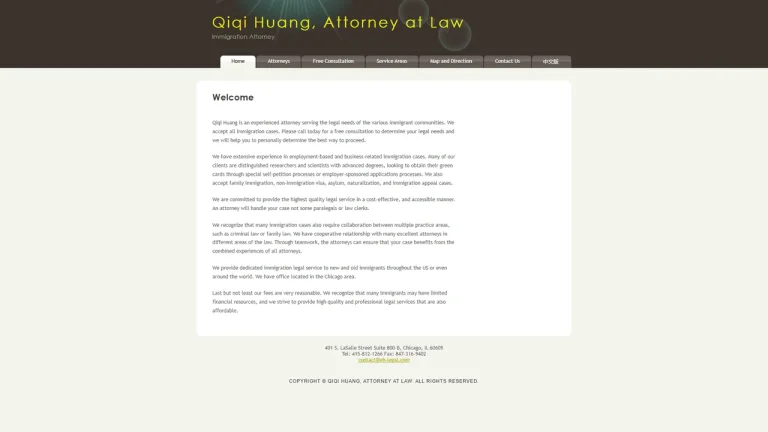
Qiqi Huang, Attorney at Law - Chicago, IL

Ahlgren Law - Chicago, IL
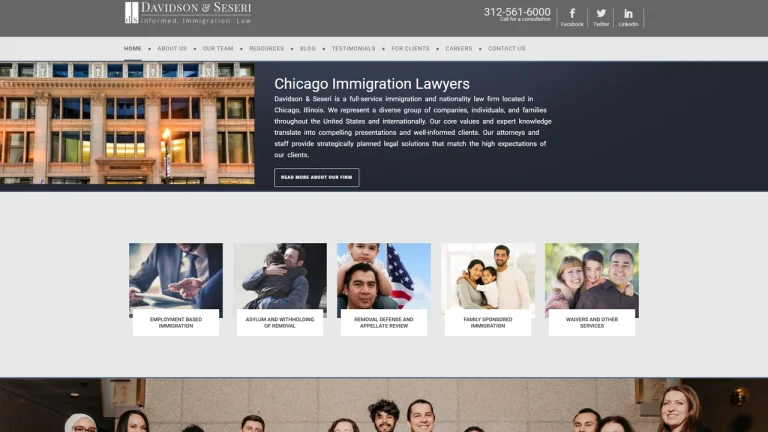
Davidson & Seseri, LLC - Chicago, IL

Zneimer & Zneimer, P.C. - Chicago, IL
The Law Offices of The Immigration Professor - Chicago, IL
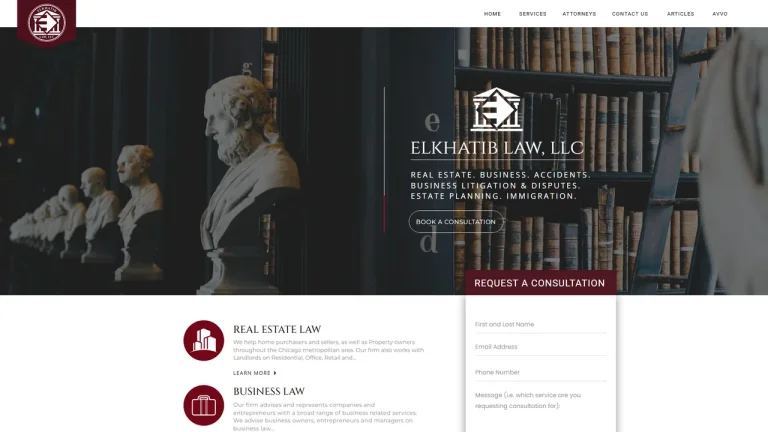
Elkhatib Law - Chicago, IL
Okorie-Eric Law Group LLC - Chicago, IL

Marian S. K. Ming & Associates - Chicago, IL
Stephen D. Berman - Chicago, IL

Law Office of Ebere N. Ekechukwu & Associates PC - Chicago, IL

Global Immigration Associates, PC - Chicago, IL
SimVisa Immigration Law Firm - Chicago, IL

Suburban Legal Group PC - Chicago, IL
Fajardo Law Group - Chicago, IL
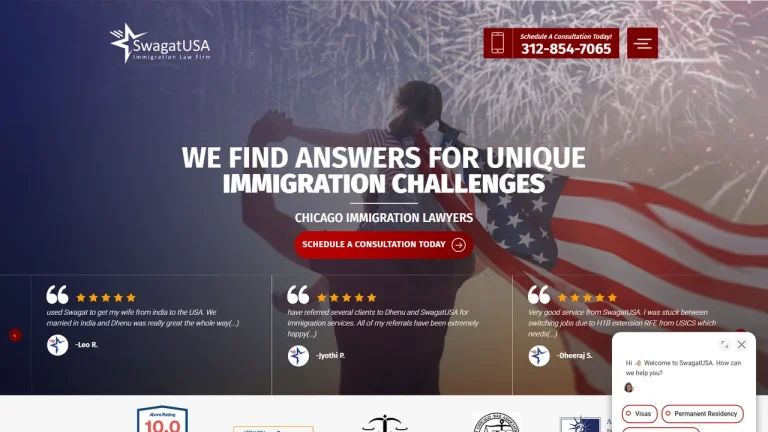
SwagatUSA, LLC - Chicago, IL
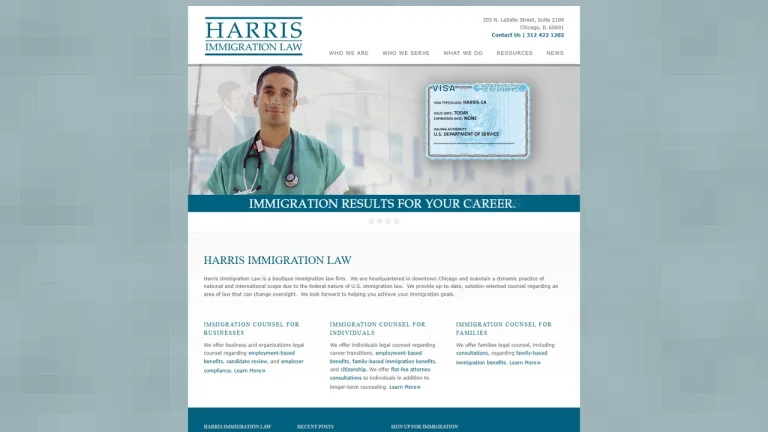
Harris Immigration Law - Chicago, IL
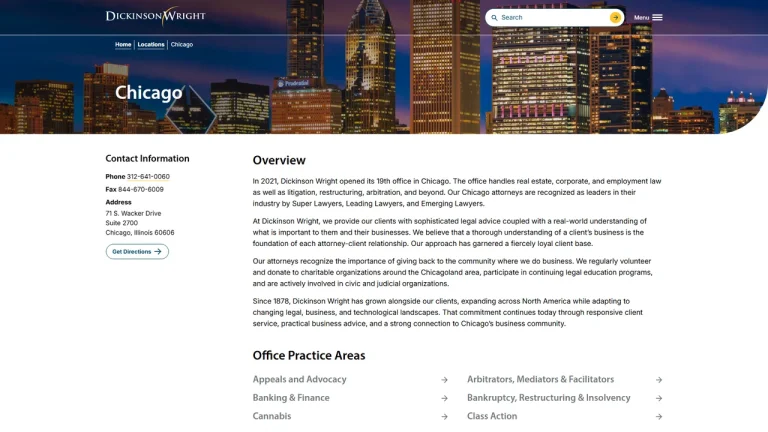
Dickinson Wright - Chicago, IL
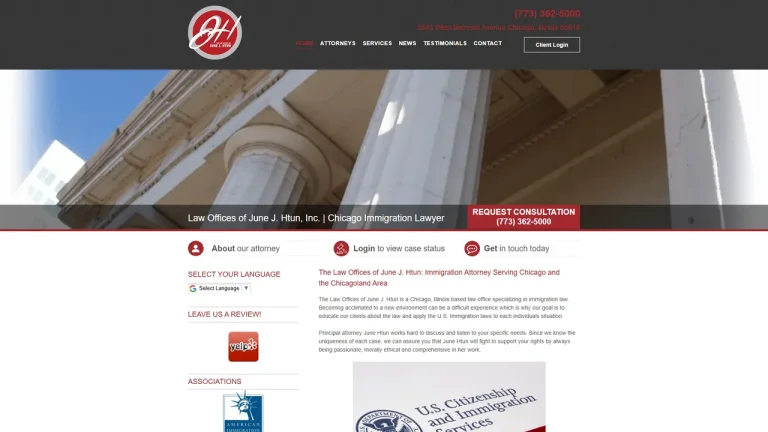
Law Offices of June J. Htun - Chicago, IL
HSD - Help Secure Defend - Immigration Lawyer, LLC - Chicago, IL

Attorney Martin Perez, LLC - Chicago, IL

Khalil J. Khalil - Chicago, IL
Hacking Immigration Law, LLC - Chicago, IL
Feduniak Law Firm - Chicago, IL

Navigating Employment Immigration in the Chicago Metro Area
Corporate immigration across Chicago requires strict adherence to federal immigration statutes and precise coordination with regional labor authorities. From technology hubs in Fulton Market and the Loop to major industrial and manufacturing corridors throughout Cook County, corporate entities rely on foreign professional talent to maintain continuous operations.
Employment-based nonimmigrant and immigrant visa petitions originate before federal administrative agencies, including the United States Citizenship and Immigration Services (USCIS) Chicago Field Office located at 101 West Ida B. Wells Drive, and the Department of Labor. When complex petition denials or unlawful agency delays occur, legal challenges proceed to the United States District Court for the Northern District of Illinois, located at the Everett McKinley Dirksen United States Courthouse on South Dearborn Street.
Experienced Chicago business immigration lawyers assist multinational corporations, healthcare networks, financial institutions, and emerging startups with securing H-1B, L-1, O-1, TN, and PERM-based immigrant visas. Professional representation ensures full compliance with Department of Labor wage mandates, prevents status lapses, and manages company-wide Form I-9 audit readiness.
Typical Costs & Fee Structures for Business & Work Visa Representation
| Case Scenario | Fee Structure | Estimated Cost (USD) | Key Cost Determinants |
|---|---|---|---|
| H-1B Specialty Occupation Petition | Flat Fee | $2,500 - $5,500 | Degree specialization alignment, prevailing wage determinations, and response to USCIS Requests for Evidence (RFEs). |
| L-1 Intracompany Transferee (L-1A/L-1B) | Flat Fee | $4,500 - $8,500 | Complexity of corporate ownership, executive hierarchy documentation, or specialized technological knowledge proof. |
| PERM Labor Certification & EB-2/EB-3 | Staged Flat Fee | $6,000 - $12,000 | Mandatory recruitment advertising scope, Department of Labor audit responses, and immigrant visa filing. |
| EB-1 or EB-2 National Interest Waiver (NIW) | Flat Fee or Retainer | $6,500 - $15,000 | Number of expert advisory letters, citation metrics, and evidence of substantial national importance. |
Critical Legal Deadlines & Statutes in Business Immigration
Employment visa petitions are subject to rigid statutory filing windows and non-negotiable agency response deadlines:
For cap-subject H-1B specialty occupation visas governed by 8 U.S. Code § 1184 and 8 CFR § 214.2, employers must participate in the electronic registration lottery during a narrow two-to-three-week window in March. Selected petitions must be formally submitted within a designated 90-day filing period.
When USCIS issues a Request for Evidence (RFE) or Notice of Intent to Deny (NOID), petitioners must file an exhaustive response within the timeframe specified on Form I-797, which strictly ranges between 30 and 90 calendar days under 8 CFR § 103.2. Federal regulations prohibit filing extensions for RFE submissions.
For permanent residency under the PERM process, prevailing wage determinations issued by the Department of Labor under 20 CFR § 656.40 remain valid for 90 days to one year. Mandatory recruitment advertising must be completed at least 30 days, but no more than 180 days, prior to filing ETA Form 9089 pursuant to 20 CFR § 656.17.
Small Claims Limits vs. Professional Representation in Chicago
In Illinois, small claims actions are restricted to a monetary ceiling of $10,000 pursuant to Ill. Sup. Ct. R. 281. The First Municipal District of the Circuit Court of Cook County at the Richard J. Daley Center resolves local contract and financial disputes but has zero legal jurisdiction over federal immigration matters.
Federal employment immigration petitions are governed exclusively by federal statutes codified in Title 8 of the United States Code. Attempting to file work visa petitions without experienced legal counsel exposes companies to severe legal risks, including mandatory visa petition revocations, employee unlawful presence accrual, and substantial corporate fines under federal employer sanction provisions.
Retaining qualified Chicago immigration counsel ensures that prevailing wage filings with the Department of Labor comply with federal benchmarks, corporate ownership structures meet regulatory standards, and complex motions to reopen or Administrative Appeals Office (AAO) appeals under 8 CFR § 103.3 are properly litigated.
Red Flags When Hiring a Chicago Business Visa Attorney
- Promising 100% Visa Approval Rates: Federal visa adjudications involve agency discretion; avoid attorneys who guarantee positive outcomes or promise expedited processing without paying official premium processing fees.
- Requiring Foreign Workers to Pay PERM Fees: Federal law under 20 CFR § 656.12 strictly prohibits foreign employees from paying attorney fees or advertising costs related to the PERM labor certification application.
- Unaccredited Immigration Consultants: Avoid non-attorney visa service centers operating in Chicago commercial corridors that lack licensing from the Illinois Attorney Registration and Disciplinary Commission (ARDC).
- Vague Retainer Agreements: Reject fee contracts that do not clearly distinguish attorney legal fees from mandatory USCIS filing fees and outside translation or credential evaluation costs.
Frequently Asked Questions
Can a foreign employee work in Chicago while a visa extension is pending?
Under 8 CFR § 274a.12, employees with a timely filed H-1B, L-1, or TN extension petition are granted an automatic 240-day work authorization extension while their petition remains pending with USCIS.
What is the difference between an L-1A and an L-1B intracompany visa?
Under 8 U.S. Code § 1101, L-1A visas are reserved for qualifying multinational managers and executives for up to seven years, while L-1B visas apply to specialized knowledge personnel for a maximum stay of five years.
Who must pay the legal fees for an H-1B or PERM filing in Chicago?
Under federal regulations, the petitioning employer is legally required to pay all costs associated with the PERM process pursuant to 20 CFR § 656.12, as well as the H-1B filing fees and associated attorney fees.
How does an EB-2 National Interest Waiver (NIW) benefit foreign applicants?
An EB-2 NIW allows qualifying foreign professionals with exceptional ability or advanced degrees to self-petition for a green card under 8 U.S. Code § 1153 without requiring an employer sponsor or a PERM labor certification.
What happens if USCIS denies an employment visa petition?
If a petition is denied, the employer can file Form I-290B to appeal to the Administrative Appeals Office (AAO) within 30 days under 8 CFR § 103.3 or challenge the decision in the Northern District of Illinois under the Administrative Procedure Act.