
Harassment Lawyers in Chicago
Confronting workplace harassment in Chicago requires seasoned legal counsel to safeguard your career, enforce statutory rights, and hold wrongdoers accountable. Experienced local employment attorneys regularly resolve hostile environment and retaliation disputes through confidential settlement negotiations and mediation before formal litigation. Explore our verified Chicago directory below to schedule a confidential case evaluation with an advocate.
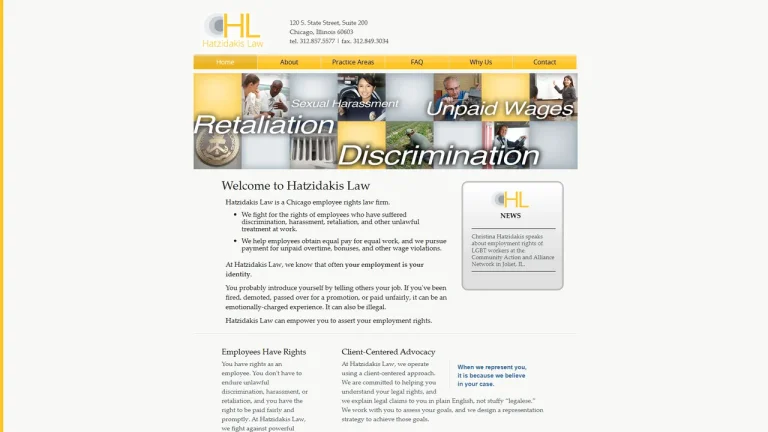
Hatzidakis Law - Chicago, IL
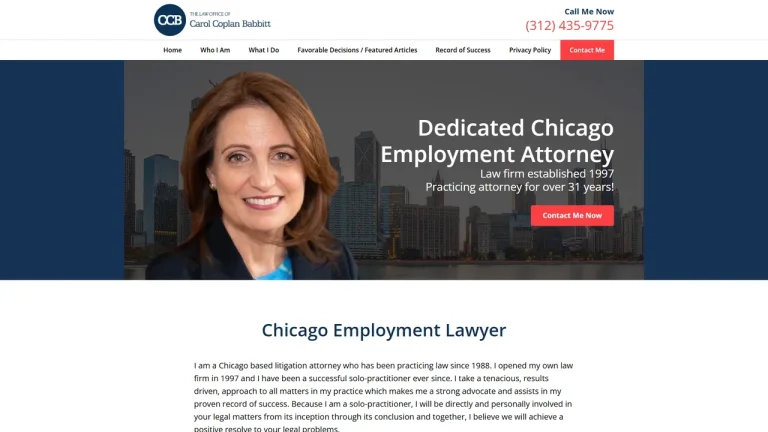
Carol Coplan Babbitt - Chicago, IL
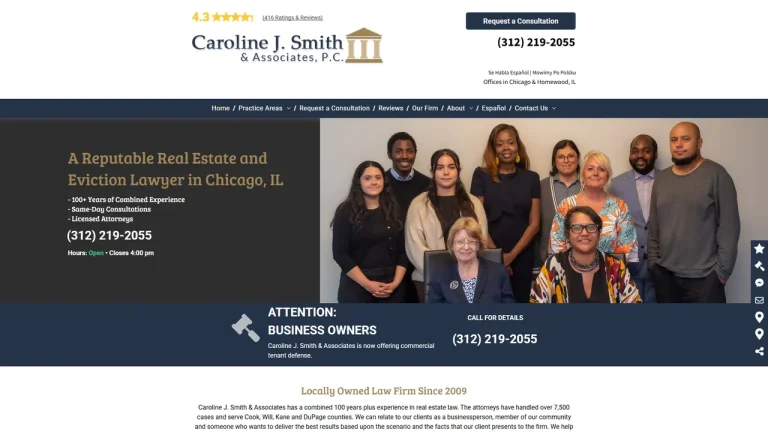
Caroline J. Smith & Associates - Chicago, IL
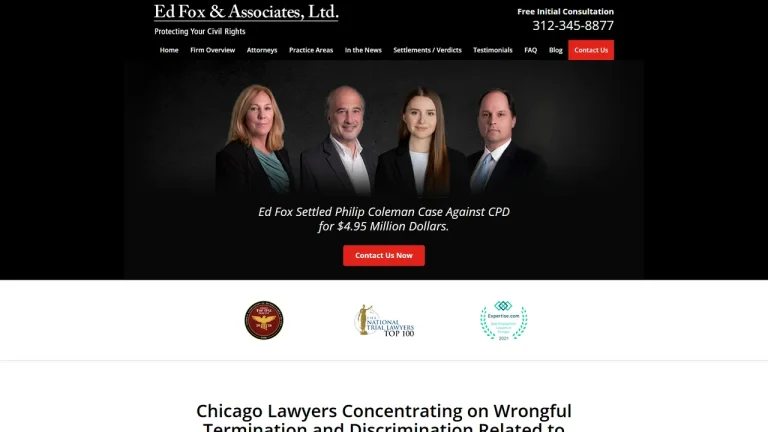
Ed Fox & Associates, Ltd. - Chicago, IL

Leonard Trial Lawyers - Chicago, IL

Workplace Law Partners - Chicago, IL
Asher Gittler & D'Alba, Ltd - Chicago, IL

Akerman LLP - Chicago, IL

The Law Offices of Eugene K. Hollander - Chicago, IL

Dvorak Law Offices, LLC - Chicago, IL
Stowell & Friedman, Ltd. - Chicago, IL

HKM Employment Attorneys LLP - Chicago, IL

Fisher & Phillips LLP - Chicago, IL

Hawks Quindel- Chicago - Chicago, IL
Attorney Patrick Cowlin - Chicago, IL

Thamman Law Office - Chicago, IL

Karmel & Torres, LLC - Chicago, IL

Keogh Law Ltd - Chicago, IL
Utreras Law Offices - Chicago, IL
Wanta Thome - Chicago, IL
Dickinson Wright - Chicago, IL

Law Office of Julie O. Herrera - Chicago, IL

Henderson Banks Law - Chicago, IL
Workplace Harassment Litigation and Employee Advocacy in Chicago
Employees navigating hostile work environments, sexual harassment, or unlawful retaliation in Chicago encounter sophisticated administrative and judicial enforcement systems. From corporate towers across The Loop and Fulton Market to commercial venues throughout River North, Lincoln Park, and Cook County suburbs, statutory protections safeguard workers from discriminatory misconduct.
Workplace harassment claims in Chicago typically initiate before specialized regulatory agencies, including the Illinois Department of Human Rights, the Chicago Commission on Human Relations, and the federal Equal Employment Opportunity Commission Chicago District Office on Dearborn Street. Counsel conducts strategic investigations and dual-filings to hold non-compliant employers accountable.
When pre-suit settlement negotiations fail, local employment attorneys initiate formal litigation in the Circuit Court of Cook County at the Richard J. Daley Center or the U.S. District Court for the Northern District of Illinois. Retaining an attorney rooted in Chicago employment law ensures critical evidence is preserved, statutory filings are perfected, and financial recoveries are maximized.
Chicago Harassment Legal Fees and Representation Scenarios
| Case Scenario | Fee Structure | Estimated Cost (USD) | Key Cost Determinants |
|---|---|---|---|
| Pre-Suit Harassment Severance Negotiation | Contingency / Retainer | 30% - 35% of Recovery or $2,500 - $6,000 | Direct evidence strength, employer liability exposure, and executive severance posture. |
| Dual IDHR / EEOC Administrative Charge Filing | Contingency / Hourly | 33% - 40% of Recovery or $350 - $650 / hr | Subpoena responses, witness interview volume, and formal fact-finding conference complexity. |
| Federal Hostile Work Environment Litigation | Pure Contingency | 33% - 40% of Final Award / Settlement | Deposition volume, forensic electronic discovery, summary judgment motion defense, and trial length. |
| Illinois Gender Violence Act Lawsuit | Hourly / Hybrid | $3,500 - $8,500 Retainer + Hourly | Physical evidence documentation, Cook County emergency protective relief, and individual defendant liability. |
Critical Legal Deadlines & Statutes in Illinois
Workplace harassment claims in Illinois are governed by stringent administrative timeframes under the Illinois Human Rights Act, codified at 775 ILCS 5/2-102. Under 775 ILCS 5/7A-102, an aggrieved employee must file a formal charge of discrimination with the Illinois Department of Human Rights within 300 calendar days of the alleged harassment incident. Because Illinois is a deferral jurisdiction, charges cross-filed with the Equal Employment Opportunity Commission under 42 U.S. Code § 2000e-5 share this 300-day window; once the EEOC issues a statutory Notice of Right to Sue, the claimant has exactly 90 calendar days to initiate a federal lawsuit in the U.S. District Court for the Northern District of Illinois.
For municipal claims arising inside city borders, the Chicago Human Rights Ordinance under Municipal Code of Chicago § 6-010-040 grants victims up to 365 calendar days to lodge an administrative complaint before the Chicago Commission on Human Relations. Furthermore, civil claims alleging physical or sexual misconduct outside standard employment limits may proceed under the Illinois Gender Violence Act pursuant to 740 ILCS 82/10, which provides extended statutory recovery windows against individual perpetrators and complicit employers.
Cook County Small Claims vs. Professional Employment Representation
Under Ill. Sup. Ct. R. 281, small claims actions in the Circuit Court of Cook County are capped at $10,000, establishing an informal forum where self-represented litigants resolve basic contractual disputes. However, civil rights and employment harassment violations operate outside this summary jurisdiction, carrying damages that far exceed small claims limitations.
Attempting to self-represent pro se against sophisticated defense counsel in the Law Division of Cook County or in federal court presents immense procedural risks. Navigating mandatory administrative exhaustion rules, formulating spoliation letters for workplace messaging platforms, and overcoming summary judgment motions require seasoned litigation skills. Harassment attorneys utilize statutory fee-shifting provisions under Illinois law to seek payment of legal fees directly from defendant employers upon establishing unlawful misconduct.
Red Flags When Selecting a Chicago Harassment Lawyer
- Demanding Large Non-Refundable Upfront Fees: Experienced plaintiff harassment attorneys in Chicago handle viable workplace claims on a contingency basis, avoiding steep upfront retainers for initial administrative reviews.
- Unethical Guarantees of Multi-Million Dollar Verdicts: Illinois attorneys regulated by the Attorney Registration & Disciplinary Commission of the Supreme Court of Illinois are prohibited from promising specific monetary verdicts prior to reviewing formal defense disclosures.
- Absence of Northern District of Illinois Experience: Workplace harassment claims regularly elevate to the federal courthouse on Dearborn Street; ensure your counsel maintains active admission and recent trial experience in the Northern District.
- Coercive Settlement Pressure: Beware of legal representatives who push premature low-value settlements simply to avoid conducting formal depositions or appearing at administrative hearings.
Frequently Asked Questions
What qualifies as illegal workplace harassment under Illinois law?
Illegal harassment encompasses unwelcome conduct, physical actions, or communications based on protected traits such as sex, race, sexual orientation, disability, or pregnancy that unreasonably interfere with work performance or create an intimidating, hostile, or offensive work environment.
What is the filing deadline for workplace harassment claims in Chicago?
Victims have up to 300 calendar days from the date of the incident to file with the Illinois Department of Human Rights or the EEOC, and up to 365 days to file with the Chicago Commission on Human Relations under municipal code rules.
Can an employer retaliate against an employee for reporting harassment?
No. Both the Illinois Human Rights Act and Title VII strictly prohibit adverse employment actions, such as termination, demotion, pay cuts, or shift reassignments, in retaliation for filing an internal complaint or participating in an investigation.
What financial damages can be recovered in a Chicago harassment lawsuit?
Recoverable damages often include back pay for lost compensation, front pay, compensatory damages for emotional distress, punitive damages under federal law, and reimbursement of statutory attorney fees and court costs.
What occurs during an IDHR fact-finding conference in Chicago?
An IDHR investigator convenes an informal administrative conference with both the employee and employer present to review documents, question parties, and assess whether substantial evidence exists to sustain the discrimination charge.