
Patent Attorneys in Illinois
Retaining a licensed Illinois patent attorney ensures your technological innovations receive comprehensive patent protection under strict federal prosecution deadlines. Experienced counsel navigates patentability searches, office action responses, and licensing agreements to safeguard your intellectual property without unnecessary conflict. Review our statewide directory below to connect with a verified patent lawyer today.
Leydig Voit & Mayer Ltd - Chicago, IL

ABC Patent Services LLC - Chicago, IL

Duane Morris LLP - Chicago, IL

Winston & Strawn LLP - Chicago, IL

Howard & Howard Attorneys PLLC - Peoria, IL
Sean Goodwin Legal Services - Evanston, IL

RinLaures LLC - Chicago, IL

Benjamin D. Kern - Winston & Strawn LLP - Chicago, IL
Knechtel Demeur & Samlan - Chicago, IL
Kameli Law - Chicago, IL

Chicago IP Law - Naperville, IL

Much Shelist, P.C. - Chicago, IL

Kevin J. Boyle - Winston & Strawn LLP - Chicago, IL
Greer, Burns & Crain, Ltd - Chicago, IL

Mudd Law - Chicago, IL

ADCAP Legal Services - Arlington Heights, IL
Armstrong Teasdale LLP - Chicago, IL
Samantha Maxfield Lerner - Winston & Strawn LLP - Chicago, IL
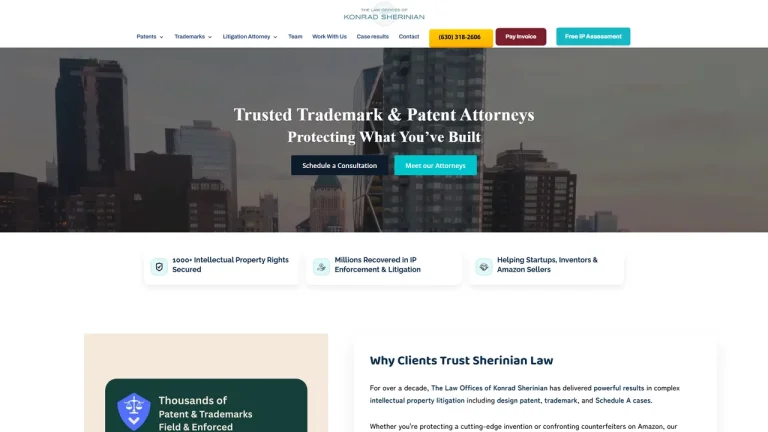
The Law Offices of Konrad Sherinian, LLC - Chicago, IL
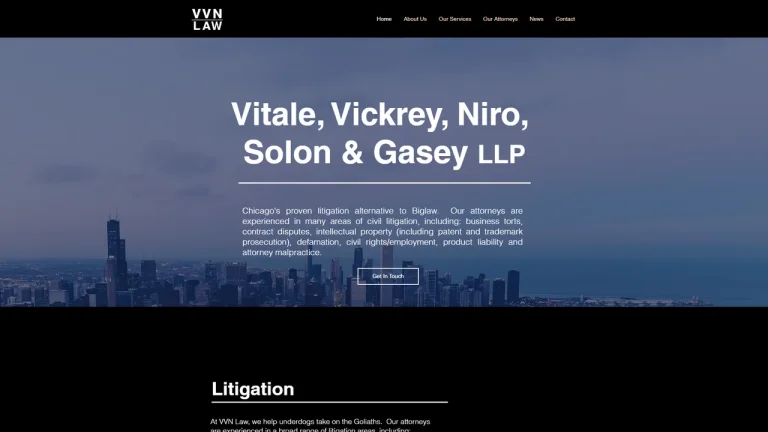
Vitale, Vickrey, Niro, Solon & Gasey LLP - Chicago, IL
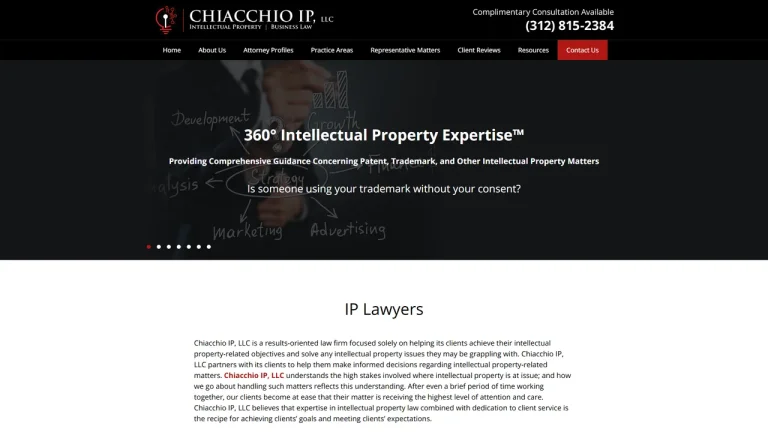
Chiacchio IP - Chicago, IL
Jenner & Block LLP - Chicago, IL

McAndrews - Chicago, IL
The Illinois Patent Landscape and Federal Court Jurisdiction
Securing and defending patent rights in Illinois requires specialized knowledge of federal intellectual property statutes and local federal court procedures. Because patent law is exclusively governed by federal jurisdiction under 28 U.S. Code § 1338(a), patent applications and infringement actions bypass state circuit courts. In Illinois, patent litigation is centered heavily in the United States District Court for the Northern District of Illinois (NDIL) in Chicago, which operates with specialized Local Patent Rules (LPR) designed to streamline claim construction and discovery.
Beyond the Northern District, patent matters are adjudicated in the United States District Court for the Central District of Illinois in Springfield and Peoria, as well as the Southern District of Illinois in East St. Louis. Appellate reviews of patent decisions are channeled exclusively to the United States Court of Appeals for the Federal Circuit. In addition, related trade secret and contractual disputes often arise in Illinois circuit courts, such as the Circuit Court of Cook County, under state intellectual property and contract law.
Practicing patent attorneys in Illinois must maintain dual licensing: admission to the Illinois State Bar, supervised by the Illinois Attorney Registration and Disciplinary Commission (ARDC), and formal registration with the United States Patent and Trademark Office (USPTO) under 37 C.F.R. § 11.6. Engaging a registered patent practitioner ensures your invention is classified accurately, claims are drafted to maximize commercial scope, and legal rights are defended against potential infringement.
Typical Fee Structures and Prosecution Costs for Illinois Patents
| Case Scenario | Fee Structure | Estimated Cost (USD) | Key Cost Determinants |
|---|---|---|---|
| Comprehensive Patentability Search & Legal Opinion | Flat Fee | $1,500 - $3,500 | Depth of domestic and international prior art databases, technology complexity, formal patentability opinion letter. |
| Provisional Patent Application Preparation | Flat Fee | $2,500 - $6,000 | Technical disclosure depth, formal engineering drawings, software architecture schematics, specification breadth. |
| Non-Provisional Utility Patent Prosecution | Flat Fee or Blended Rate | $8,500 - $16,000+ | Independent and dependent claim drafting, USPTO filing fees, responding to examiner office actions, examiner interviews. |
| Federal Patent Infringement Litigation (NDIL) | Hourly Retainer ($350 - $850/hr) | $75,000 - $500,000+ | Local Patent Rules schedule, Markman claim construction hearing, deposition volume, technical expert witness retention. |
Critical Legal Deadlines & Statutes in Illinois
Securing a patent requires strict adherence to statutory filing windows under federal law. Pursuant to the America Invents Act codified in 35 U.S. Code § 102, the United States enforces a first-inventor-to-file rule. If an inventor publicly discloses, sells, or offers an invention for sale before filing, a strict one-year grace period begins running under 35 U.S. Code § 102(b). If a non-provisional or provisional application is not filed within twelve months of that initial public disclosure, the invention enters the public domain and cannot be patented.
When utilizing a provisional patent application under 35 U.S. Code § 111(b), the applicant has a rigid 12-month window from the provisional filing date to file a corresponding non-provisional utility patent application under 35 U.S. Code § 111(a) to retain the initial priority date. This statutory deadline is non-extendable. Missing this one-year cutoff results in the complete abandonment of the provisional filing and the loss of priority status.
For patent enforcement, 35 U.S. Code § 286 establishes a six-year statute of limitations for patent infringement. Patent owners cannot recover monetary damages for any infringement committed more than six years prior to the filing of the complaint. In addition, when proprietary innovations are protected as confidential information prior to patenting, the Illinois Trade Secrets Act provides a five-year statute of limitations for misappropriation claims under 765 ILCS 1065/7.
State Small Claims Exclusions vs. Federal Patent Practice
Under Ill. Sup. Ct. R. 281, small claims courts in Illinois are capped at $10,000 and have zero jurisdiction to adjudicate patent validity, infringement, or inventorship. Exclusive subject-matter jurisdiction over patent actions is reserved to federal courts pursuant to 28 U.S. Code § 1338(a). Even related technology licensing disputes filed in state courts that require interpreting patent claims are routinely removed to federal court.
Attempting to draft and prosecute a patent without a registered patent attorney presents catastrophic commercial risks. Pro se applicants routinely make fatal errors in claim drafting, such as drafting overly narrow claims that competitors can easily design around, or failing to satisfy the written description and enablement requirements under 35 U.S. Code § 112. Working with a registered patent attorney licensed by the ARDC and the USPTO ensures that your intellectual property receives maximum legal protection and survives commercial scrutiny.
Red Flags to Avoid When Selecting an Illinois Patent Attorney
- Unlicensed 'invention promotion' organizations or marketing agencies that promise patent issuance but do not employ registered USPTO patent attorneys.
- Attorneys who guarantee that a patent will be granted or approved by the USPTO without first conducting a formal prior art patentability search.
- Litigators who lack familiarity with the Northern District of Illinois Local Patent Rules (LPR) or the Patent Trial and Appeal Board (PTAB) procedures.
- Law firms that fail to provide transparent written estimates detailing patent application drafting fees, USPTO examination costs, and ongoing maintenance fee obligations.
Frequently Asked Questions
What is the difference between a patent attorney and a patent agent?
Both patent attorneys and patent agents are registered to practice before the USPTO under 37 C.F.R. § 11.6. However, patent attorneys are also licensed lawyers admitted to a state bar, such as the Illinois Bar, allowing them to draft licensing contracts, handle trade secret disputes, and litigate patent infringement actions in federal court.
What is the deadline to convert a provisional patent application in Illinois?
Under 35 U.S. Code § 111(b), you have exactly 12 months from the provisional filing date to file a non-provisional application to claim the priority date. This statutory deadline cannot be extended.
Can a patent infringement lawsuit be filed in an Illinois state court?
No. Under 28 U.S. Code § 1338(a), federal courts have exclusive jurisdiction over patent infringement and validity claims. In Illinois, these claims are filed in federal district courts, such as the Northern District of Illinois in Chicago.
What is the public disclosure grace period for inventions?
Under 35 U.S. Code § 102(b), inventors have a one-year grace period from their initial public disclosure, sale, or public use of an invention to file a patent application before forfeiting their rights.
What are the Northern District of Illinois Local Patent Rules?
The Northern District of Illinois maintains specialized Local Patent Rules that establish structured deadlines for initial disclosures, infringement contentions, invalidity contentions, and Markman claim construction hearings in federal patent cases.