
DUI/DWI Defense Lawyers in Indiana
Connect with top Indiana DUI/DWI defense lawyers to protect your driver's license and freedom. Skilled attorneys challenge breath tests and stops statewide. Experienced defense counsel across Indiana navigate Operating While Intoxicated charges, BMV suspensions, and specialized driving petitions to avoid jail and harsh penalties. Explore our statewide directory below to schedule an urgent confidential case review.

Hennessy David R - Indianapolis, IN

Beers Law Office - Fort Wayne, IN

Attorney Janet Davis Hocker (Hocker Law) - Indianapolis, IN

Sly Law LLC - Indianapolis, IN

J. Timmons Law, LLC - Indianapolis, IN

Nicholas A Adams Law Office - Fort Wayne, IN
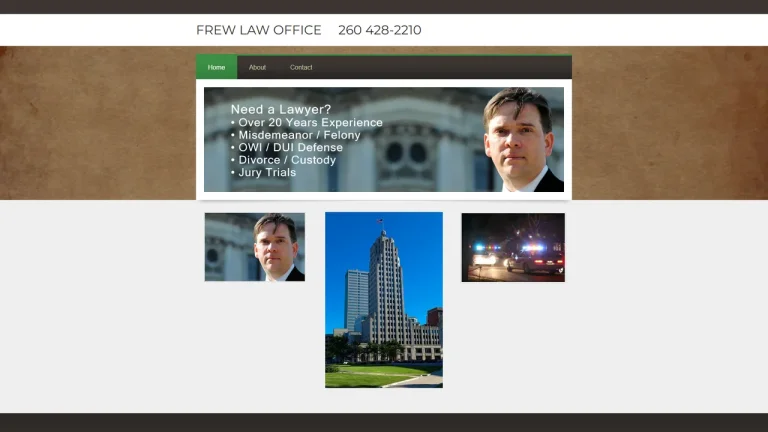
Frew Law Office - Fort Wayne, IN

Josiah Swinney Criminal Attorney - Indianapolis, IN

Fumarolo Law Office - Fort Wayne, IN

Taylor Law Office - Evansville, IN

Scates Law Firm - Evansville, IN

The Law Office of Carman L. Malone - Indianapolis, IN
Ayres Carr & Sullivan, P.C. - Indianapolis, IN

Bohleber Steven L, Attorney at Law - Evansville, IN

Steven Allen, Attorney at Law - Indianapolis, IN

Gemma & Karimi - Indianapolis Criminal Defense Lawyers - Indianapolis, IN

Foley Abbott & Steele, LLC - Indianapolis, IN

Brinkley Law - Indianapolis, IN
Law Offices of Steven K. Deig, LLC - Evansville, IN
Massillamany Jeter & Carson LLP - Fishers, IN

Trapp Law, LLC - Indianapolis, IN

Craig Law Office - Evansville, IN
The Law Offices of Rebecca Gray, LLC - Indianapolis, IN

Navigating Indiana Operating While Intoxicated (OWI) Defense
Facing impaired driving allegations in Indiana requires immediate, proactive legal action. Across primary travel corridors such as Interstate 65, Interstate 70, Interstate 69, and Interstate 465 in Indianapolis, as well as thoroughfares across Lake, Allen, St. Joseph, and Vanderburgh counties, law enforcement agencies vigorously arrest motorists suspected of Operating While Intoxicated (OWI).
In Indiana, drunk driving offenses are formally charged as Operating While Intoxicated or operating a vehicle with an Alcohol Concentration Equivalent (ACE) of 0.08 or greater. Beyond criminal penalties in court, an arrest triggers immediate administrative license suspensions administered by the Indiana Bureau of Motor Vehicles (BMV), threatening your livelihood and daily mobility.
Attorneys listed in our directory are licensed by the Indiana Supreme Court Disciplinary Commission and belong to the Indiana State Bar Association. Local counsel appear regularly in the Criminal Divisions of Indiana Superior and Circuit Courts via the Indiana E-Filing System (IEFS), reviewing police camera recordings, challenging breathalyzer calibrations, and petitioning for specialized driving privileges.
Indiana OWI Defense Fee Structures & Legal Cost Estimates
| Case Scenario | Fee Structure | Estimated Cost (USD) | Key Cost Determinants |
|---|---|---|---|
| First-Offense Misdemeanor OWI Plea Agreement | Flat Legal Fee | $2,000 to $4,500 | Class C or Class A misdemeanor, chemical test analysis, pre-trial conference negotiations, and probation terms. |
| Contested OWI Trial & Evidentiary Suppression | Flat or Hourly Retainer | $4,500 to $10,000 ($250 - $450/hr) | Motion to suppress traffic stop, challenging DataMaster/Intoximeter maintenance logs, and bench or jury trial. |
| Felony OWI with Prior Convictions or Injury | Milestone Retainer | $6,000 to $15,000+ | Level 6 to Level 4 felony charges, prior convictions within seven years, serious bodily injury liability, prison defense. |
| Specialized Driving Privileges (SDP) Petition | Flat Legal Fee | $1,000 to $2,500 | Civil court petition under statutory rules, BMV record review, ignition interlock device coordination, court hearing. |
Critical Legal Deadlines & Statutes in Indiana
Operating a vehicle with an ACE of 0.08 or above constitutes a Class C misdemeanor under Ind. Code § 9-30-5-1, which elevates to a Class A misdemeanor if the vehicle is operated with an ACE of 0.15 or more. Furthermore, under Ind. Code § 9-30-5-2, operating a vehicle while intoxicated in a manner that endangers a person is charged as a Class A misdemeanor, carrying up to one year of imprisonment.
Prior convictions significantly escalate penalties under Indiana law. Under Ind. Code § 9-30-5-3, an OWI charge is elevated to a Level 6 felony if the defendant has a prior conviction for operating while intoxicated within the preceding seven years. When an OWI incident results in serious bodily injury, Ind. Code § 9-30-5-4 establishes Level 5 or Level 4 felony charges, while fatalities are charged as Level 4 or Level 3 felonies under Ind. Code § 9-30-5-5.
Motorists who refuse a lawful chemical test face harsh administrative penalties under Indiana implied consent law codified in Ind. Code § 9-30-6-7, triggering an automatic one-year license suspension by the BMV, or two years if the driver has a prior OWI conviction. To regain limited driving capabilities, drivers can petition the court for Specialized Driving Privileges under Ind. Code § 9-30-16-3. Under Ind. Code § 35-41-4-2, misdemeanors carry a two-year statute of limitations, while felonies have a five-year window.
Small Claims Limits vs. Criminal Court Representation in Indiana
Small Claims Courts in Indiana operate under a jurisdictional cap of $10,000 as established by Ind. Code § 33-28-3-4, handling civil debt and property disputes exclusively. Small claims divisions have no jurisdiction or authority over criminal charges or BMV license revocation hearings.
OWI prosecutions take place in the Criminal Divisions of Indiana Circuit and Superior Courts, where self-representation exposes defendants to mandatory jail sentences, hefty fines, and license revocation. Private defense counsel examines traffic stop validity under Article 1, Section 11 of the Indiana Constitution, evaluates field sobriety testing protocols, and petitions for Specialized Driving Privileges under Ind. Code § 9-30-16-3 to maintain essential driving authorization.
Red Flags to Avoid When Hiring an Indiana OWI Defense Lawyer
- Promising a Guaranteed Dismissal: Avoid attorneys who guarantee a complete dismissal before obtaining body camera recordings, chemical test certificates, and police incident narratives.
- Pushing an Immediate Guilty Plea: Steer clear of lawyers who encourage accepting a plea agreement at the initial hearing without investigating whether the officer had reasonable suspicion for the traffic stop.
- Ignoring BMV Administrative Suspensions: Do not hire counsel who only handle the court dates while ignoring your BMV license suspension and failing to seek Specialized Driving Privileges under Ind. Code § 9-30-16-3.
- Lack of Chemical Test Defense Knowledge: Reject legal practitioners who are unfamiliar with breath test certification standards and blood draw warrant protocols under Indiana law.
Frequently Asked Questions
What is the difference between DUI and OWI in Indiana?
In Indiana, the official statutory term is Operating While Intoxicated (OWI) under Ind. Code § 9-30-5-2, encompassing impairment by alcohol, illegal narcotics, prescription drugs, or controlled substances.
What happens if I refuse a chemical breath test in Indiana?
Under Ind. Code § 9-30-6-7, refusing a chemical test results in an automatic administrative suspension of your driving privileges for one year, or two years if you have a prior OWI conviction, with no standard eligibility for hardship relief.
Can I get a hardship driver's license after an OWI arrest in Indiana?
Yes, drivers may petition the court for Specialized Driving Privileges under Ind. Code § 9-30-16-3, which allows driving for employment, medical, and family needs, often with an ignition interlock device.
When is an OWI charged as a felony in Indiana?
Under Ind. Code § 9-30-5-3, an OWI is enhanced to a Level 6 felony if the driver has a prior OWI conviction within the past seven years, or if the offense involves minors or causes serious bodily injury under Ind. Code § 9-30-5-4.
How long does the state have to file misdemeanor OWI charges in Indiana?
Under Ind. Code § 35-41-4-2, the state must commence prosecution for a misdemeanor OWI within two years of the offense, while felony OWI charges must be filed within five years.