
DUI/DWI Defense Lawyers in Fort Wayne
Being arrested for an OVWI in Fort Wayne threatens your driving privileges, career, and personal freedom under Indiana law. Experienced local DUI defense lawyers vigorously contest breathalyzer calibrations, chemical blood draws, and traffic stops in Allen County courts. Explore our verified directory below to consult an aggressive Fort Wayne OVWI defense attorney today.

The Law Office of Aaron J. Stoll, LLC - Fort Wayne, IN

Federoff Law - Fort Wayne, IN
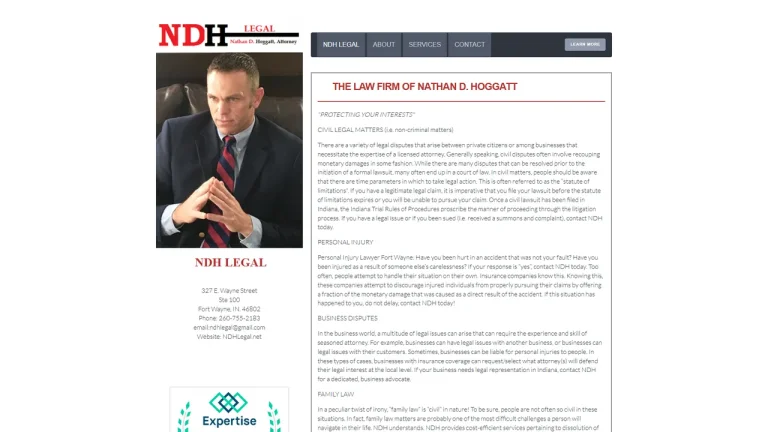
Nathan D. Hoggatt Attorney at Law - Fort Wayne, IN
Law Offices of John G Clifton - Fort Wayne, IN

Hofer Alan K - Fort Wayne, IN

Gibson Law Office - Fort Wayne, IN

Cory A Spreen Attorney At Law - Fort Wayne, IN

Nicholas A Adams Law Office - Fort Wayne, IN

Thomas C. Allen, Attorney at Law - Fort Wayne, IN
Law Office of Michael D. Ghilardi - Fort Wayne, IN

Nakos Law Office - Fort Wayne, IN

Joley Law Firm PC - Fort Wayne, IN

Joshua Michael Attorney at Law LLC - Fort Wayne, IN
Christoff & Christoff Attorneys - Fort Wayne, IN
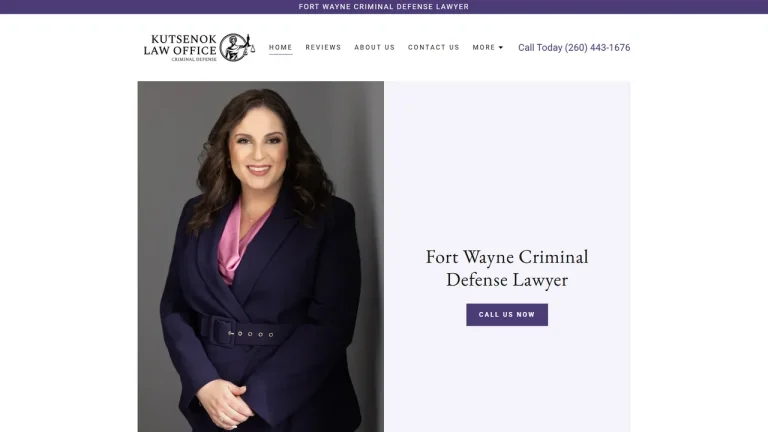
Kutsenok Law Office, LLC - Fort Wayne, IN
The Law Offices of Ryan E. Lackey - Fort Wayne, IN

Lebamoff Law, LLC - Fort Wayne, IN
Mc Entee Law Office - Fort Wayne, IN

Federal Community Defenders - Fort Wayne, IN

John D. Kitch III, Attorney at Law - Fort Wayne, IN
Gregory A. Miller - Fort Wayne, IN

Williams Matthew S. Attorney At Law - Fort Wayne, IN
Richard J. Thonert, Attorney at Law - Fort Wayne, IN

Aggressive Defense for Operating While Intoxicated (OVWI) in Fort Wayne
In Indiana, driving under the influence is legally prosecuted as Operating a Vehicle While Intoxicated (OVWI) or Operating with an Alcohol Concentration Equivalent (ACE) of 0.08 or greater. In Fort Wayne, OVWI enforcement is heavily concentrated along major thoroughfares, including Interstate 69 (I-69), Interstate 469 (I-469), Coliseum Boulevard (SR-930), Clinton Street, and around entertainment districts in Downtown Fort Wayne and the Landing. Arrests and targeted patrols are conducted by the Fort Wayne Police Department, the Allen County Sheriff's Department, and the Indiana State Police District 22.
Individuals arrested for OVWI are taken to the Allen County Jail located on Calhoun Street. Arraignments, pretrial hearings, and jury trials take place in the Misdemeanor and Traffic Division of the Allen Superior Court at the Charles 'Bud' Meeks Justice Center on South Calhoun Street. Even a first-time misdemeanor OVWI can trigger an immediate administrative license suspension by the Indiana Bureau of Motor Vehicles (BMV), mandatory drug and alcohol assessments, steep court costs, and incarceration.
Retaining a seasoned Fort Wayne OVWI defense lawyer immediately is critical. Local defense counsel can petition the court for Specialized Driving Privileges (SDP) under Indiana statutes, allowing you to commute to work, transport family members, and handle essential obligations while contesting the criminal charges. Furthermore, an attorney investigates whether officers had reasonable suspicion to execute the stop or probable cause to conduct standardized field sobriety tests.
Typical Fee Structures for Fort Wayne OVWI Defense Cases
| Case Scenario | Fee Structure | Estimated Cost (USD) | Key Cost Determinants |
|---|---|---|---|
| First-Offense Misdemeanor OVWI (BAC 0.08-0.14) | Flat Fee | $2,000 - $4,500 | Chemical breath test accuracy, Specialized Driving Privileges petition, BMV contest. |
| High BAC Misdemeanor OVWI (BAC 0.15+ or Endangerment) | Flat Fee / Tiered | $2,500 - $6,000 | Class A misdemeanor enhancement, blood search warrant analysis, bodycam review. |
| Repeat Offense / Prior OVWI within 7 Years (Level 6 Felony) | Retainer / Hourly | $4,500 - $10,000 | Mandatory minimum jail exposure, prior conviction suppression, felony defense. |
| OVWI Involving Serious Bodily Injury or Death (Level 4/5 Felony) | Comprehensive Retainer | $10,000 - $30,000+ | Accident reconstruction, toxicology chain of custody, expert witnesses, trial in Fort Wayne. |
Critical Legal Deadlines & Statutes in Indiana
Indiana enforces stringent statutory deadlines and penalties for operating while intoxicated. Basic offenses are codified under Ind. Code § 9-30-5-1, where operating with an ACE between 0.08 and 0.14 is a Class C misdemeanor, while an ACE of 0.15 or more elevates the offense to a Class A misdemeanor. Operating in a manner that endangers a person is prosecuted as a Class A misdemeanor under Ind. Code § 9-30-5-2.
Under Ind. Code § 9-30-5-3, an OVWI becomes a Level 6 felony if the defendant has a prior OVWI conviction within the past 7 years or is at least 21 years old and driving with a passenger under 18. Under the Indiana Implied Consent Law (Ind. Code § 9-30-6-7), refusing a certified chemical breath or blood test results in an automatic, non-probationary 1-year administrative license suspension for a first offense and a 2-year suspension for a repeat refusal, with refusal suspensions generally ineligible for specialized driving privileges. Petitions for Specialized Driving Privileges must be formally submitted under Ind. Code § 9-30-16-3 to the Allen Superior Court. Under Ind. Code § 35-41-4-2, misdemeanors must be prosecuted within 2 years, while felony OVWI charges carry a 5-year limitations period. Court tracking runs through IEFS.
Self-Representation vs. Hiring a Fort Wayne OVWI Defense Attorney
Under Indiana Small Claims Rules, small claims divisions in Allen Superior Court (capped at $10,000) have zero jurisdiction over criminal traffic offenses. Facing an OVWI without dedicated defense counsel exposes drivers to automatic BMV suspensions, mandatory minimum incarceration under Ind. Code § 9-30-5-15, and severe insurance rate hikes.
An experienced Fort Wayne OVWI defense attorney investigates whether officers had reasonable suspicion to initiate the stop on Coliseum Boulevard or I-69 and scrutinizes whether Standardized Field Sobriety Tests (SFSTs) complied with federal NHTSA guidelines. Counsel audits the maintenance and inspection records of the certified breath test machine and challenges the chain of custody for chemical blood draws. Defense counsel can also negotiate plea agreements that eliminate jail time or seek entry into diversion programs when eligible.
Red Flags to Avoid When Selecting an OVWI Defense Lawyer
- Attorneys who promise that charges will be dropped before examining police dashcam footage and toxicology results.
- General practice lawyers who do not understand Indiana BMV administrative suspension rules or Specialized Driving Privileges laws.
- Law firms quoting low flat rates that do not include filing fees for specialized driving privilege petitions in Allen County.
- Counsel who urges an immediate guilty plea at the initial hearing without reviewing officer search and stop justifications.
Frequently Asked Questions
What are Specialized Driving Privileges in Indiana?
Under Ind. Code § 9-30-16-3, Specialized Driving Privileges (SDP) allow individuals with suspended driver's licenses to drive for specific purposes, such as employment, child care, schooling, or medical appointments. A petition must be filed in the Allen Superior Court, and the judge may require the installation of an ignition interlock device.
What happens if I refuse a breathalyzer test in Fort Wayne?
Under Indiana's Implied Consent statute (Ind. Code § 9-30-6-7), refusing a certified chemical test triggers an automatic 1-year license suspension for a first refusal and a 2-year suspension for a repeat refusal. Unlike standard suspensions, test refusal suspensions are generally not eligible for specialized driving privileges.
Can an OVWI conviction be expunged in Indiana?
Yes. Under the Indiana Second Chance law (Ind. Code § 35-38-9), an eligible misdemeanor OVWI conviction can generally be expunged 5 years after the date of conviction, provided all terms of sentencing have been satisfied and no new criminal charges have occurred.
What is the difference between an OVWI and an Operating with an ACE charge?
Operating with an Alcohol Concentration Equivalent (ACE) under Ind. Code § 9-30-5-1 is a per se violation based purely on chemical test results of 0.08 or higher. An OVWI charge under Ind. Code § 9-30-5-2 requires prosecutors to prove that alcohol or drugs actually impaired your driving ability, regardless of chemical test results.