
Patent Attorneys in Fort Wayne
Retaining a registered Fort Wayne patent attorney ensures your technological innovations and commercial inventions are secured under federal patent law. Skilled Allen County patent attorneys frequently resolve licensing disputes and infringement conflicts through negotiated agreements, preventing costly federal litigation. Explore our verified directory below to connect with a qualified local patent professional.
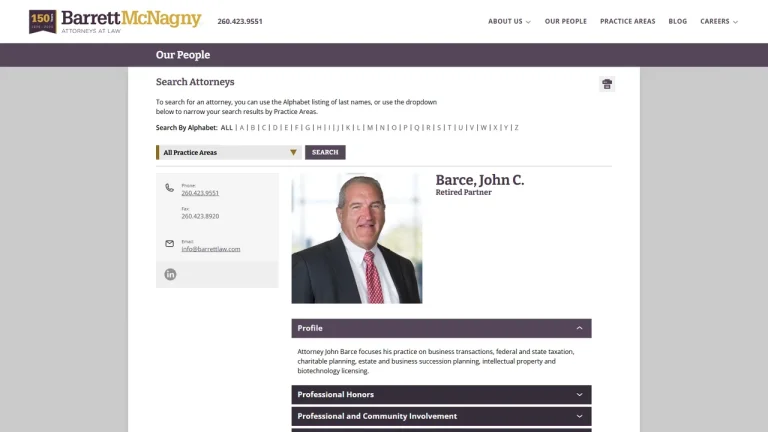
John C. Barce - Barrett McNagny LLP - Fort Wayne, IN

Holly Weber - Barrett McNagny LLP - Fort Wayne, IN

George Pappas, Patent Attorney - Fort Wayne, IN

Securing Patent Rights and Industrial Innovation in Fort Wayne, Indiana
Fort Wayne serves as a robust center for advanced manufacturing, defense engineering, automotive systems, and medical device technology in Allen County. From emerging ventures at the Electric Works innovation district to established operations at the Northeast Indiana Innovation Center, inventors must protect proprietary engineering from unauthorized exploitation across regional and national markets.
Patent law is governed by exclusive federal jurisdiction pursuant to 28 U.S. Code § 1338(a). Patent infringement lawsuits originating in Fort Wayne are litigated in the U.S. District Court for the Northern District of Indiana, Fort Wayne Division, at the E. Ross Adair Federal Building. Related state disputes involving nondisclosure breaches or trade secret theft proceed in the Allen Superior Court at the historic Allen County Courthouse.
Engaging a Fort Wayne patent attorney admitted before the United States Patent and Trademark Office (USPTO) under 37 C.F.R. § 11.7 provides essential technical and legal precision. Local counsel evaluates prior art landscapes, drafts defensible patent claims, and defends patent portfolios during Patent Trial and Appeal Board (PTAB) proceedings.
Fort Wayne Patent Legal Fees and Prosecution Schedules
| Case Scenario | Fee Structure | Estimated Cost (USD) | Key Cost Determinants |
|---|---|---|---|
| Prior Art Search & Patentability Opinion | Flat Fee | $1,500 - $3,500 | Technical complexity, volume of prior art, landscape breadth. |
| Non-Provisional Utility Patent Drafting | Flat Fee or Hourly | $7,000 - $14,000 | Number of independent claims, mechanical vs electronic complexity. |
| Design Patent Application & Prosecution | Flat Fee | $1,800 - $3,500 | Number of formal drafting views, USPTO examiner office action frequency. |
| Federal Patent Infringement Litigation | Hourly Retainer | $400 - $750 per hour ($25,000+ upfront) | Markman claim construction hearings, expert witness reports, trial length. |
Critical Legal Deadlines & Statutes in Indiana
Under the federal Leahy-Smith America Invents Act codified at 35 U.S. Code § 102, the United States enforces a first-inventor-to-file standard. Any public disclosure, commercial sale, or demonstration of an invention triggers a strict 1-year statutory grace period under 35 U.S. Code § 102(b). If an inventor fails to file a provisional or non-provisional application within 12 months of disclosure, patent rights are permanently forfeited.
Filing a provisional patent application establishes an immediate priority date, giving the applicant exactly 12 months under 35 U.S. Code § 119(e) to file a non-provisional utility application. For infringement damages, 35 U.S. Code § 286 restricts recovery to infringements occurring within 6 years prior to filing the complaint. State trade secret claims in Allen County are governed by a 3-year limitations window under the Indiana Uniform Trade Secrets Act (Ind. Code § 24-2-3-7). Federal filings proceed electronically through CM/ECF and the USPTO Patent Center.
Small Claims Limitations vs. Retaining a Patent Attorney
The Small Claims Division of the Allen Superior Court operates under Ind. Code § 33-29-2-4 with a recovery cap of $10,000. However, state small claims courts have zero legal authority to evaluate patent validity or adjudicate patent infringement claims. Under 28 U.S. Code § 1338(a), federal courts maintain exclusive jurisdiction over patent actions, and any patent dispute filed in small claims court will be dismissed.
Patent prosecution requires admission to the USPTO patent bar and specialized technical competence. Competitors defend patent disputes aggressively through inter partes review petitions before the PTAB and dispositive motions in federal district court. Retaining a Fort Wayne patent attorney ensures patent claims are drafted defensibly, licensing royalties are maximized, and innovations are defended in the U.S. District Court for the Northern District of Indiana.
Red Flags When Hiring a Patent Attorney
- Invention promotion companies that guarantee commercial success or patent issuance without conducting thorough prior art searches.
- Practitioners not registered with the USPTO under 37 C.F.R. § 11.7 who attempt to draft or file patent applications.
- Firms quoting unusually low flat fees that omit mandatory USPTO filing costs and necessary office action responses.
- Lawyers who fail to explore trade secret protections or neglect strict 1-year public disclosure deadlines.
Frequently Asked Questions
What is the difference between a provisional and non-provisional patent?
A provisional patent application acts as a temporary 12-month placeholder that establishes an early priority date without examination. A non-provisional application is formally examined by the USPTO and can issue as an enforceable patent.
Do all attorneys qualify to draft patent applications in Indiana?
No. Drafting and prosecuting patent applications before the USPTO requires passing the USPTO registration examination and holding a recognized degree in engineering or science under 37 C.F.R. § 11.7.
Where are patent infringement lawsuits filed in Fort Wayne?
Patent infringement actions are filed in the U.S. District Court for the Northern District of Indiana, Fort Wayne Division, located at the E. Ross Adair Federal Building.
How long does patent protection last under federal law?
Under 35 U.S. Code § 154, a utility patent generally lasts 20 years from the non-provisional filing date, subject to timely payment of maintenance fees, while design patents last 15 years from issuance.