
Patent Attorneys in Indiana
Engaging a registered Indiana patent attorney protects your novel inventions, navigates prior art searches, and secures enforceable patent grants from the USPTO. Qualified patent counsel resolves examiner rejections and negotiates licensing agreements to protect commercial assets. Explore our directory below to schedule a case review with trusted local professionals.

George Pappas, Patent Attorney - Fort Wayne, IN

Martin IP Law Group - Evansville, IN

Botkin & Hall LLP - South Bend, IN

Bradshaw Law LLC - Indianapolis, IN

Maginot, Moore and Beck LLP - Indianapolis, IN

Reichel Stohry Dean LLP - Indianapolis, IN
Taft Stettinius and Hollister LLP - Indianapolis, IN

Mercho Strzynski LLP - Indianapolis, IN
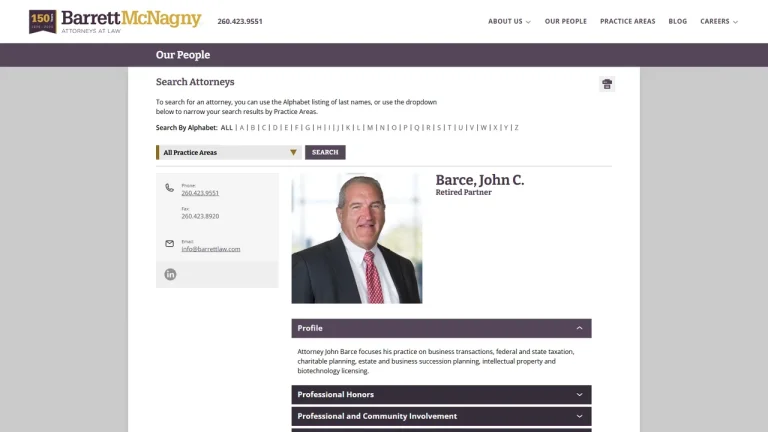
John C. Barce - Barrett McNagny LLP - Fort Wayne, IN

Emergent IP Consulting - Indianapolis, IN

Amundsen Davis, LLC - Indianapolis, IN

Gutwein Law - Indianapolis, IN

Faegre Drinker Biddle & Reath LLP - Indianapolis, IN

Katie Charleston Law, PC - Carmel, IN

Martin IP Law Group - Carmel, IN
Woodard, Emhardt, Henry, Reeves & Wagner, LLP - Indianapolis, IN

Notre Dame Clinical Law Center - South Bend, IN
Outlier Patent Attorneys, PLLC - Indianapolis, IN

Bose McKinney & Evans LLP - Indianapolis, IN
Lewis Brisbois Bisgaard & Smith, LLP - Indianapolis, IN
Askew Intellectual Property, LLC - Fort Wayne, IN
Indiano Law Group, LLC - Indianapolis, IN
John A. Conway, Attorney at Law - South Bend, IN

Safeguarding Inventions Under Federal Patent Jurisdiction in Indiana
Securing and protecting intellectual property in Indiana is vital for innovators across the state's commercial landscape, from biomedical and orthopedic device manufacturers in Warsaw and Indianapolis to advanced manufacturing centers in Fort Wayne, South Bend, and Evansville. Developing proprietary technology requires patent counseling that protects commercial investments against infringement.
Patent prosecution is governed by federal law and conducted before the United States Patent and Trademark Office (USPTO). Patent practitioners must be registered patent attorneys admitted to practice before the USPTO under federal regulations. When patent litigation arises, actions are heard exclusively in the federal judiciary, proceeding in the United States District Court for the Southern District of Indiana or the Northern District of Indiana pursuant to exclusive jurisdiction under 28 U.S. Code § 1338(a). Appeals are reviewed by the U.S. Court of Appeals for the Federal Circuit.
Indiana patent attorneys guide businesses through the complexities of prior art searching, utility patent drafting, and administrative office actions. Local legal counsel coordinates patent assets with state-level protections, such as trade secrets under the Indiana Uniform Trade Secrets Act pursuant to Ind. Code § 24-2-3-1.
Indiana Patent Legal Fees and Prosecution Cost Structures
| Case Scenario | Fee Structure | Estimated Cost (USD) | Key Cost Determinants |
|---|---|---|---|
| Patentability Search & Legal Opinion | Flat Fee | $1,500 - $3,500 | Exhaustive search of USPTO and foreign patent databases, prior art analysis, and formal written patentability opinion memorandum. |
| Provisional Patent Application | Flat Fee | $2,500 - $5,500 | Drafting detailed technical specifications, preparing formal drawings, and establishing early priority filing under 35 U.S. Code § 111(b). |
| Non-Provisional Utility Patent | Flat Fee / Hourly | $7,500 - $15,000+ | Drafting complex claim sets meeting 35 U.S. Code § 112 requirements, formal illustrations, entity fee classifications, and USPTO filing. |
| USPTO Office Action Response | Hourly Rate ($375 - $650/hr) | $2,000 - $5,000 | Overcoming Section 102 novelty or Section 103 obviousness rejections, amending patent claims, and conducting examiner interviews. |
Critical Legal Deadlines & Statutes in Indiana
Patent protection operates under strict statutory filing deadlines. Under 35 U.S. Code § 102(b), an inventor has a maximum grace period of one year from the date of first public disclosure, public use, or commercial sale of the invention to file a patent application. Failure to file within this one-year period permanently bars the inventor from obtaining a patent.
Inventors who file a provisional patent application under 35 U.S. Code § 111(b) must file a corresponding non-provisional application within 12 months to claim the benefit of the earlier filing date. Once a patent is granted, actions seeking monetary recovery for past infringement are subject to a six-year statutory damages limitation under 35 U.S. Code § 286.
For innovations maintained as confidential proprietary knowledge, the Indiana Uniform Trade Secrets Act provides legal remedies against misappropriation. Under Ind. Code § 24-2-3-7, an action for trade secret misappropriation must be commenced within three years after the misappropriation is discovered or should have been discovered.
Small Claims Limits vs. Exclusive Federal Patent Jurisdiction
Under Ind. Code § 33-28-3-4, Indiana small claims dockets have a monetary jurisdictional limit of $10,000. However, small claims courts have zero jurisdiction over patent disputes.
Pursuant to 28 U.S. Code § 1338(a), federal district courts possess exclusive original jurisdiction over any civil action arising under any Act of Congress relating to patents. State small claims courts cannot hear patent infringement claims, determine patent validity, or order injunctive relief. Navigating patent procurement before the USPTO or enforcing patent rights in the Northern or Southern District of Indiana requires an attorney registered with the USPTO Patent Bar.
Red Flags to Avoid When Hiring an Indiana Patent Attorney
- Non-attorney 'invention promotion' firms that promise to patent and commercialize inventions without registered USPTO patent attorneys.
- Attorneys who lack a USPTO Registration Number and are not legally authorized to practice patent prosecution before the patent office.
- Lawyers who guarantee that a patent will be granted by the USPTO before a comprehensive prior art search is conducted.
- Failing to advise inventors regarding the critical one-year public disclosure bar under 35 U.S. Code § 102(b), which can permanently forfeit patent rights.
Frequently Asked Questions
What is the difference between a patent lawyer and a patent agent?
Both patent lawyers and patent agents are registered to practice before the USPTO. However, patent lawyers have also graduated from law school, passed a state bar, and can represent clients in court litigation, draft licensing agreements, and handle trade secret disputes.
What does a provisional patent application accomplish in Indiana?
A provisional patent application filed under 35 U.S. Code § 111(b) establishes an official priority filing date with the USPTO and allows you to label your product 'Patent Pending.' You have 12 months to convert it into a formal non-provisional application.
What happens if I sell my product before filing a patent application?
Under 35 U.S. Code § 102(b), you have a one-year grace period from the date of first public offer for sale or public disclosure to file an application. If you fail to file within one year, you lose all patent rights to the invention.
Where are patent infringement lawsuits filed in Indiana?
Patent infringement lawsuits must be filed in federal court under 28 U.S. Code § 1338(a). In Indiana, cases are heard in either the U.S. District Court for the Southern District of Indiana or the U.S. District Court for the Northern District of Indiana.
How long does it take to obtain a utility patent from the USPTO?
Obtaining a utility patent generally requires between two and four years from the date of filing. The process involves comprehensive prior art searches, formal examination by a USPTO patent examiner, and responding to substantive office actions.