
Business & Real Estate Lawyers in Iowa
Structuring commercial ventures and real estate acquisitions in Iowa requires meticulous legal counsel to safeguard assets and avoid costly contractual disputes. An experienced business and real estate attorney can resolve complex title issues and negotiate contracts out of court to protect your bottom line. Browse our directory below to connect with verified Iowa lawyers.

Petersen Law - Council Bluffs, IA

Klinger, Robinson & Ford, LLP - Cedar Rapids, IA

David A. Poore, Attorney at Law - Council Bluffs, IA

Hong Law, PLC - Cedar Rapids, IA

Steven W. Hendricks, Attorney at Law - Fort Dodge, IA

Lonny L. Kolln, II, Attorney at Law - Council Bluffs, IA
Anderson & Houghton Law Office - Iowa City, IA

Mears Law Office - Iowa City, IA

Brenneman, Detweiler & Goertz, LLP - Iowa City, IA
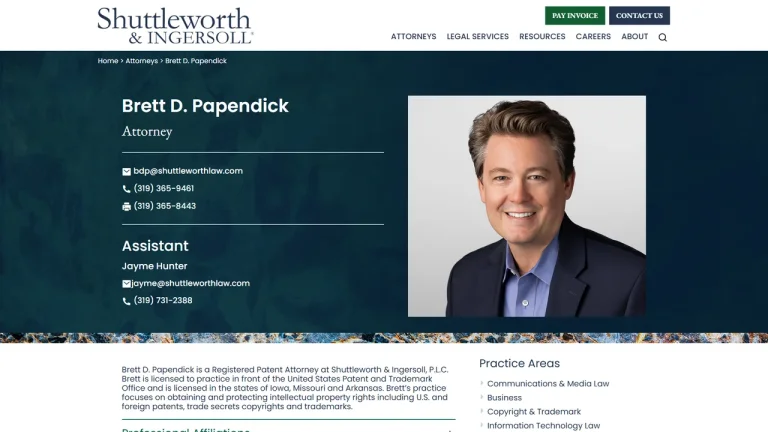
Brett D. Papendick - Shuttleworth & Ingersoll - Cedar Rapids, IA
University of Iowa Student Legal Services - Iowa City, IA
Hall Law Firm, P.L.C. - Sioux City, IA
Theodore E. Karpuk, Attorney at Law - Sioux City, IA
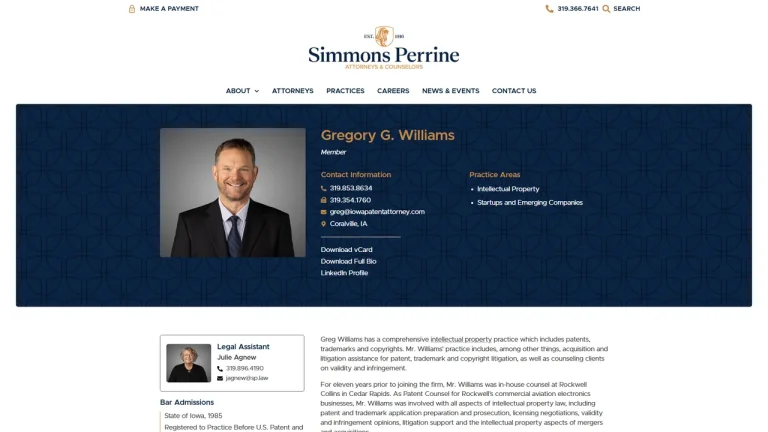
Iowa Patent Attorney (Gregory G. Williams) - Cedar Rapids, IA
Stuart Tinley Law Firm LLP - Council Bluffs, IA
Reynolds & Kenline - Dubuque, IA
Julian West, Attorney at Law - Iowa City, IA
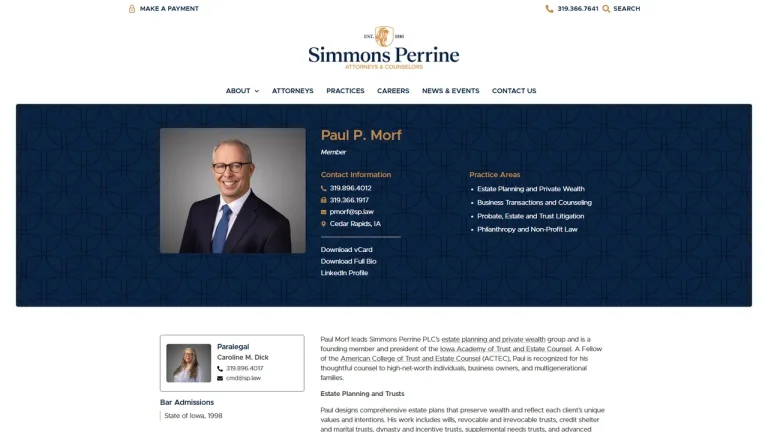
Paul P. Morf - Simmons Perrine Moyer Bergman PLC - Cedar Rapids, IA
Vogel Law, PLLC - Des Moines, IA
Hughes & Trannel PC Attorneys - Dubuque, IA
Diane E. Puthoff, Attorney at Law - Davenport, IA

The Immigration Group - Cedar Rapids, IA
O'Flaherty Law of Iowa City - IA
Commercial Enterprise and Real Estate Law Across Iowa
Commercial enterprises and real property transactions across the State of Iowa operate within a distinct statutory and regulatory framework. From financial, insurance, and corporate centers in Des Moines and Cedar Rapids to agricultural and logistics hubs in Davenport, Sioux City, Waterloo, and Council Bluffs, business entities require precise legal documentation to maintain liability protection and regulatory compliance.
Real estate practice in Iowa is uniquely structured compared to standard real property conveyancing. Under state law, commercial title insurance is prohibited, meaning property ownership relies on rigorous attorney examination of 40-year abstract chains of title and the issuance of certificates through the Iowa Title Guaranty program. When contractual conflicts, zoning disputes, or property line disagreements cannot be settled through direct negotiation, civil actions are litigated in the Iowa District Courts across the state's eight judicial districts, with all filings processed through the Iowa Judicial Branch Electronic Document Management System (EDMS).
Engaging legal counsel admitted to the Iowa Supreme Court and in good standing with the Iowa State Bar Association (ISBA) ensures seamless execution of transactions. A knowledgeable attorney drafts entity operating agreements, navigates commercial leasing covenants, conducts thorough title examinations, and protects contractor and developer rights through the Iowa Mechanics' Notice and Lien Registry (MNLR).
Iowa Business and Real Estate Legal Fee Structures
| Case Scenario | Fee Structure | Estimated Cost (USD) | Key Cost Determinants |
|---|---|---|---|
| LLC Formation & Custom Operating Agreement | Flat Fee | $1,000 - $2,500 | Number of equity members, customized voting thresholds, buy-sell triggers, and Secretary of State filings. |
| Commercial Real Estate Closing & Title Examination | Flat Fee or Hourly | $1,800 - $5,000 | 40-year abstract review, Iowa Title Guaranty coverage limits, environmental Phase I review, and survey certifications. |
| Commercial Lease Drafting & Negotiation (NNN/Retail) | Flat Fee or Hourly | $1,500 - $4,000 | Square footage, operating expense pass-through audits, exclusive use clauses, and sublease assignment rights. |
| Mechanics Lien Foreclosure & Commercial Litigation | Hourly Retainer | $5,000 - $18,000 | MNLR registry compliance, subcontractor priority disputes, deposition volume, and EDMS motion practice. |
Critical Legal Deadlines & Statutes in Iowa
Real estate transactions and commercial litigation in Iowa are subject to unyielding statutory limitations. Under the Iowa Marketable Title Act, codified at Iowa Code § 614.17 and Iowa Code § 614.29, property claims are subject to an unbroken 40-year chain-of-title standard to extinguish stale real estate claims. Title protection is secured through the Iowa Title Guaranty program administered by the Iowa Finance Authority under Iowa Code § 16.91, which operates alongside the statutory ban on commercial title insurance under Iowa Code § 515.48(10).
Construction contractors, subcontractors, and suppliers must comply with the Iowa Mechanics' Notice and Lien Registry (MNLR). Pursuant to Iowa Code § 572.8, a mechanics lien must be posted to the MNLR within 90 days of completing work to guarantee priority over subsequent purchasers and encumbrances. Enforcement of a mechanics lien requires commencing a foreclosure lawsuit in District Court within two years from the 90-day posting deadline under Iowa Code § 572.27.
Breach of contract claims adhere to strict limitation periods under Iowa law. Actions based on written contracts must be commenced within ten years under Iowa Code § 614.1(5), while actions founded on unwritten contracts or open accounts must be filed within five years pursuant to Iowa Code § 614.1(4). Corporate governance and limited liability company operations are regulated under the Iowa Revised Uniform Limited Liability Company Act, Iowa Code § 489.101.
Small Claims Limitations vs. District Court Commercial Practice
In Iowa, small claims jurisdiction is capped at $6,500 for civil money judgments under Iowa Code § 631.1. Small claims hearings before judicial magistrates or district associate judges offer an economical forum for minor tenant deposit disputes or simple unpaid invoice collections without extensive formal discovery.
However, small claims courts lack jurisdiction to award equitable relief, enforce specific performance on property purchases, quiet disputed titles, or resolve corporate fiduciary breaches. Commercial property investments involve significant financial capital and complex liabilities. Attempting to draft purchase agreements or lease instruments without dedicated counsel risks title defects, unperfected liens, and personal liability for business debts. Retaining a commercial lawyer ensures proper entity formation, preserves title warranties through Iowa Title Guaranty, and protects business assets.
Red Flags When Hiring an Iowa Business & Real Estate Lawyer
- Lawyers unfamiliar with the Iowa Title Guaranty system or attempting to procure private title insurance prohibited by state statute.
- Utilizing generic, out-of-state entity templates that fail to conform to the Iowa Revised Uniform Limited Liability Company Act.
- Failure to perform or verify mandatory postings on the Iowa Mechanics' Notice and Lien Registry (MNLR) prior to real estate transfers.
- Attorneys lacking active standing or with disciplinary histories before the Iowa Supreme Court Attorney Disciplinary Board.
Frequently Asked Questions
Why does Iowa utilize Iowa Title Guaranty instead of private title insurance?
Under Iowa Code § 515.48(10), commercial title insurance is barred by law. Instead, the state operates Iowa Title Guaranty under Iowa Code § 16.91, which requires an attorney title examination of a 40-year abstract to issue title protection.
What is the Mechanics' Notice and Lien Registry (MNLR) in Iowa?
Administered by the Iowa Secretary of State under Iowa Code § 572.13A, the MNLR is a centralized online registry where preliminary notices and mechanics liens must be posted to preserve contractor lien rights.
What is the statute of limitations for commercial contract breaches in Iowa?
Pursuant to Iowa Code § 614.1(5), actions based on written commercial contracts must be filed within ten years, while unwritten contracts must be commenced within five years under Iowa Code § 614.1(4).
Can a corporate entity appear in Iowa District Court without an attorney?
No. Under Iowa court rules and judicial precedents, corporations and limited liability companies must be represented by a licensed attorney in all formal District Court proceedings.
What is the purpose of the Iowa Marketable Title Act?
Codified at Iowa Code § 614.17, the act extinguishes ancient title defects and unasserted claims that predate a continuous 40-year chain of record title, ensuring property marketability.