
Financial & IP Lawyers in Cedar Rapids
Protecting proprietary innovations and commercial capital in Cedar Rapids requires strategic counsel from skilled financial and IP attorneys. Knowledgeable lawyers assist businesses and inventors with patent filings, trademark protection, trade secret defense, and commercial loan transactions. Explore our verified directory below to schedule a consultation with leading Cedar Rapids financial and intellectual property law practitioners.
Vernon P. Squires, Attorney - Cedar Rapids, IA

Fiegen Law Firm, P.C. - Cedar Rapids, IA

Elderkin & Pirnie, PLC: Daniel DenBeste, LL.M - Cedar Rapids, IA

Iowa Bankruptcy Attorney John M Heckel - Cedar Rapids, IA
Hong Law, PLC - Cedar Rapids, IA
Rush & Nicholson Lawyers - Cedar Rapids, IA
Day Rettig Martin, P.C. - Cedar Rapids, IA

Piersall Law Firm PC - Cedar Rapids, IA
Nazette Marner Nathanson & Shea LLP - Cedar Rapids, IA
Forsythe Todd P - Cedar Rapids, IA
Iowa Chapter 7 - Cedar Rapids, IA

McCool & McCool Law Office - Cedar Rapids, IA
Simmons Perrine Moyer Bergman PLC - Cedar Rapids, IA

Premier Trust and Estate, PLC - Cedar Rapids, IA
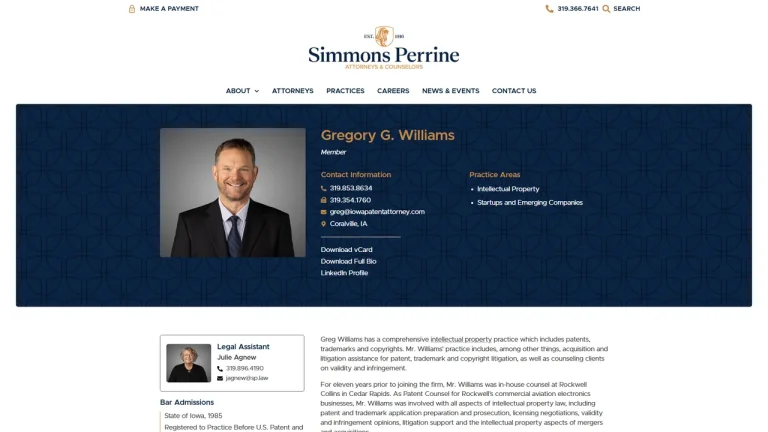
Iowa Patent Attorney (Gregory G. Williams) - Cedar Rapids, IA

Rush M. Shortley, Attorney at Law - Cedar Rapids, IA
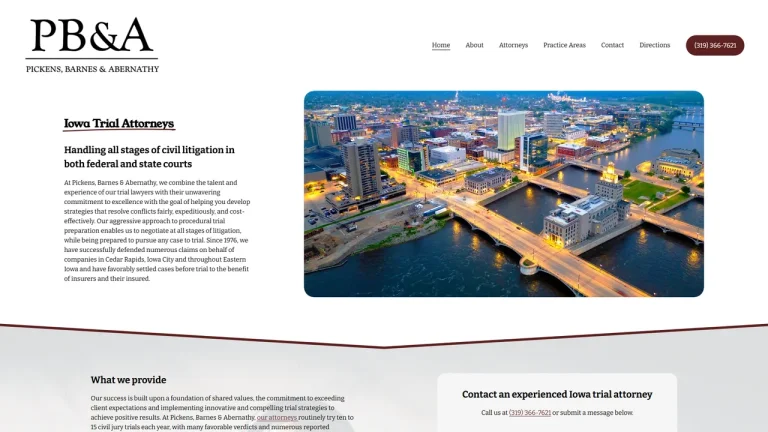
Pickens, Barnes & Abernathy - Cedar Rapids, IA
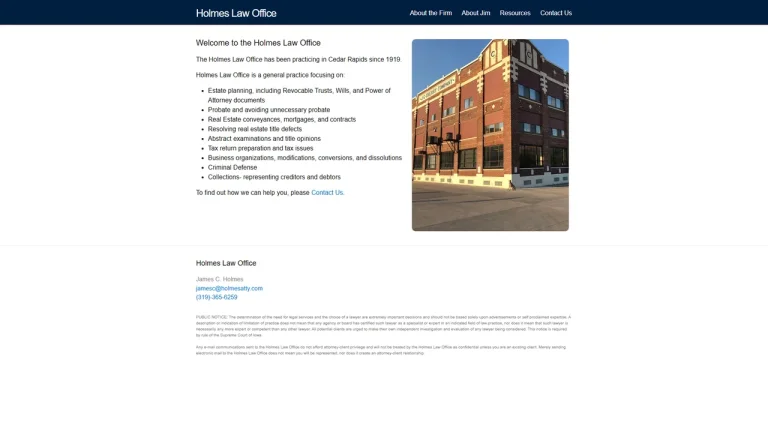
Holmes Law Office - Cedar Rapids, IA
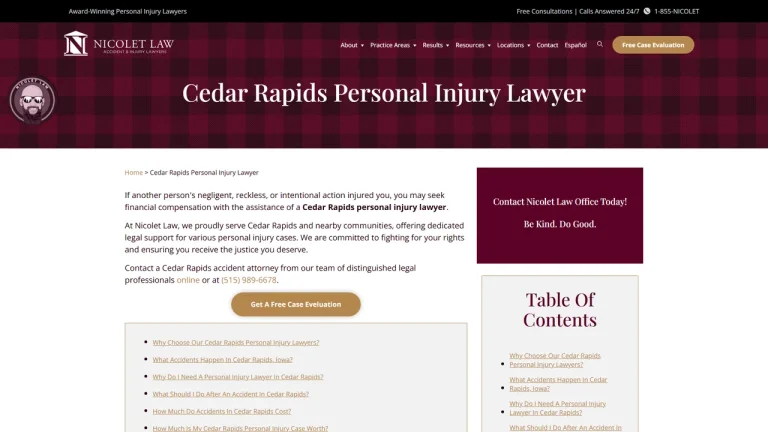
Nicolet Law Accident & Injury Lawyers - Cedar Rapids, IA
Willey Law Firm, P.C. - Cedar Rapids, IA
Seidl & Seidl, P.L.C. - Cedar Rapids, IA

Klinger, Robinson & Ford, LLP - Cedar Rapids, IA
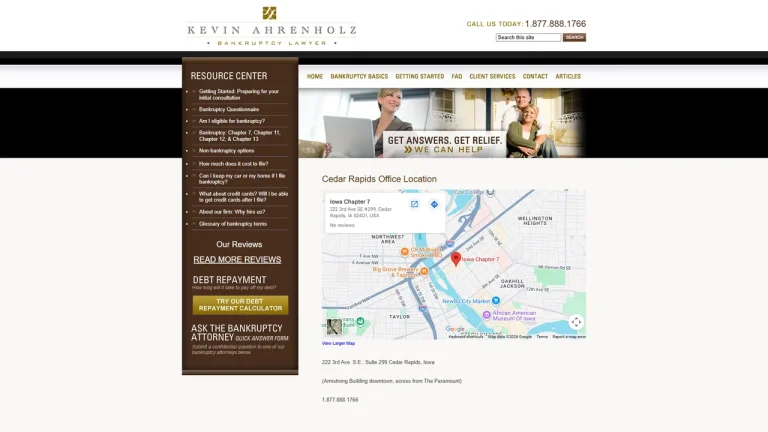
Marks Law Firm - Cedar Rapids, IA
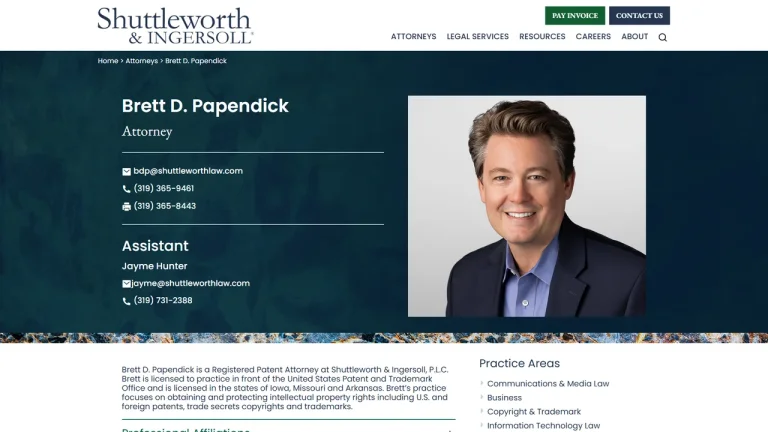
Financial and Intellectual Property Law in Cedar Rapids
Cedar Rapids serves as an economic cornerstone of Iowa's Creative Corridor, recognized for enterprise innovation across avionics, telecommunications, food sciences, bio-processing, and financial services. Emerging enterprises and established corporations across Cedar Rapids, Marion, and Hiawatha require robust legal frameworks to safeguard intangible assets and structure complex financial transactions.
State-level commercial financial litigation, breach of loan covenants, and trade secret disputes are adjudicated in the 6th Judicial District of Iowa at the Linn County Courthouse on May's Island. Conversely, intellectual property actions involving federal patent infringement, trademark violations under the Lanham Act, and copyright disputes fall under the exclusive jurisdiction of the U.S. District Court for the Northern District of Iowa, situated on Seventh Avenue SE in Cedar Rapids.
Intellectual property and business financing in Iowa are governed by key statutory structures, including the Iowa Trade Secrets Act under Iowa Code § 550.1 and commercial debt enforcement pursuant to the Iowa Uniform Commercial Code under Iowa Code § 554.1101. Partnering with an experienced Cedar Rapids financial and IP lawyer safeguards patent portfolios, strengthens trademark protection, and ensures enforceable commercial agreements.
Cedar Rapids Financial and IP Legal Fees and Engagements
| Case Scenario | Fee Structure | Estimated Cost (USD) | Key Cost Determinants |
|---|---|---|---|
| Trademark Clearance & Federal USPTO Registration | Flat Fee | $1,200 - $3,000 | Number of international trademark classes, likelihood of confusion clearance, substantive office action responses. |
| Non-Provisional Patent Application Drafting | Flat Fee / Retainer | $6,000 - $14,000 | Technological complexity, number of independent claims, prior art search volume, mechanical vs. software art. |
| Commercial Lending Structuring & UCC Perfection | Hourly / Retainer | $3,500 - $10,000 | Collateral complexity, UCC-1 financing statements, personal guaranty provisions, multi-party debt syndication. |
| Federal IP Infringement Litigation (N.D. Iowa) | Retainer / Hourly | $20,000 - $60,000+ | Markman claim construction hearings, expert forensic witness testimony, Northern District discovery volume. |
Critical Legal Deadlines & Statutes in Iowa
Managing financial assets and intellectual property requires strict compliance with federal and state statutory timelines. Under federal patent law (35 U.S.C. § 102), an inventor has a maximum of one year from the first date of public disclosure, commercial sale, or public use to file a patent application before forfeiting patentability under the statutory bar.
For trade secret claims, the Iowa Trade Secrets Act establishes in Iowa Code § 550.6 that an action for misappropriation must be commenced within three years after the misappropriation is discovered or should have been discovered through reasonable diligence. Regarding commercial financing, Iowa Code § 614.1(5) provides a ten-year statute of limitations for lawsuits founded on written financial contracts and promissory notes, while oral financial agreements carry a five-year limitation period under Iowa Code § 614.1(4). Additionally, trademark owners must submit a Declaration of Continued Use under 15 U.S.C. § 1058 between the fifth and sixth year following registration to maintain active USPTO rights.
Small Claims Limits vs. Professional Representation
In Linn County, the Small Claims Court is capped at $6,500 pursuant to Iowa Code § 631.1. Small businesses may use this venue without attorney representation to collect overdue trade receivables or straightforward commercial debt below that threshold.
However, small claims courts lack equitable jurisdiction to issue injunctive orders to halt trademark counterfeiting, software code theft, or patent infringement. Furthermore, patent and copyright litigation belongs exclusively in federal court. Enforcing commercial financing agreements, protecting proprietary technological formulations, and defending against intellectual property infringement necessitate legal representation admitted before the Iowa State Bar and the United States Patent and Trademark Office (USPTO).
Red Flags When Hiring a Financial and IP Lawyer
- Non-USPTO Registered Patent Counsel: When filing patent applications, ensure your attorney is a registered patent attorney licensed with the USPTO and possessing an active registration number.
- Invention Promotion Scams: Steer clear of non-lawyer invention marketing companies that promise commercial success or patent guarantees in return for large upfront retainers.
- Absence of Federal Litigation Capability: Avoid retaining transactional counsel who lacks the willingness or experience to litigate contested matters in the U.S. District Court for the Northern District of Iowa.
- Vague Fee Agreements Regarding USPTO Fees: Ensure your legal fee contract explicitly differentiates attorney professional rates from official government filing fees, trademark search costs, and patent maintenance fees.
Frequently Asked Questions
What is the difference between a patent, copyright, and trademark?
A patent protects new and useful inventions, processes, or machines; a trademark protects brand names, logos, and slogans that identify the commercial source of goods or services; and a copyright protects original works of authorship such as software code, writing, music, and artistic designs.
Can I enforce a non-disclosure agreement (NDA) to protect trade secrets in Iowa?
Yes. Well-drafted non-disclosure agreements are enforceable in Iowa under contract law and the Iowa Trade Secrets Act. To maintain protection, businesses must demonstrate they took reasonable measures under the circumstances to keep the proprietary information confidential.
Where are federal patent infringement cases filed in eastern Iowa?
Federal patent and trademark infringement actions arising in Cedar Rapids and Linn County are filed in the U.S. District Court for the Northern District of Iowa, located at the federal courthouse in downtown Cedar Rapids.
How does a lender perfect a security interest in commercial assets in Iowa?
Under the Iowa Uniform Commercial Code, a commercial lender perfects a security interest by filing a UCC-1 Financing Statement with the Iowa Secretary of State, giving notice of their legal claim against specified business equipment, accounts receivable, or inventory.
How long does it take to register a trademark with the USPTO?
The federal trademark registration process typically takes between 10 to 18 months from initial application filing to registration, assuming no substantive office actions or third-party oppositions are encountered during the publication period.