
Bankruptcy Lawyers in Kansas
Enlist a skilled Kansas bankruptcy lawyer to halt creditor harassment, stop foreclosure, and protect your home using robust state exemption statutes. Experienced bankruptcy counsel navigates Chapter 7 liquidations and Chapter 13 repayment plans to eliminate debt out of court. Explore our directory below to schedule a case review with trusted local professionals.
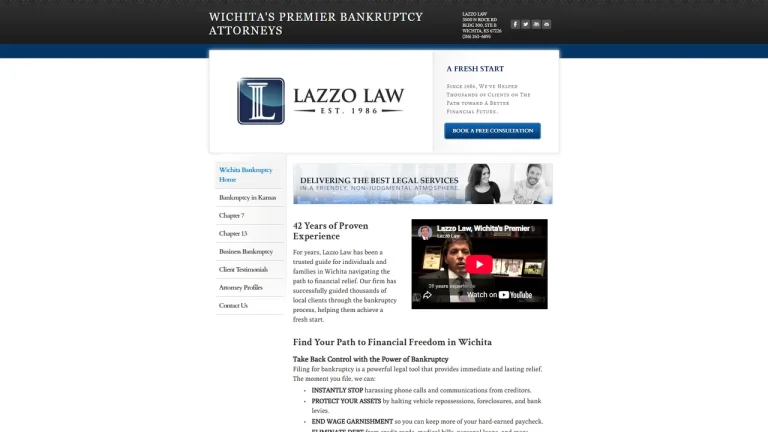
Lazzo Law - Wichita, KS
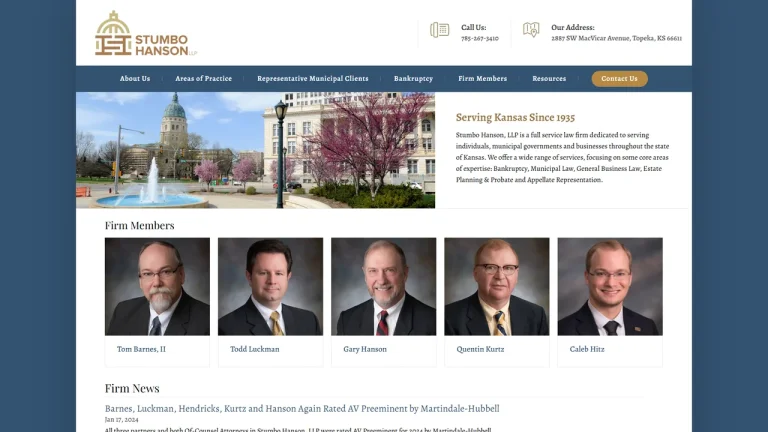
Stumbo Hanson, LLP, Topeka, KS

Bruce, Bruce & Lehman, L.L.C. - Wichita, KS

Hammond Zongker & Farris LLC - Wichita, KS
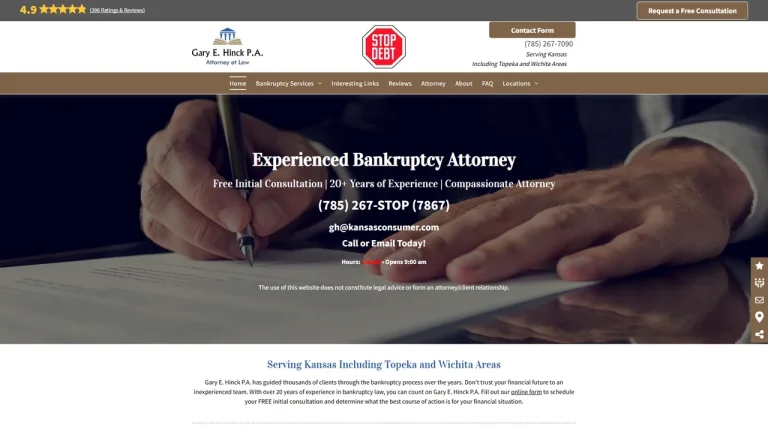
Gary E. Hinck P.A. - Topeka, KS
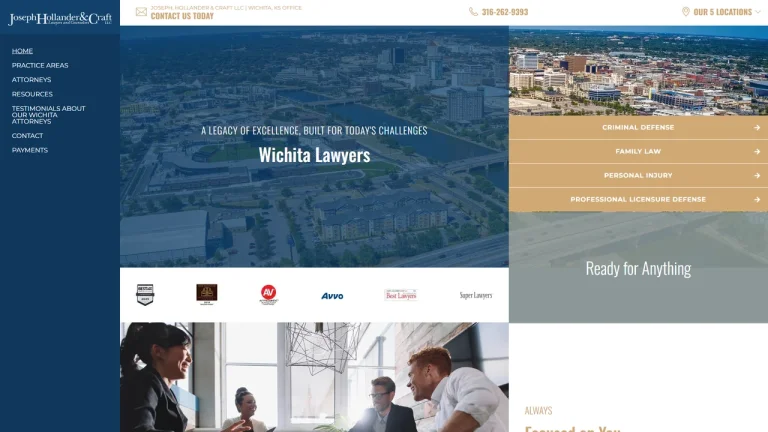
Joseph, Hollander & Craft LLC - Wichita, KS

Cary L Standiferd, Attorney At Law, Topeka, KS

Bryan D. Nicholson, Attorney at Law - Wichita, KS
Tax Problem Solver - Topeka, KS
Coons and Crump - Topeka, KS

Eric W. Lomas, Bankruptcy Attorney - Wichita, KS

Dewey and Lund LLP - Wichita, KS

L Donald Huelson Attorney at Law - Olathe, KS
Troy A. Berberick - Topeka, KS

Garrett Law LLC - Topeka, KS

Callahan Law Firm - Overland Park, KS

Attorney Broc E. Whitehead - Wichita, KS

Jordan Schwartz Law Office - Overland Park, KS
Kansas Legal Services - Kansas City, KS

Allen Hickey - Wichita, KS
Neis Michaux Law Office - Topeka, KS
Kansas Bankruptcy Ladies - Wichita, KS
Jeffrey L. Willis PA - Wichita, KS
Navigating Debt Relief Under Kansas Bankruptcy Jurisdiction
Financial hardship caused by sudden medical debts, business downturns, or wage garnishments impacts families and businesses across Kansas, from agricultural operations in Salina and Hutchinson to commercial enterprises in Wichita, Topeka, and Kansas City. Federal bankruptcy law provides legal relief to eliminate unmanageable debt and restore financial stability.
Bankruptcy proceedings in the state are handled exclusively by the United States Bankruptcy Court for the District of Kansas, with divisional courthouses in Wichita, Topeka, and Kansas City. Appellate reviews are heard by the Tenth Circuit Bankruptcy Appellate Panel or the U.S. District Court for the District of Kansas. Legal practitioners are admitted to the federal bar and regulated by the Kansas Supreme Court and the Kansas Bar Association.
Kansas is a strict bankruptcy opt-out state under Kan. Stat. Ann. § 60-2312, meaning debtors must utilize Kansas state statutory exemptions rather than federal exemptions. Working with an experienced Kansas bankruptcy attorney ensures that your homestead and personal property are shielded from bankruptcy trustee liquidation under state law.
Kansas Bankruptcy Legal Fees and Case Cost Structures
| Case Scenario | Fee Structure | Estimated Cost (USD) | Key Cost Determinants |
|---|---|---|---|
| Chapter 7 Individual Liquidation | Flat Fee | $1,200 - $2,500 | Income qualifies under Kansas median income means test, protecting assets under Kan. Stat. Ann. § 60-2304, debt discharge. |
| Chapter 13 Wage Earner Reorganization | Court-Approved Flat Fee | $3,500 - $5,000 | Three to five-year plan to cure mortgage arrears, restructure vehicle debt, and prevent residential foreclosure. |
| Emergency Filing to Stop Garnishment | Flat Fee | $1,500 - $3,000 | Expedited filing to invoke immediate automatic stay under 11 U.S. Code § 362 and stop sheriff auctions or bank levies. |
| Adversary Proceeding & Discharge Defense | Hourly Rate ($275 - $450/hr) | $3,500 - $12,000+ | Defending against creditor allegations of fraud or willful injury under 11 U.S. Code § 523(a) in bankruptcy court. |
Critical Legal Deadlines & Statutes in Kansas
Kansas opted out of the federal exemption scheme pursuant to Kan. Stat. Ann. § 60-2312, requiring debtors to claim exemptions established under Kansas statutes. The state provides one of the nation's strongest homestead protections under Kan. Stat. Ann. § 60-2301, shielding unlimited equity in a debtor's primary residence on up to 160 acres of agricultural land or one acre within an incorporated city.
Personal property exemptions are codified under Kan. Stat. Ann. § 60-2304, protecting household goods, clothing, jewelry up to $1,000, and tools of the trade up to $7,500. Upon filing a bankruptcy petition, 11 U.S. Code § 362 imposes an immediate automatic stay that halts all creditor collections, wage garnishments, and mortgage foreclosures.
Procedurally, debtors must complete mandatory credit counseling within 180 days prior to filing under 11 U.S. Code § 109(h). To qualify for Chapter 7 relief, an applicant must pass the Means Test under 11 U.S. Code § 707(b)(2), which evaluates average monthly income earned during the six full calendar months preceding the petition date. Creditors have 60 days following the first scheduled Meeting of Creditors to object to debt discharge.
Small Claims Limits vs. Federal Bankruptcy Court Jurisdiction
Under Kan. Stat. Ann. § 61-2703, the Kansas Small Claims Procedure Act is capped at $4,000 and attorneys are generally prohibited from appearing in small claims hearings under Kan. Stat. Ann. § 61-2707. Small claims courts have zero legal jurisdiction to discharge debt, alter loan agreements, or enforce the federal automatic stay.
Bankruptcy matters fall under the exclusive original jurisdiction of federal district courts pursuant to 28 U.S. Code § 1334. Attempting to file bankruptcy pro se or through non-lawyer petition preparers frequently leads to botched exemption schedules, trustee turnover demands, and dismissal of the case. Retaining a licensed Kansas bankruptcy attorney guarantees proper application of Kansas exemption laws and ensures complete discharge of qualifying debts.
Red Flags to Avoid When Hiring a Kansas Bankruptcy Lawyer
- High-volume petition mills that advertise artificially low fees only to charge extra for basic appearances at the Meeting of Creditors.
- Attorneys who fail to understand the Kansas opt-out statute under Kan. Stat. Ann. § 60-2312 and erroneously attempt to claim federal exemptions.
- Failing to properly document and claim the homestead exemption under Kan. Stat. Ann. § 60-2301, putting family home equity at risk.
- Advising debtors to transfer assets to family members or incur new debt before filing, which constitutes bankruptcy fraud.
Frequently Asked Questions
Can I protect my home in a Kansas bankruptcy?
Yes. Under Kan. Stat. Ann. § 60-2301, Kansas provides an unlimited homestead exemption for your primary residence on up to one acre within an incorporated city or up to 160 acres of farming land, provided residency requirements are met.
What is the difference between Chapter 7 and Chapter 13 in Kansas?
Chapter 7 liquidates non-exempt assets to eliminate qualifying unsecured debt within four to six months. Chapter 13 creates a three-to-five-year court-supervised repayment plan that allows debtors to cure mortgage arrears and keep non-exempt property.
Does Kansas allow debtors to use federal bankruptcy exemptions?
No. Under Kan. Stat. Ann. § 60-2312, Kansas has opted out of the federal bankruptcy exemption scheme. All debtors filing bankruptcy in Kansas must use the exemptions provided under Kansas state statutes.
How does the automatic stay protect me when I file for bankruptcy?
Pursuant to 11 U.S. Code § 362, the automatic stay goes into effect immediately upon filing your petition, legally barring creditors from continuing lawsuits, seizing bank accounts, garnishing paychecks, or executing foreclosures.
What debts cannot be discharged in a Kansas bankruptcy?
Under 11 U.S. Code § 523(a), non-dischargeable debts generally include child support, alimony, most student loans, recent tax obligations, and debts resulting from fraud or willful and malicious injury.