
Divorce Lawyers in Kansas
Navigating a marriage dissolution in Kansas requires experienced legal guidance to protect your financial assets, parental rights, and personal future. Experienced Kansas divorce attorneys guide clients through equitable property division, temporary support orders, and spousal maintenance negotiations in county district courts. Explore our verified directory below to schedule a confidential consultation with an experienced local divorce attorney.

Matthew Wideman Attorney-at-Law, LLC - Kansas City, KS
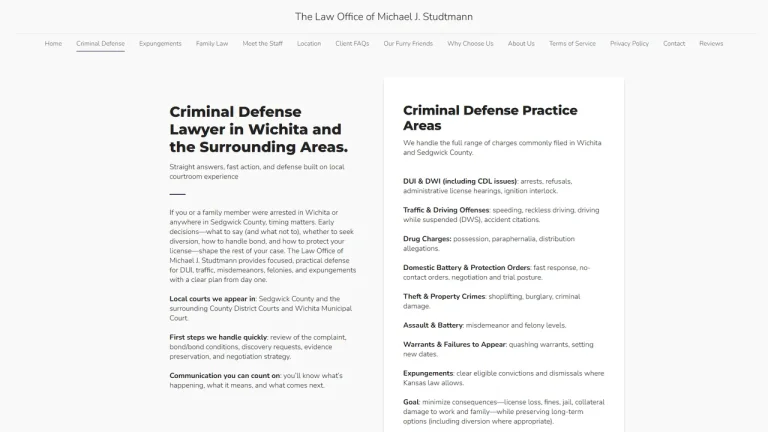
The Law Office of Michael J. Studtmann - Wichita, KS

Moore Law Center - Olathe, KS

Joseph, Hollander & Craft LLC - Overland Park, KS

Nguyen Law Offices, LLC - Wichita, KS
Topeka Family Law Offices - Topeka, KS


Baig Law Office, LLC - Overland Park, KS
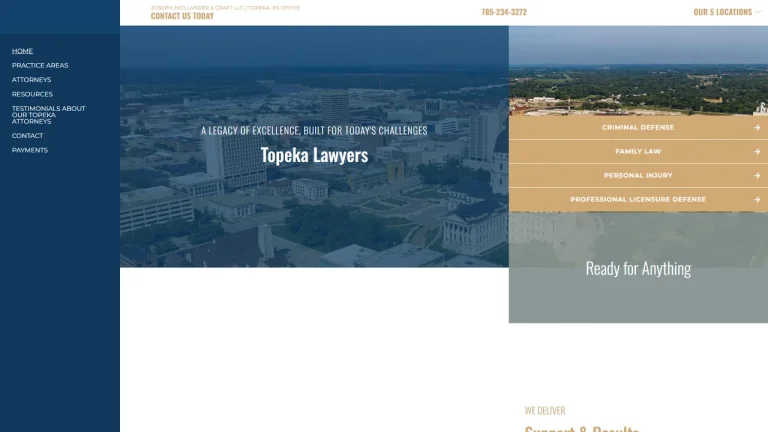
Joseph, Hollander and Craft LLC Topeka, KS
Jeffers Law Office - Overland Park, KS

Wiechman Law - Wichita, KS
Lauren Fields Attorney at Law - Overland Park, KS

Colgan Law Firm LLC - Kansas City, KS

The Law Offices of Tel Parrett - Olathe, KS

The Law Office of Zach V. Thomas, LLC - Olathe, KS

Penner Lowe Law Group, LLC - Wichita, KS
Larry C. Hoffman, Attorney at Law - Overland Park, KS
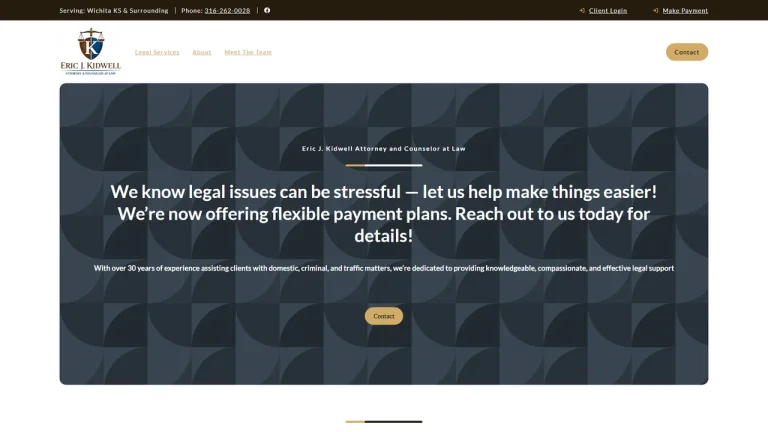
Eric Kidwell Attorney and Counselor at Law - Wichita, KS
Donna M Manning, Attorney at Law - Olathe, KS
Cordell & Cordell - Divorce Attorney Office - Overland Park, KS
Conwell Law, LLC - Topeka, KS

Beck & Gunn Law Office, LLC - Topeka, KS
Landon Law, LLC - Olathe, KS
Kansas Divorce Law and District Court Jurisdiction
Ending a marriage in Kansas is governed by the Kansas Family Law Code under Kan. Stat. Ann. § 23-2701. Kansas is a no-fault divorce state where parties commonly petition on the ground of incompatibility, eliminating the necessity of proving marital misconduct to obtain a decree.
Divorce petitions must be filed in the District Court of the county where either spouse resides, including high-volume family law benches such as Johnson County District Court in Olathe, Sedgwick County District Court in Wichita, and Shawnee County District Court in Topeka. Filings, motions for temporary orders, and domestic relations financial affidavits are submitted through Kansas Courts eFiling.
Retaining an attorney in good standing with the Kansas Bar Association (KBA) ensures adherence to mandatory waiting periods, accurate business and real estate appraisals, and equitable division of marital property pursuant to state statutory factors.
Kansas Divorce Legal Costs and Case Complexity
| Case Scenario | Fee Structure | Estimated Cost (USD) | Key Cost Determinants |
|---|---|---|---|
| Uncontested Divorce with Property Agreement | Flat Fee | $1,500 - $3,500 | Complete asset disclosure, absence of minor child disputes, streamlined decree drafting. |
| Contested Divorce with Real Estate & Retirement | Hourly / Retainer | $4,500 - $15,000 | Qualified Domestic Relations Order drafting, real property appraisals, deposition scope. |
| High-Net-Worth Divorce / Business Valuation | Hourly / Retainer | $12,000 - $40,000+ | Forensic accounting, business goodwill assessments, executive compensation splits. |
| Spousal Maintenance Dispute | Hourly / Retainer | $3,000 - $10,000 | Maintenance duration limits under Kan. Stat. Ann. § 23-2902, earning capacity proof. |
Critical Divorce Deadlines & Statutes in Kansas
To file for divorce in Kansas, at least one spouse must have been an actual resident of the state for at least sixty days immediately preceding the filing of the petition pursuant to Kan. Stat. Ann. § 23-2703. Once filed, Kansas imposes a mandatory statutory cooling-off period: under Kan. Stat. Ann. § 23-2708, no trial may be held and no final decree may be entered until sixty days have elapsed from the petition filing date, unless an emergency is declared by the court.
Kansas divides marital property under the rule of equitable distribution pursuant to Kan. Stat. Ann. § 23-2802, considering factors such as the age of the parties, the duration of the marriage, and the source of assets. Under Kan. Stat. Ann. § 23-2902, court-ordered spousal maintenance is strictly capped at a maximum duration of 121 months in the initial decree, although parties may petition for subsequent extensions not exceeding 121 months per motion upon showing good cause.
Self-Filing Risks vs. Professional District Court Representation
Kansas Small Claims Court, limited to $4,000 under Kan. Stat. Ann. § 61-2703, has zero legal authority over divorce, marriage dissolution, or marital property division. Divorce jurisdiction rests exclusively within the Kansas District Courts.
While pro se divorce packets exist for simple uncontested dissolutions, attempting to manage a divorce without counsel poses severe financial risks. Failing to file a compliant Domestic Relations Financial Affidavit or mishandling the division of KPERS public pensions, 401(k) plans, or family farms can result in irreversible financial forfeiture. A skilled divorce attorney obtains temporary support orders under Kan. Stat. Ann. § 23-2707, manages formal discovery to uncover hidden assets, and drafts binding separation agreements that withstand post-decree challenge.
Red Flags to Avoid When Choosing a Kansas Divorce Lawyer
- Promising an absolute 50/50 property split without reviewing Kansas equitable distribution factors under Kan. Stat. Ann. § 23-2802.
- Attempting dual representation of both spouses in a divorce, which creates an inherent conflict of interest and violates Kansas ethics rules.
- Failing to secure Qualified Domestic Relations Orders to divide private or military retirement accounts before the final decree is signed.
- Inexperience with local district court judges and local administrative rules in counties like Johnson, Sedgwick, or Shawnee.
Frequently Asked Questions
What is the residency requirement to file for divorce in Kansas?
Under Kan. Stat. Ann. § 23-2703, either the petitioner or the respondent must have been an actual resident of Kansas for at least sixty days immediately prior to the filing of the divorce petition in the local District Court.
What is the mandatory 60-day waiting period for a Kansas divorce?
Pursuant to Kan. Stat. Ann. § 23-2708, no divorce hearing or final decree may be entered until at least sixty days have passed since the petition was filed, unless the court grants an emergency motion based on extraordinary circumstances.
How is property divided in a Kansas divorce?
Kansas is an equitable distribution state under Kan. Stat. Ann. § 23-2802. The court divides all marital and separate property justly and reasonably based on the age of the parties, marriage duration, earning capacities, and dissipation of assets, which does not necessarily require an equal 50/50 split.
How long can spousal maintenance last under Kansas law?
Under Kan. Stat. Ann. § 23-2902, the court cannot award spousal maintenance for a period exceeding 121 months in the initial decree. The recipient may petition the court for an extension prior to expiration, which may be renewed in increments up to 121 months upon judicial review.
Can temporary financial support be ordered during a Kansas divorce?
Yes. Under Kan. Stat. Ann. § 23-2707, a party may request temporary orders for spousal support, child custody, parenting time, child support, and exclusive possession of the marital residence while the divorce proceedings remain pending.