
IRS Dispute Lawyers in Kansas
Confronting federal tax audits or IRS collection actions in Kansas requires assertive legal advocacy to protect your assets and resolve substantial tax liabilities. A dedicated IRS dispute attorney can negotiate offers in compromise, secure levy releases, and represent you before the U.S. Tax Court. Explore our directory below to connect with proven tax controversy lawyers in Kansas.

Boxelder Consulting - Wichita, KS

Kansas Legal Services - Kansas City, KS
Tax Solutions Law Firm, LLC - Overland Park, KS
Joe G. English, JD, CPA, Attorney-at-Law - Wichita, KS

Wiesner and Frackowiak, LC - Overland Park, KS
Lazzo Law - Wichita, KS

Tax Assistance Group - Overland Park, KS
Bever Dye, LC - Wichita, KS
Stanley G. Andeel - Wichita, KS

Krieger Law Firm, LLC - Olathe, KS
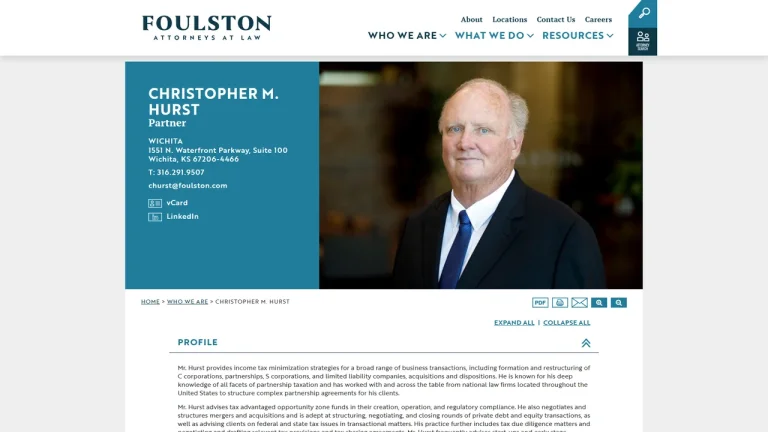
Christopher M. Hurst - Wichita, KS
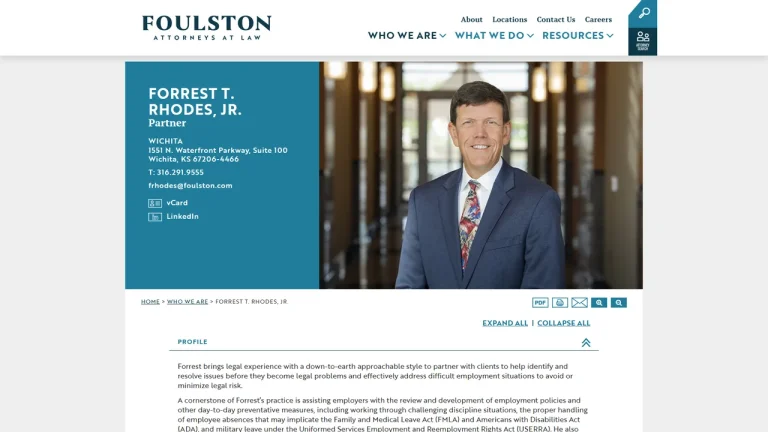
Forrest T. Rhodes Jr. - Wichita, KS

Law Office of Cathleen A. Gulledge - Wichita, KS

Jordan Schwartz Law Office - Overland Park, KS
The Law Office of Matthew R Williams - Topeka, KS
Resolving Federal Tax Controversies and IRS Audits in Kansas
Federal tax audits and collection enforcement actions in the State of Kansas present significant legal and financial risks for individuals and commercial enterprises. Operating out of field offices in Wichita, Topeka, and Overland Park, Internal Revenue Service revenue agents and officers aggressively pursue unfiled returns, corporate payroll discrepancies, and substantial tax deficiencies.
When an administrative resolution cannot be achieved with local revenue officers or through the IRS Independent Office of Appeals, tax controversy disputes are litigated in federal judicial venues. The United States Tax Court holds regular trial calendars for regional taxpayers in Kansas City. Concurrently, tax refund litigation and federal tax lien foreclosure actions proceed in the United States District Court for the District of Kansas at courthouses in Wichita, Topeka, or Kansas City.
Retaining an attorney admitted to practice before the Kansas Supreme Court, the U.S. District Court for the District of Kansas, and the United States Tax Court is critical. An experienced tax litigator provides the protection of attorney-client privilege, manages Collection Due Process (CDP) appeals, challenges civil penalties, and negotiates structured debt settlements under federal law.
Kansas IRS Tax Controversy Representation Fee Structure
| Case Scenario | Fee Structure | Estimated Cost (USD) | Key Cost Determinants |
|---|---|---|---|
| IRS Audit Defense & Examination Representation | Hourly Retainer | $2,500 - $6,500 | Correspondence vs. field audit scope, business expense substantiation, and IRS Independent Office of Appeals prep. |
| Collection Due Process (CDP) & Bank Levy Defense | Flat Fee or Hourly | $1,800 - $4,500 | Form 12153 filing timeliness, wage garnishment or levy releases, and proposing viable collection alternatives. |
| Offer in Compromise (OIC) & Debt Settlement | Flat Fee or Staged Retainer | $3,000 - $8,000 | Doubt as to collectibility proof, asset valuation analysis, and reasonable collection potential (RCP) calculations. |
| United States Tax Court Petition & Litigation | Hourly Retainer | $5,000 - $20,000 | 90-day petition filing, IRS Chief Counsel negotiations, formal stipulation of facts, and trial proceedings. |
Critical Legal Deadlines & Statutes in Kansas
Federal tax controversy practice is governed by unyielding statutory deadlines established in the Internal Revenue Code. Upon receiving a Statutory Notice of Deficiency (90-Day Letter), a taxpayer has exactly 90 calendar days to file a formal petition with the United States Tax Court pursuant to 26 U.S.C. § 6213(a). This deadline is strictly jurisdictional and cannot be extended by IRS agents or the court.
When the IRS issues a Final Notice of Intent to Levy, the taxpayer has exactly 30 calendar days to file Form 12153 requesting a Collection Due Process (CDP) hearing under 26 U.S.C. § 6330. Timely filing a CDP request legally suspends all administrative collection actions, including bank levies and wage seizures, while preserving the right to appeal adverse decisions to the Tax Court.
The IRS generally has three years from the date a tax return is filed to assess additional taxes under 26 U.S.C. § 6501(a). Once a tax liability is formally assessed, the Collection Statute Expiration Date (CSED) under 26 U.S.C. § 6502(a) gives the IRS ten years to collect the outstanding balance. Debt settlements through the Offer in Compromise program operate under 26 U.S.C. § 7122, while spouses seeking relief from joint tax liabilities must file under 26 U.S.C. § 6015.
Small Claims Limitations vs. Federal Tax Controversy Counsel
Under K.S.A. § 61-2703, the Kansas Small Claims Procedure Act is limited to civil disputes where the amount claimed does not exceed $4,000. State small claims courts have zero authority over federal administrative agencies and cannot adjudicate IRS liabilities, modify tax liens, or grant injunctive relief against federal levies.
Federal tax controversy demands sophisticated knowledge of federal procedural codes, Treasury regulations, and Tax Court rules. Taxpayers attempting to negotiate directly with revenue officers frequently volunteer unrequired financial records, compromise their negotiating leverage, or consent to unrealistic installment plans. Retaining a licensed tax controversy attorney preserves attorney-client privilege, challenges erroneous penalty assessments, halts collection seizures, and ensures aggressive representation before the U.S. Tax Court.
Red Flags When Hiring a Kansas IRS Dispute Lawyer
- National tax relief companies that advertise pennies-on-the-dollar settlements without evaluating your Reasonable Collection Potential (RCP).
- Non-attorney representatives who cannot represent you in the United States Tax Court or the U.S. District Court for the District of Kansas.
- Firms charging large upfront non-refundable retainers without explaining the procedural hurdles of the IRS Independent Office of Appeals.
- Missing the mandatory 90-day deadline under 26 U.S.C. § 6213(a), which forfeits your legal right to dispute taxes before paying them.
Frequently Asked Questions
What is the 90-day deadline for an IRS Notice of Deficiency?
Under 26 U.S.C. § 6213(a), you have exactly 90 calendar days from the date stamped on the notice to file a petition with the U.S. Tax Court to challenge the tax without paying it first.
What is a Collection Due Process (CDP) hearing?
A CDP hearing under 26 U.S.C. § 6330 is an administrative appeal that legally halts IRS levies and garnishments while an independent appeals officer evaluates payment alternatives.
How does an Offer in Compromise work?
Authorized by 26 U.S.C. § 7122, an Offer in Compromise allows eligible taxpayers to resolve unpaid tax liabilities for less than the full balance if they prove an inability to pay.
What is the IRS Trust Fund Recovery Penalty?
Under 26 U.S.C. § 6672, the IRS can hold business owners, officers, and payroll managers personally liable for unpaid employee income and payroll withholding taxes.
How long can the IRS legally collect unpaid back taxes?
Pursuant to 26 U.S.C. § 6502(a), the IRS has a ten-year Collection Statute Expiration Date (CSED) from the date of formal tax assessment to collect outstanding debts.