
Tax Lawyers in Kansas
Navigating state and federal tax controversies in Kansas requires skilled legal representation to resolve tax audits and reduce substantial financial exposure. A qualified Kansas tax attorney can negotiate with the Kansas Department of Revenue and represent your interests before administrative appeals boards. Browse our verified directory below to consult trusted local tax counsel.
Tax Problem Solver - Topeka, KS

Tax Assistance Group - Overland Park, KS
Joe G. English, JD, CPA, Attorney-at-Law - Wichita, KS
Woner, Reeder & Girard, P.A., Topeka, KS
The Law Office of Matthew R Williams - Topeka, KS
Gary E. Hinck, P.A. - Wichita, KS

Dreiling Law - Olathe, KS
Bever Dye, LC - Wichita, KS
Duggan Shadwick Doerr & Kurlbaum LLC - Overland Park, KS

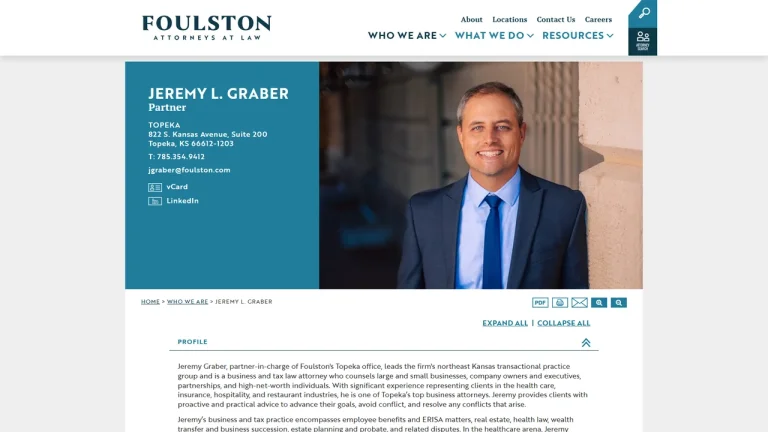
Foulston Siefkin LLP - TOPEKA, KS
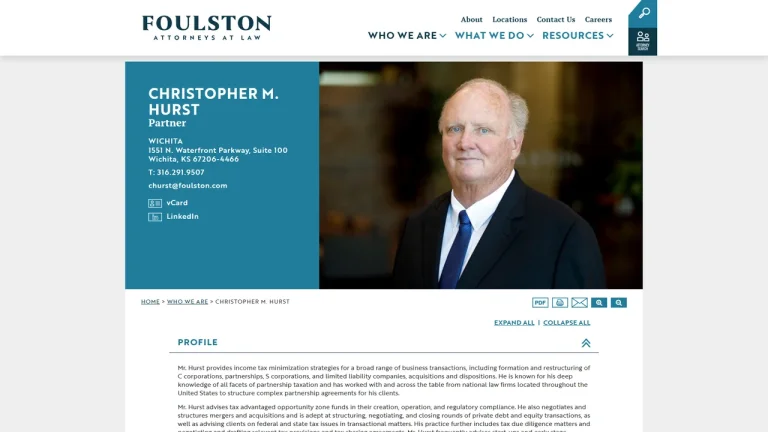
Christopher M. Hurst - Wichita, KS
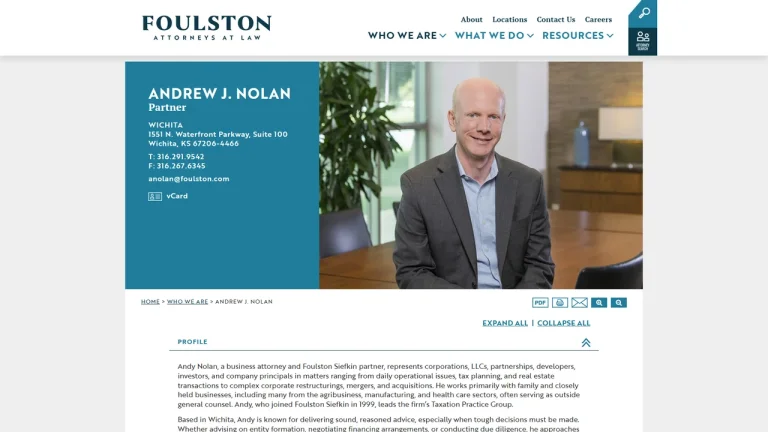
Andrew J. Nolan - Foulston Siefkin LLP - Wichita, KS

Kansas Legal Services - Kansas City, KS

Sloan, Eisenbarth, Glassman, McEntire and Jarboe, L.L.C. - Topeka, KS
Tax Solutions Law Firm, LLC - Overland Park, KS

Riordan, Fincher & Mayo, PA - TOPEKA, KS
Federal Public Defender - Wichita, KS

McKinney and McKinney - Topeka, KS

Krieger Law Firm, LLC - Olathe, KS
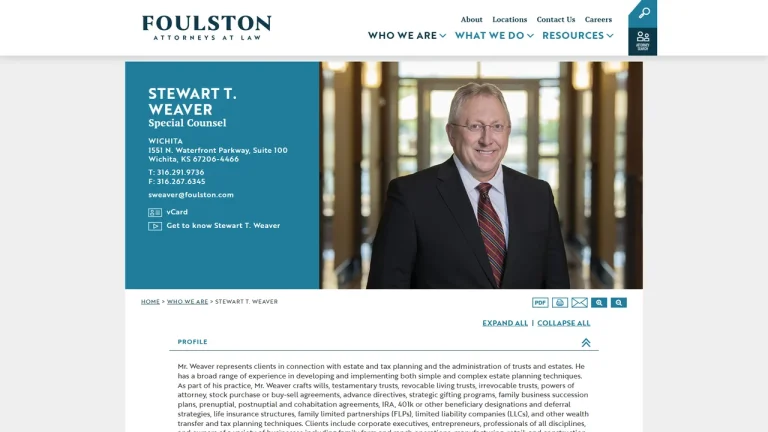
Stewart T. Weaver - Wichita, KS

Eidelman Law Firm - Wichita, KS

Property Tax Law Group - Overland Park, KS
Navigating State and Federal Tax Controversies in Kansas
Commercial enterprises and individual taxpayers in the State of Kansas operate within a detailed tax structure enforced by state and federal authorities. From the corporate corridors of Overland Park, Olathe, and Wichita to agribusiness operations in Salina, Topeka, and Dodge City, managing state income tax, sales and use tax, withholding obligations, and commercial property assessments requires rigorous statutory compliance.
State tax administration is overseen by the Kansas Department of Revenue (KDOR) Division of Taxation in Topeka. If audit assessments or tax determinations are disputed, taxpayers pursue administrative remedies through the Kansas Board of Tax Appeals (BOTA), an independent state administrative tax tribunal. Judicial review of BOTA decisions proceeds to the Shawnee County District Court or the Kansas Court of Appeals, with filings managed via the Kansas Courts eFiling system.
Retaining a tax attorney licensed by the Kansas Supreme Court and active in the Kansas Bar Association (KBA) provides an essential shield against aggressive state enforcement. Qualified counsel coordinates formal audit defense, files timely administrative protests, challenges commercial real estate valuations, and negotiates state tax warrant releases to prevent commercial disruption.
Kansas Tax Controversy Legal Fee Structures
| Case Scenario | Fee Structure | Estimated Cost (USD) | Key Cost Determinants |
|---|---|---|---|
| KDOR Audit Defense & Informal Conference | Hourly Retainer | $2,000 - $5,500 | Audit scope, corporate sales and withholding records, nexus issues, and informal conference brief preparation. |
| Kansas Board of Tax Appeals (BOTA) Proceeding | Hourly Retainer | $4,000 - $12,000 | Formal evidentiary hearing preparation, expert witness testimony, legal briefing, and commercial valuation models. |
| Commercial Ad Valorem Property Tax Protest | Contingency or Hourly | 25% - 35% of tax savings | County appraiser informal meetings, commercial property valuation variance, and BOTA equalization filings. |
| State Tax Warrant Defense & Penalty Abatement | Flat Fee or Hourly | $1,500 - $3,500 | Warrant lien releases, KDOR closing agreements, bank levy mitigation, and showing reasonable cause. |
Critical Legal Deadlines & Statutes in Kansas
Kansas tax proceedings are governed by strict statutory deadlines that bar relief if missed. Under the Kansas Income Tax Act, codified at K.S.A. § 79-3201 et seq., a taxpayer disputing an assessment issued by the Kansas Department of Revenue must request an informal conference under K.S.A. § 79-3226 within 60 days from the mailing date of the proposed assessment.
If the informal conference does not resolve the controversy and KDOR issues a final written determination, the taxpayer has exactly 30 days from the date of the order to appeal to the Kansas Board of Tax Appeals pursuant to K.S.A. § 74-2426. Furthermore, commercial property owners seeking to challenge ad valorem real estate valuations must file a formal payment under protest application under K.S.A. § 79-2005 on or before December 20, or by May 10 if the second-half payment is made.
Statutes of limitation on state tax assessments are regulated under K.S.A. § 79-3230, which generally restricts KDOR from assessing additional income tax beyond three years from the date the return was filed. For business entities, officers and directors face personal liability for unremitted sales and withholding taxes under trust fund recovery provisions set forth in K.S.A. § 79-3233b.
Small Claims Limitations vs. Tax Controversy Representation
Under K.S.A. § 61-2703, the Kansas Small Claims Procedure Act limits jurisdiction to monetary disputes up to $4,000. Small claims courts operate without formal discovery and have zero legal authority to hear state tax controversies, cancel KDOR assessments, or adjust county property tax valuations.
Tax controversies involve specialized administrative law and jurisdictional prerequisites before the Kansas Board of Tax Appeals. Taxpayers attempting to handle audits or valuation disputes without counsel risk waiving procedural rights, missing the strict 60-day informal conference deadline, and triggering statutory liens under KDOR tax warrants. Retaining an experienced tax attorney protects business continuity, challenges incorrect auditor assumptions, and pursues tax reductions through administrative and judicial channels.
Red Flags When Hiring a Kansas Tax Lawyer
- Non-attorney representation companies that lack authorization to practice before the Kansas Board of Tax Appeals (BOTA).
- Guarantees of specific tax savings or penalty abatements prior to conducting a detailed audit of KDOR assessment records.
- Firms failing to monitor the strict 60-day deadline under K.S.A. § 79-3226 to file an informal conference request with KDOR.
- Attorneys lacking active standing with the Kansas Supreme Court or who are unfamiliar with BOTA administrative procedure.
Frequently Asked Questions
What is the deadline to appeal an assessment from the Kansas Department of Revenue?
Under K.S.A. § 79-3226, you have 60 days from the mailing date of the proposed assessment to submit a written request for an informal conference with the Secretary of Revenue.
What is the Kansas Board of Tax Appeals (BOTA)?
The Kansas Board of Tax Appeals is an independent state administrative tribunal governed by K.S.A. § 74-2426 that adjudicates disputes between taxpayers and KDOR or county appraisers.
Can corporate officers be held personally liable for Kansas business taxes?
Yes. Under K.S.A. § 79-3233b, corporate officers, directors, and LLC managers with control over financial decisions can be held personally liable for unpaid state sales and employee withholding taxes.
How do I challenge commercial real estate tax valuations in Kansas?
Commercial owners can appeal the initial valuation in spring or file a payment under protest by December 20 pursuant to K.S.A. § 79-2005, taking unresolved claims to BOTA.
What is the statute of limitations for a Kansas state tax audit?
Pursuant to K.S.A. § 79-3230, KDOR generally has three years from the date an income tax return is filed to audit and assess additional taxes, except in cases of fraud or unfiled returns.