
Financial & IP Lawyers in Topeka
Retaining an experienced financial and intellectual property lawyer in Topeka protects your proprietary assets, commercial lending portfolios, and brand equity under state and federal law. Dedicated legal counsel manages trademark filings, trade secret enforcement, and regulatory compliance before Kansas administrative agencies and Shawnee County courts. Explore our directory below to consult with qualified Topeka financial and IP attorneys.
Nystrom Law Offices - Topeka, KS
Tax Problem Solver - Topeka, KS

McKinney and McKinney - Topeka, KS

Zimmerman, & Zimmerman P.A. - Topeka, KS

Newman, Hesse and Associates PA Topeka, KS
Gary E. Hinck P.A. - Topeka, KS

Fisher Patterson Sayler Smith - Topeka, KS

Garrett Law LLC - Topeka, KS
Chris W. Steffens, Attorney at Law - TOPEKA, KS
Foulston Siefkin LLP - TOPEKA, KS

Troy A. Berberick - Topeka, KS
Neis Michaux Law Office - Topeka, KS
Mack & Associates, LLC - Topeka, KS
Coons and Crump - Topeka, KS
Riordan, Fincher & Mayo, PA - TOPEKA, KS
Stumbo Hanson, LLP, Topeka, KS

Cary L Standiferd, Attorney At Law, Topeka, KS

McCullough Wareheim & Labunker - Topeka, KS

The Law Office of Matthew R Williams - Topeka, KS
Kansas Legal Services - Topeka, KS
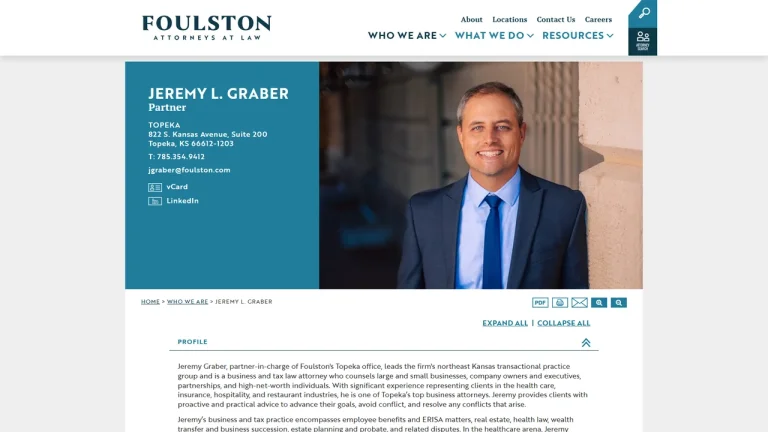
Jeremy L. Graber - Topeka, KS
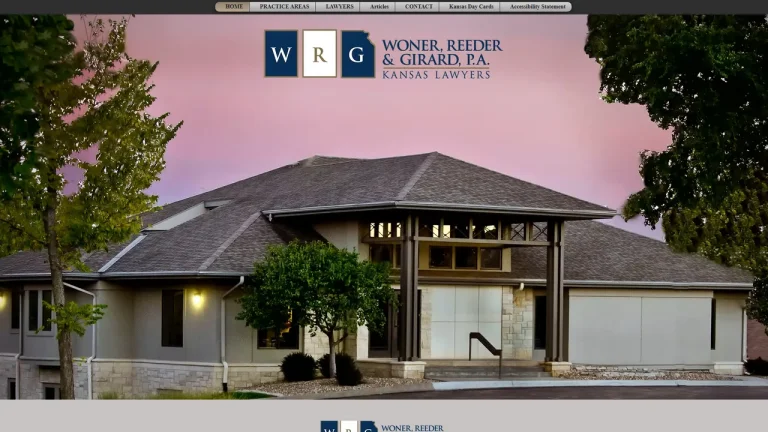
Woner, Reeder & Girard, P.A., Topeka, KS

Financial & IP Legal Practice in Topeka, KS
Managing financial transactions and intellectual property assets in Topeka, Kansas requires navigating both state regulatory agencies and local court systems. As the state capital, Topeka is the epicenter of Kansas administrative governance, housing key regulatory bodies such as the Office of the State Bank Commissioner (OSBC) and the Kansas Secretary of State, which administers statewide trademark filings under the Kansas Trademark Act, codified at K.S.A. § 81-201.
Commercial and intellectual property disputes in Topeka are divided between state and federal jurisdictions. State contract enforcements, secured transactions under the Kansas Uniform Commercial Code, and trade secret claims are adjudicated by the Shawnee County District Court-the 3rd Judicial District of Kansas located at the Shawnee County Courthouse, 200 SE 7th Street. Conversely, federal patent prosecution, federal trademark disputes under the Lanham Act, and copyright infringement litigations are heard at the United States District Court for the District of Kansas, located at the Frank Carlson Federal Building at 444 SE Quincy Street in Downtown Topeka.
From commercial enterprises in Downtown Topeka and the NOTO Arts & Entertainment District to corporate lenders and technology startups along the Wanamaker corridor, securing experienced legal counsel is essential. Local financial and IP lawyers structure secured lending instruments under K.S.A. § 84-9-101, register proprietary marks, and litigate non-disclosure agreements to safeguard your competitive advantage.
Financial & IP Legal Fee Guidelines
| Case Scenario | Fee Structure | Estimated Cost (USD) | Key Cost Determinants |
|---|---|---|---|
| Kansas State & Federal Trademark Registration | Flat Fee ($1,000 - $2,500) | $1,000 - $2,500 | Comprehensive clearance search depth, USPTO vs. Kansas Secretary of State filings, substantive office action responses |
| Commercial Loan Documentation & UCC Perfection | Flat Fee or Hourly ($250 - $425/hr) | $2,000 - $6,000 | Security agreement drafting, perfection under Article 9, personal guarantee structuring, asset priority review |
| Trade Secret Protection & NDA Enforcement | Hourly Retainer ($275 - $475/hr) | $3,500 - $10,000 | Emergency injunctive relief needs, digital forensics analysis, reasonableness of restrictive covenants |
| Federal Patent or Trademark Infringement Litigation | Hourly Retainer ($350 - $600/hr) | $15,000 - $50,000+ | Frank Carlson Courthouse trial duration, technical expert witness retainers, claim construction (Markman) hearings |
Critical Legal Deadlines & Statutes in Kansas
Financial institutions, business owners, and creators in Topeka must comply with rigid statutory deadlines to maintain legal remedies and asset protections:
- Kansas Trade Secret Misappropriation: Under the Kansas Uniform Trade Secrets Act, K.S.A. § 60-3325, an action for misappropriation must be commenced within three years after the misappropriation is discovered or reasonably should have been discovered.
- State Trademark Duration & Renewal: State trademark registrations filed with the Kansas Secretary of State remain effective for five years and must be renewed within six months prior to expiration under K.S.A. § 81-206.
- Written Financial Contract Breach: Under K.S.A. § 60-511, actions upon written commercial contracts, promissory notes, or financial loan defaults must be initiated within five years.
- UCC Secured Transactions Perfection: Filing financing statements with the Kansas Secretary of State to perfect security interests in personal property collateral is governed pursuant to K.S.A. § 84-9-310.
- Federal Trademark Infringement: Civil actions for infringement of federally registered marks are brought under the Lanham Act, specifically 15 U.S. Code § 1114.
- Statutory Trade Secret Injunctions: Courts are authorized to grant injunctions against actual or threatened trade secret misappropriation under K.S.A. § 60-3321.
Small Claims Limits vs. Retaining Legal Counsel
Under the Kansas Small Claims Procedure Act, specifically K.S.A. § 61-2703, small claims recovery is strictly limited to monetary actions not exceeding $4,000. Small claims courts resolve minor financial disagreements without the formality of legal counsel under K.S.A. § 61-2707.
However, small claims courts possess zero jurisdiction over intellectual property rights, federal patent disputes, or equitable injunctions. The court cannot issue temporary restraining orders (TROs) to halt trade secret misappropriation or order the impoundment of counterfeit products. Those equitable remedies require filing in the Shawnee County District Court or the Frank Carlson Federal Courthouse in Topeka. Furthermore, corporations and LLCs cannot appear pro se in plenary civil litigation; retaining a licensed financial and IP lawyer is mandatory to prosecute commercial defaults or defend proprietary brand assets.
Red Flags & Hiring Precautions in Kansas City
- Skipping Comprehensive Clearance Searches: Beware of practitioners who register trademarks with the Kansas Secretary of State without conducting federal USPTO clearance searches, leaving your mark open to federal cancellation actions.
- Overly Broad Non-Compete and IP Covenants: Kansas courts scrutinize trade restraint agreements; ensure your counsel drafts restrictive covenants that are reasonable in geographic scope and duration to survive judicial review.
- Confusing State Registration with Federal Protection: State trademark registration under K.S.A. § 81-202 protects your brand only within Kansas; counsel should explain when nationwide federal protection is necessary.
- Opaque Fee Agreements: Ensure your legal engagement clearly distinguishes between routine document preparation fees, USPTO administrative fees, and hourly litigation retainers.
Frequently Asked Questions
What is the difference between a Kansas state trademark and a federal trademark?
A Kansas trademark registered under K.S.A. § 81-202 with the Kansas Secretary of State protects your brand exclusively within the state of Kansas. A federal trademark registered with the USPTO under 15 U.S. Code § 1051 provides nationwide protection and the legal presumption of ownership across all states.
Where are intellectual property lawsuits filed in Topeka, KS?
Federal patent, copyright, and Lanham Act trademark claims are heard at the United States District Court for the District of Kansas at the Frank Carlson Federal Building in Downtown Topeka. State trade secret and contract breach disputes are filed in the Shawnee County District Court.
What is the statute of limitations for trade secret theft in Kansas?
Under the Kansas Uniform Trade Secrets Act, K.S.A. § 60-3325, an action for misappropriation must be filed within three years after the misappropriation is discovered or reasonably should have been discovered through the exercise of reasonable diligence.
How do lenders perfect a security interest in commercial collateral in Kansas?
Lenders perfect a security interest under the Kansas Uniform Commercial Code by executing a valid security agreement and filing a UCC-1 financing statement with the Kansas Secretary of State in Topeka pursuant to K.S.A. § 84-9-310.
Can an LLC represent itself in commercial IP litigation in Topeka?
No. Under Kansas civil procedure and federal court rules, artificial legal entities such as limited liability companies and corporations cannot represent themselves pro se in plenary litigation; they must appear through a licensed attorney.