
Tax Lawyers in Wichita
Resolving complex state and federal tax liabilities in Wichita demands assertive advocacy before administrative revenue authorities. An experienced tax attorney defends against KDOR and IRS audits, halts bank levies, and negotiates binding settlement agreements before trial. Explore our verified directory below to schedule a case review with a trusted Wichita tax lawyer.
Joe G. English, JD, CPA, Attorney-at-Law - Wichita, KS
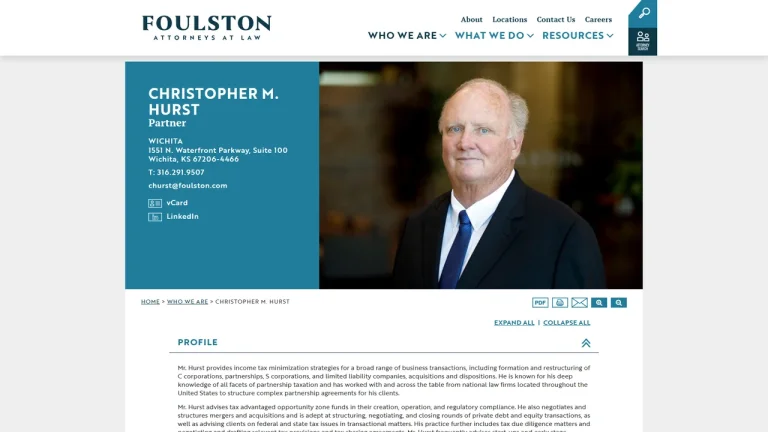
Christopher M. Hurst - Wichita, KS

Eidelman Law Firm - Wichita, KS

Law Office of Cathleen A. Gulledge - Wichita, KS
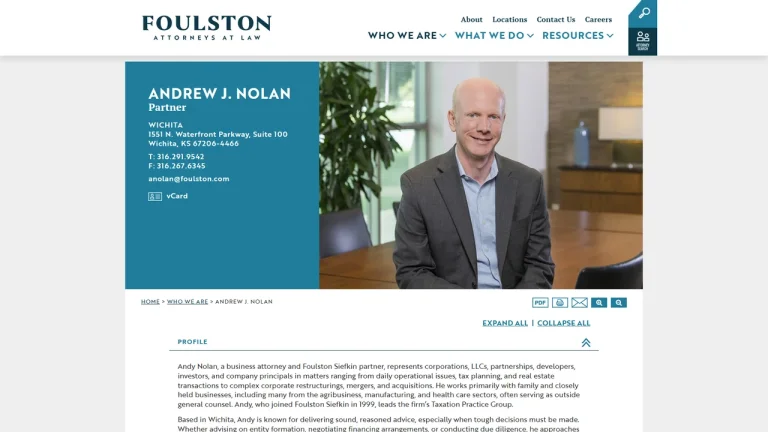
Andrew J. Nolan - Foulston Siefkin LLP - Wichita, KS
Boxelder Consulting - Wichita, KS
Bever Dye, LC - Wichita, KS
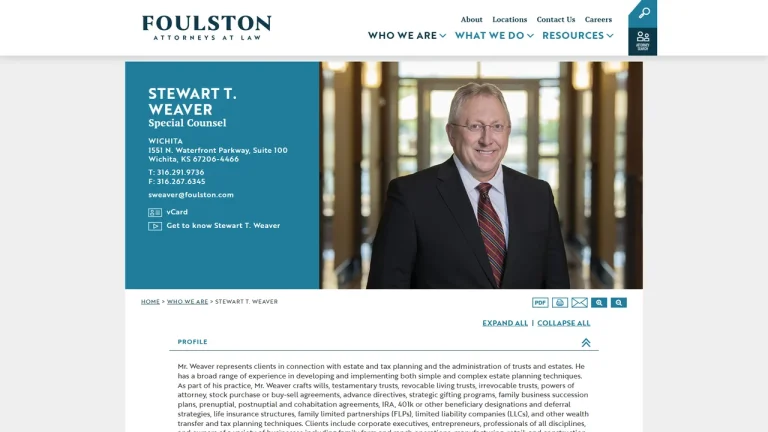
Stewart T. Weaver - Wichita, KS
Gary E. Hinck, P.A. - Wichita, KS
State and Federal Tax Advocacy in Wichita, Kansas
Navigating tax audits, assessments, and enforcement actions requires experienced legal counsel in Wichita. As the regional economic center for South Central Kansas, Wichita supports major aviation manufacturing facilities, corporate headquarters, logistics operations, and small businesses along Kellogg Avenue and the Rock Road commercial district. Both business entities and individual filers in Sedgwick County face rigorous compliance standards from state and federal revenue agencies.
State tax disputes involving sales tax audits, withholding liabilities, or corporate franchise taxes originate through the Kansas Department of Revenue (KDOR) Wichita field office, with administrative appeals heard by the Kansas Board of Tax Appeals (BOTA). Local real estate tax valuation challenges are addressed initially with the Sedgwick County Appraiser at the Sedgwick County Courthouse, located at 525 North Main Street. Federal tax controversies involving the Internal Revenue Service are litigated before the United States Tax Court or the United States District Court for the District of Kansas - Wichita Division at 401 North Market Street.
Engaging a skilled Wichita tax lawyer ensures your assets are protected against tax warrants and administrative levies. Local counsel communicates directly with KDOR and IRS revenue agents, manages formal administrative appeals conferences, structures pass-through entity tax strategies, and defends against personal liability assessments under corporate trust fund tax statutes.
Fee Arrangements for Wichita Tax Legal Representation
| Case Scenario | Fee Structure | Estimated Cost (USD) | Key Cost Determinants |
|---|---|---|---|
| KDOR Sales & Corporate Income Tax Audit | Hourly ($275 - $450/hr) | $2,500 - $6,000 | Audit scope, statistical transaction sampling, electronic accounting reconciliation with KDOR auditors |
| Kansas Board of Tax Appeals (BOTA) Action | Hourly or Retainer | $3,500 - $8,000 | Evidentiary hearing presentation, appraisal evidence analysis, formal statutory brief submission |
| Sedgwick County Property Tax Valuation Dispute | Flat Fee or Contingency on Tax Savings | $1,500 - $4,000 | Commercial appraisal reviews, informal appraiser negotiations, presentation of valuation evidence before BOTA |
| IRS Notice of Deficiency & Tax Court Petition | Retainer / Hourly ($300 - $500/hr) | $3,000 - $7,500 | Strict 90-day petition drafting, IRS Independent Appeals conferences, trial brief preparation |
Critical Legal Deadlines & Statutes in Kansas
State and federal tax proceedings operate under rigid statutory deadlines. Under Kan. Stat. Ann. § 79-3226, a taxpayer receiving a final assessment notice from the Kansas Department of Revenue has exactly 60 days to request an informal conference with the Secretary of Revenue. Failing to request this conference within the 60-day window causes the assessment to become final, legally binding, and subject to collection.
If an adverse determination is issued after the conference, the taxpayer has 30 days to appeal to the Kansas Board of Tax Appeals pursuant to Kan. Stat. Ann. § 74-2426. For local real estate tax disputes in Sedgwick County, property owners must file an appeal for equalization within 30 days of the mailing date of the annual valuation notice under Kan. Stat. Ann. § 79-1448. On the federal side, receiving a Statutory Notice of Deficiency from the IRS triggers a non-extendable 90-day deadline under 26 U.S. Code § 6213(a) to file a petition in the United States Tax Court. Under 26 U.S. Code § 6330(a)(3)(B), a taxpayer has 30 days from a Final Notice of Intent to Levy to file a Collection Due Process request, and general assessments are limited by a 3-year statute under 26 U.S. Code § 6501(a).
Small Claims Court Inapplicability vs. Tax Controversy Defense
The small claims division of the Sedgwick County District Court operates under Kan. Stat. Ann. § 61-2703, which establishes an absolute recovery threshold of $4,000 for monetary controversies. Small claims courts have zero legal jurisdiction over state or federal tax disputes. Tax assessments must be contested through specialized administrative avenues and established state and federal tax tribunals.
Attempting to handle tax disputes without an attorney often leads to severe enforcement actions, such as state tax warrants filed in the Sedgwick County District Court, federal tax liens, frozen business operating accounts, and the revocation of sales tax certificates. A qualified Wichita tax lawyer understands administrative appeal procedures, asserts statutory penalty abatement defenses, and structures enforceable payment agreements that safeguard commercial operations and personal assets.
Red Flags When Selecting a Wichita Tax Attorney
- National tax resolution call centers promising unrealistic settlements for pennies on the dollar without reviewing KDOR or IRS financial transcripts.
- Firms lacking licensed attorneys admitted to practice before the Kansas Supreme Court or the United States Tax Court.
- Non-attorney representatives who cannot invoke attorney-client privilege during sensitive state or federal tax examinations.
- Attorneys unfamiliar with Sedgwick County property tax appraisal procedures or Kansas Board of Tax Appeals rules.
Frequently Asked Questions
What is the Kansas Board of Tax Appeals (BOTA)?
The Kansas Board of Tax Appeals is the state tax tribunal with jurisdiction to hear appeals regarding property valuations, state income taxes, and sales tax assessments following administrative decisions by the Kansas Department of Revenue or county appraiser offices.
How do I dispute a property tax valuation in Sedgwick County?
You must file an equalization appeal within 30 days of receiving your valuation notice from the Sedgwick County Appraiser. If the informal meeting does not resolve the valuation discrepancy, your attorney can appeal the decision directly to the Kansas Board of Tax Appeals.
What happens if I ignore an assessment from the Kansas Department of Revenue?
If you fail to appeal within 60 days, the assessment becomes final. The KDOR can file a tax warrant in the Sedgwick County District Court, creating a judgment lien against your real estate and personal property, authorizing bank levies, and risking revocation of business licenses.
Can a tax attorney represent me in both KDOR and IRS audits?
Yes. A licensed Kansas tax attorney who is also admitted to federal practice can represent you concurrently in audits involving both the Kansas Department of Revenue and the Internal Revenue Service, coordinating evidence to resolve liabilities across jurisdictions.
Where are federal tax proceedings litigated for Wichita filers?
Federal tax litigation for Wichita residents and businesses is conducted in the United States Tax Court or in the United States District Court for the District of Kansas - Wichita Division, located at the U.S. Courthouse at 401 North Market Street.