
Workplace Discrimination Lawyers in Wichita
Confront workplace bias and illegal harassment with top workplace discrimination lawyers in Wichita advocating across Sedgwick County and federal courtrooms. Experienced local attorneys gather crucial documentation, navigate KHRC and EEOC proceedings, and resolve disputes through negotiated settlements to protect your career. Explore our directory below to schedule a confidential legal review in Wichita today.

Gary Albin - Wichita, KS
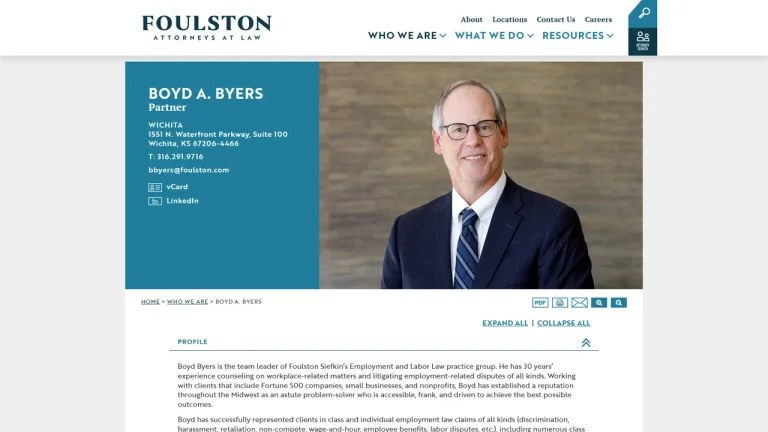
Boyd A. Byers - Wichita, KS
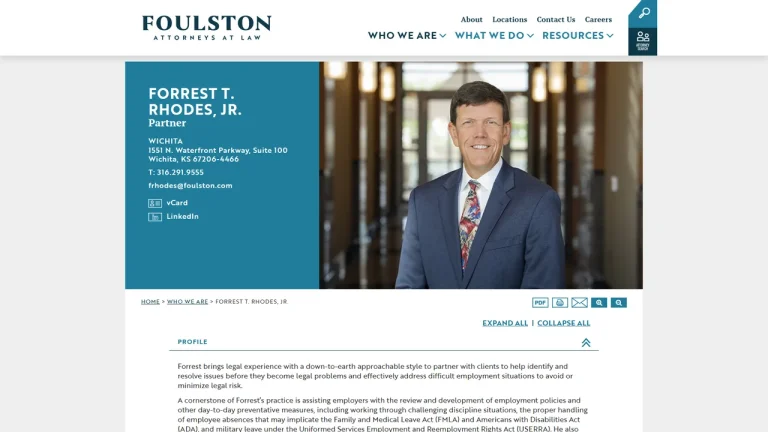
Forrest T. Rhodes Jr. - Wichita, KS

Law Office of Sean M. Dwyer - Wichita, KS
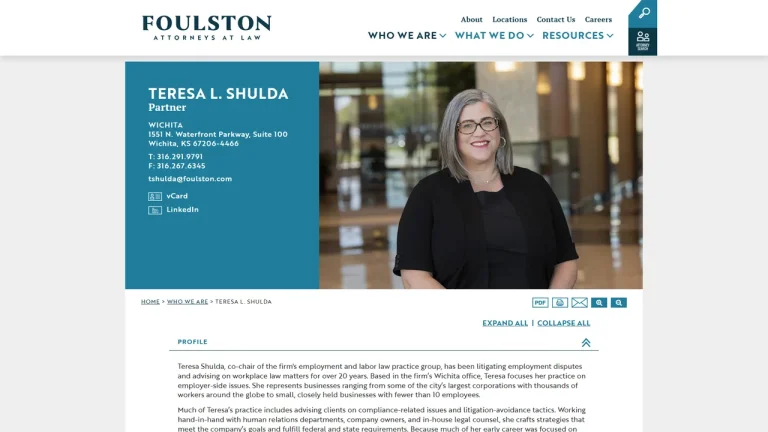
Teresa L. Shulda - Foulston Siefkin LLP - Wichita, KS
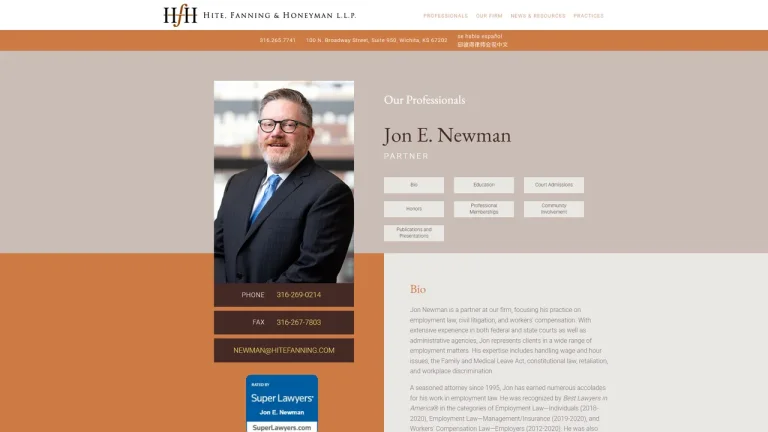
Jon E. Newman - Wichita, KS
Sean McGivern - Graybill & Hazlewood, L.L.C. - Wichita, KS
Galdean Law Firm - Wichita, KS

Kansas Employee Lawyer - Hite, Fanning & Honeyman, LLP - Wichita, KS
Combating Employment Bias Across Sedgwick County
Wichita's industrial and corporate sectors provide livelihoods for tens of thousands of workers. When employment decisions-such as hiring, promotions, disciplinary measures, or terminations-are based on race, sex, age, disability, pregnancy, or national origin, state and federal laws provide vital protections.
Workplace discrimination claims originating in Wichita are litigated in the 18th Judicial District Court at the Sedgwick County Courthouse or the U.S. District Court for the District of Kansas on North Market Street. Prior to filing in court, employees must exhaust mandatory administrative avenues through the Kansas Human Rights Commission (KHRC) or the federal Equal Employment Opportunity Commission (EEOC).
Whether you work in manufacturing facilities near South City, corporate suites in Old Town and Delano, or medical centers in Riverside, local discrimination lawyers provide dedicated advocacy. Skilled attorneys dismantle employer pretexts, secure electronic communications, and demand full statutory compensation.
Workplace Discrimination Legal Cost Breakdown
Discrimination representation in Wichita is typically structured on contingency fee models or statutory fee-shifting, meaning workers incur minimal upfront out-of-pocket costs.
| Case Scenario | Fee Structure | Estimated Cost (USD) | Key Cost Determinants |
|---|---|---|---|
| KHRC / EEOC Administrative Intake & Investigation | Contingency / Hybrid | $0 Upfront (Contingency) | Administrative filing timeliness, rebuttal statements, and agency conciliation conferences. |
| Disability Accommodation (ADA / KAAD Violation) | Contingency (33.3% - 40%) | $0 Upfront (Fee-Shifting) | Interactive process documentation, medical functional capacity reports, and undue hardship defenses. |
| Age Discrimination (KADEA / ADEA Action) | Contingency (33.3% - 40%) | $0 Upfront (Contingency) | Corporate restructuring patterns, replacement by younger employees, and lost retirement benefits. |
| Federal Civil Rights Jury Trial | Statutory Fee-Shifting | $0 Upfront (Court Awarded) | Statistical disparate impact analysis, supervisor depositions, and federal jury trial duration. |
Critical Legal Deadlines & Statutes in Kansas
Strict filing deadlines control discrimination claims in Wichita. Under the Kansas Act Against Discrimination (KAAD), codified at K.S.A. § 44-1001, an aggrieved worker must file a formal complaint with the Kansas Human Rights Commission (KHRC) within six months (180 days) of the alleged discriminatory act under K.S.A. § 44-1005(i). Failure to meet this 180-day deadline bars all state administrative claims.
Because Kansas operates a certified fair employment agency, employees have up to 300 days to dual-file an administrative charge under federal statutes, including Title VII of the Civil Rights Act (42 U.S. Code § 2000e) and the Americans with Disabilities Act (42 U.S. Code § 12101). Workers aged 40 and older are protected from age bias under the Kansas Age Discrimination in Employment Act (K.S.A. § 44-1111) and the federal ADEA.
Once the EEOC or KHRC concludes its inquiry and delivers a Right-to-Sue notice pursuant to 42 U.S. Code § 2000e-5(f)(1), the plaintiff has exactly 90 calendar days to file a lawsuit in either the 18th Judicial District Court or the U.S. District Court in Wichita.
Small Claims Limitations vs. Discrimination Legal Counsel
Under K.S.A. § 61-2703, Kansas small claims courts possess limited jurisdiction capped at $10,000 for monetary controversies. Pursuant to K.S.A. § 61-2707, attorneys are prohibited from appearing on behalf of litigants in small claims trials.
Workplace discrimination cases cannot be heard in small claims court. Adjudicating workplace civil rights claims requires exhausting state or federal administrative remedies, navigating the McDonnell Douglas burden-shifting evidentiary framework, and establishing corporate liability. Furthermore, state and federal civil rights statutes contain mandatory fee-shifting provisions requiring non-compliant employers to pay reasonable attorney fees. Retaining counsel ensures that workers obtain back pay, compensatory damages, and injunctive relief without paying legal fees out-of-pocket.
Red Flags When Hiring a Wichita Discrimination Lawyer
Choosing experienced employment counsel is critical to vindicating your rights. Watch out for these warning signs:
- Attorneys who charge substantial upfront fees for discrimination cases without explaining statutory fee-shifting remedies.
- Firms that fail to monitor the 180-day administrative filing deadline under K.S.A. § 44-1005(i).
- Lawyers lacking federal litigation admission in the U.S. District Court for the District of Kansas.
- Counsel who encourage quick, nominal settlements without requesting personnel records or comparing peer wage data.
Frequently Asked Questions
What is the administrative deadline to file a discrimination claim in Wichita?
Under K.S.A. § 44-1005(i), you have 180 days from the discriminatory action to file with the Kansas Human Rights Commission (KHRC). If dual-filing with the EEOC under federal law, the deadline is extended to 300 days.
What remedies are available in a Kansas discrimination lawsuit?
Remedies include back pay, front pay, job reinstatement, compensatory damages for emotional distress, and reasonable attorney fees under state and federal anti-discrimination statutes.
Can my employer fire me for filing a discrimination charge in Wichita?
No. Retaliation against an employee for reporting discrimination or participating in an investigation is illegal under K.S.A. § 44-1009(a)(4) and 42 U.S. Code § 2000e-3(a).
How long do I have to file a lawsuit after getting a right-to-sue letter?
Under 42 U.S. Code § 2000e-5(f)(1), you have exactly 90 calendar days from receipt of the right-to-sue notice to file a formal complaint in civil court.
Where are employment discrimination lawsuits heard in Wichita, KS?
Lawsuits are filed in the 18th Judicial District Court at the Sedgwick County Courthouse or the U.S. District Court for the District of Kansas at the federal courthouse in downtown Wichita.