
Divorce & Family Law Lawyers in New Orleans
Retaining an experienced divorce and family law attorney in New Orleans protects your parental rights and community assets under the unique Louisiana Civil Code. Skilled local counsel guides you through separation waiting periods, custody schedules, and property partition to achieve equitable out-of-court resolutions. Explore our verified directory below to schedule an initial consultation with a trusted Orleans Parish family lawyer.

Schonekas Evans McGoey & McEachin, L.L.C. - New Orleans, LA

Stephenson, Chávarri & Dawson, LLC - New Orleans, LA
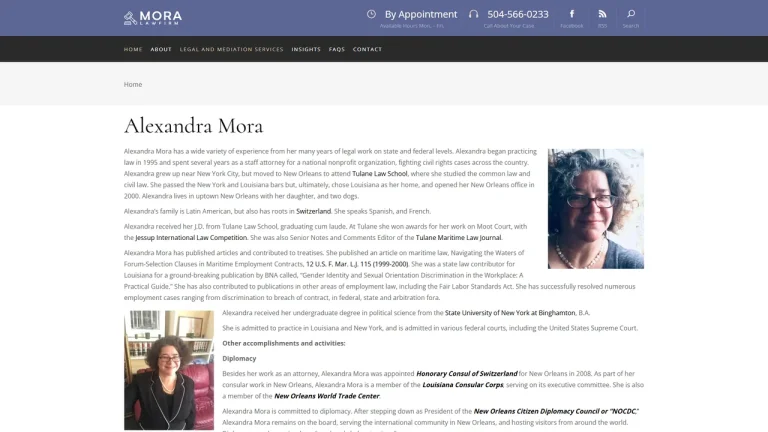
Mora Law Office - New Orleans, LA

David Band PLC - New Orleans, LA

Louisiana Divorce Law Firm - New Orleans, LA

Barbara J. Ziv, L.L.C. - New Orleans, LA

Schoenfeld Law Firm - New Orleans, LA
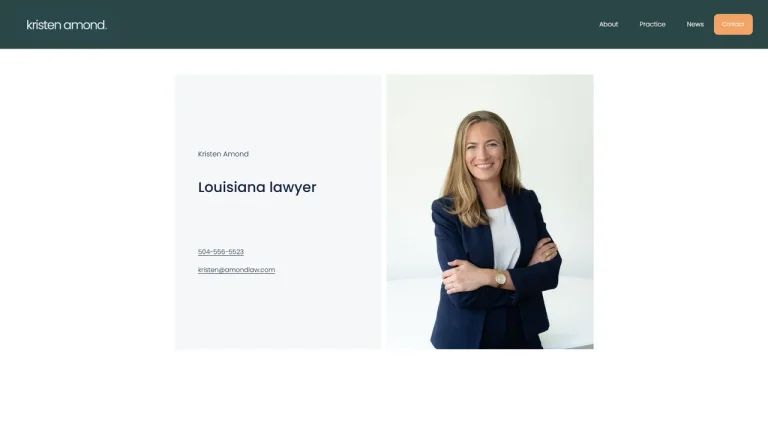
Kristen Amond LLC - New Orleans, LA
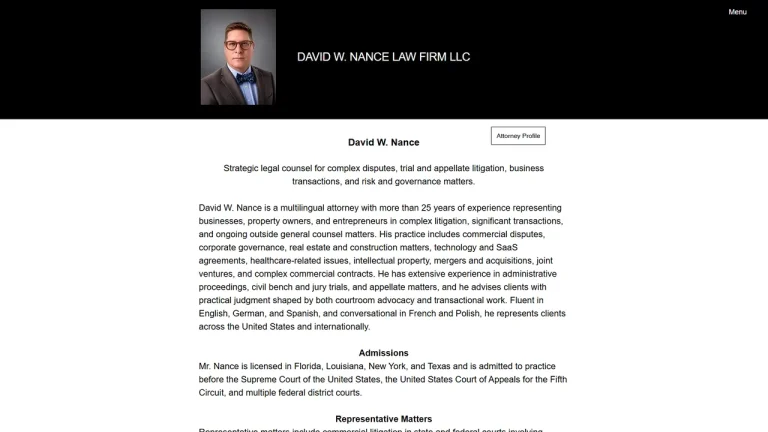
DAVID W. NANCE LAW FIRM, LLC - New Orleans, LA

Amber L. Cain, LLC - New Orleans, LA
Gusman Law Firm - New Orleans, LA

Wallace Meyaski Law - New Orleans, LA

Bickham Law Practice - New Orleans, LA

Johnson Law Office - New Orleans, LA

Rees Law Firm - New Orleans, LA

Mordock Legal - New Orleans, LA

DiGiulio Utley, LLC - New Orleans, LA
Law Offices of Joseph C. Bartels - New Orleans, LA
A. A. Adkinson, Attorney, LLC - New Orleans, LA

Scott Vicknair Personal Injury Lawyers - New Orleans, LA
The Law Office of Jon G Bethune - New Orleans, LA

Southeast Louisiana Legal Services - New Orleans, LA
CARBINE LAW FIRM, LLC - New Orleans, LA
Family Law Practice & Orleans Parish Civil District Court
Navigating family law transitions across New Orleans-whether settling marital property in Uptown, structuring joint custody arrangements in Mid-City, or negotiating spousal support in Lakeview and the Garden District-demands thorough proficiency in Louisiana's civil law framework. Domestic disputes involve complex legal rights that benefit significantly from early strategic counsel.
Unlike parishes with separate standalone family courts, all domestic relations and divorce actions in Orleans Parish are filed within the Civil District Court for the Parish of Orleans (CDC Orleans) at 421 Loyola Avenue. The court designates specialized Domestic Section divisions under La. R.S. § 13:1138, where dedicated judges and domestic hearing officers preside over divorce rules, protective orders, and custody implementation plans.
Louisiana's community property regime creates a legal presumption that all assets and debts accumulated during the marriage belong equally to both spouses under La. Civ. Code art. 2338. Retaining an established New Orleans family law attorney ensures separate property claims are protected and that child custody awards strictly serve the best interests of the child pursuant to La. Civ. Code art. 131.
Common Family Law Legal Fee Structures in New Orleans
| Case Scenario | Fee Structure | Estimated Cost (USD) | Key Cost Determinants |
|---|---|---|---|
| Uncontested Article 103 Divorce (No Minor Children) | Flat Fee | $1,200 - $2,700 | Waiver of formal citation, absence of spousal support, property agreement drafting. |
| Article 102 Divorce with Domestic Docket Rules | Retainer + Hourly ($250 - $400/hr) | $2,500 - $6,500 | Mandatory domestic rule days, interim spousal support, temporary custody hearings. |
| Contested Custody & Domiciliary Parent Disputes | Hourly Rate ($275 - $450/hr) | $4,500 - $12,500+ Retainer | Custody evaluations, best interest factors, mental health testimony in CDC Orleans. |
| Complex Community Property Partition & Asset Audits | Hourly Rate ($300 - $500/hr) | $6,000 - $20,000+ Retainer | Historic real estate appraisals, business valuations, pension QDROs, descriptive lists. |
Critical Legal Deadlines & Statutes in Louisiana
Family law actions in Orleans Parish are governed by strict statutory waiting periods and prescriptive deadlines:
- Physical Separation Waiting Periods: Under La. Civ. Code art. 102 and La. Civ. Code art. 103, spouses without minor children must live separate and apart continuously for at least 180 days before obtaining a no-fault divorce decree, while spouses with minor children must complete 365 days of continuous separation.
- Interim Spousal Support Expiration: Under La. Civ. Code art. 113, an award of interim spousal support terminates automatically 180 days after the rendition of the final judgment of divorce, unless extended for good cause.
- Final Periodic Spousal Support Prescription: Under La. Civ. Code art. 112, an action for final spousal support requires proof of freedom from fault in the marital dissolution and is subject to a 3-year prescriptive period from the date the divorce judgment is rendered.
- Community Property Partition Descriptive Lists: Under La. R.S. § 9:2801, parties involved in community property partition proceedings must file a detailed descriptive list of all community and separate property within 45 days of service of the motion, followed by formal traversals within 60 days.
- Joint Custody Presumption: Under La. Civ. Code art. 132 and La. Civ. Code art. 134, joint custody is presumed to be in the child's best interest, evaluated under twelve statutory factors including parental guidance capacity and the emotional stability of each home.
Small Claims Limits vs. Professional Representation in New Orleans
The Small Claims Divisions of First City Court and Second City Court in New Orleans are limited to financial recovery matters up to $5,000 under La. R.S. § 13:5202.
However, under La. Code Civ. Proc. art. 4847, small claims courts have zero legal jurisdiction over divorce petitions, child custody proceedings, marital status, or community property partitions. All domestic relations matters must be presented to the Domestic Section of the Civil District Court for the Parish of Orleans.
Louisiana matrimonial law operates under unique legal doctrines. Community assets are presumed shared under La. Civ. Code art. 2338, and parties who represent themselves frequently forfeit valid claims for reimbursement under La. Civ. Code art. 2367 or fail to secure domiciliary parent rights under La. R.S. § 9:335. Retaining knowledgeable counsel ensures proper partition lists are filed, protects parental decision-making authority, and guarantees compliance with CDC Orleans domestic procedures.
Red Flags & Hiring Safeguards for New Orleans Clients
- Generic Common-Law Online Forms: Reject generic online divorce packets; Louisiana is a civil law jurisdiction, and non-compliant common-law forms are routinely rejected by Orleans Parish judges.
- Failing to Plead Interim Spousal Support: Ensure your attorney files rules for interim support and exclusive use of the family residence under La. R.S. § 9:374 during initial pleadings.
- Ignoring Community Reimbursement Claims: Be wary of attorneys who fail to audit separate property expenditures used to satisfy community obligations under La. Civ. Code art. 2367.
- Unfamiliarity with Domestic Section Rules: Retain counsel who regularly practices in the Domestic Section of CDC Orleans and understands local hearing commissioner procedures.
Frequently Asked Questions
How does the divorce process work in Orleans Parish Civil District Court?
Divorces in New Orleans are filed with the Orleans Parish Clerk of Civil District Court at 421 Loyola Avenue. Petitions proceed under either Article 102 (filed before the separation period ends) or Article 103 (filed after the separation period has elapsed or on fault grounds), with ancillary matters like custody and support referred to domestic hearing commissioners before final judgment.
What is the difference between an Article 102 and Article 103 divorce?
An Article 102 divorce is filed prior to completing the physical separation period, initiating the statutory 180-day or 365-day clock upon service. An Article 103 divorce is filed after the spouses have already lived separate and apart for the requisite statutory timeframe, or immediately on fault grounds such as adultery or a felony conviction.
How is community property partitioned under Louisiana law?
Community property partition is governed by La. R.S. § 9:2801. Spouses must exchange sworn detailed descriptive lists of assets and liabilities. The court values the assets, allocates property to achieve an equal net division, and determines reimbursement claims for separate funds spent on community debts.
What authority does a domiciliary parent hold in New Orleans?
Under La. R.S. § 9:335, the court designates a domiciliary parent with whom the child primarily resides. This parent holds legal authority to make major decisions regarding education, elective healthcare, and religious upbringing, subject to judicial review upon objection by the non-domiciliary parent.
Who is eligible for spousal support in Louisiana?
Under La. Civ. Code art. 113, interim spousal support is awarded during divorce based on the claimant's financial need and the other spouse's ability to pay. Final periodic support under La. Civ. Code art. 112 requires that the recipient be completely free from fault in the breakdown of the marriage.