
Workplace Discrimination Lawyers in Maine
Confronting unfair workplace treatment requires dedicated Maine workplace discrimination lawyers who protect your civil rights under state and federal law. Skilled employment attorneys investigate biased practices, file timely complaints with the Maine Human Rights Commission, and pursue fair financial restitution. Browse our verified statewide directory to connect with top-rated Maine attorneys ready to advocate for your workplace dignity.

Sulloway & Hollis, P.L.L.C. - Portland, ME

Legal-Ease - Portland, ME

Maria Fox - Portland, ME

Horn Wright, LLP, Attorneys at Law - Portland, ME
Maine Employee Rights Group - Portland, ME

Drummond Woodsum - Portland, ME
Clifford and Clifford, LLC - Portland, ME

Murray Plumb & Murray - Portland, ME

Taylor McCormack & Frame - Portland, ME
Gordon Rees Scully Mansukhani, LLP - Portland, ME

Kelly, Remmel & Zimmerman - Portland, ME

Peter Thompson & Associates - Portland, ME
Sally Morris, Attorney at Law - Portland, ME
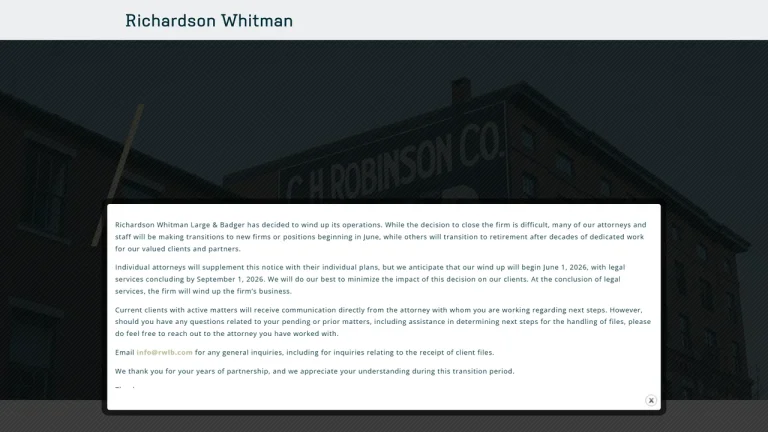
Richardson, Whitman, Large & Badger - Portland, ME

Michael X Savasuk Law Offices - Portland, ME
Clifford & Clifford Law Office - Portland, ME
Workplace Discrimination Protections and Maine Jurisdictions
In Maine, employee civil rights are anchored in the Maine Human Rights Act (MHRA), codified under 5 M.R.S. § 4551 et seq. The Act establishes broad protections prohibiting employers from discriminating in hiring, compensation, terms of employment, or termination based on race, color, sex, sexual orientation, gender identity, physical or mental disability, religion, age, ancestry, or national origin. These state protections operate in tandem with federal civil rights legislation, including Title VII of the Civil Rights Act, the Americans with Disabilities Act, and the Age Discrimination in Employment Act.
Discrimination claims in Maine span diverse employment settings, from financial and legal service firms in Portland to manufacturing plants in Auburn, healthcare networks in Bangor, and tourism operations along the coast. State statutory claims are heard in Maine Superior Courts-including Cumberland County Superior Court, Kennebec County Superior Court, and Androscoggin County Superior Court-or removed to the United States District Court for the District of Maine, which holds sessions in Portland and Bangor.
Working with an employment attorney admitted to the Maine State Bar Association is essential for establishing discriminatory intent or disparate impact. Experienced counsel guides workers through the mandatory administrative intake process at the Maine Human Rights Commission (MHRC) in Augusta, conducts thorough witness interviews, subpoenas workplace records, and vigorously advocates for full civil remedies.
Maine Workplace Discrimination Legal Fee Structures
| Case Scenario | Fee Structure | Estimated Cost (USD) | Key Cost Determinants |
|---|---|---|---|
| Intake Assessment & MHRC Complaint Drafting | Flat Fee or Hourly | $500 - $1,800 | Review of performance reviews, comparative employee evidence, and timeline analysis |
| MHRC Dual-Filing & Mediation Representation | Hybrid or Contingency | $1,500 - $4,500 | Position statement replies, commission investigator conferences, and mediation rounds |
| Full MHRA Superior Court Litigation | Contingency (33.33% - 40%) | $0 Upfront (Litigation Costs Apply) | Expert witness requirements, electronic discovery breadth, and trial preparation |
| Pattern-and-Practice or Multi-Plaintiff Claim | Contingency or Blended Rate | Varies by Group Size | Statistical workplace modeling, multiple plaintiff depositions, and defense motions |
Critical Legal Deadlines & Statutes in Maine
Workplace discrimination claims in Maine require strict adherence to intersecting state administrative processes and court filing limitations:
- Protected Characteristics Under State Law: Under 5 M.R.S. § 4572, it is unlawful employment discrimination for an employer to refuse to hire, discharge, or penalize any individual because of protected status, including race, sex, disability, sexual orientation, or gender identity.
- MHRC Administrative Deadline: An aggrieved employee must file a formal complaint with the Maine Human Rights Commission under 5 M.R.S. § 4611 within 300 days of the discriminatory occurrence.
- Two-Year Court Statute of Limitations: Pursuant to 5 M.R.S. § 4613(2)(C), an action in Maine Superior Court must be filed no later than two years after the date of the discriminatory event.
- Right-to-Sue Window: If the MHRC concludes its proceedings or issues a right-to-sue letter, the claimant must commence court action within 90 days of receipt, provided the overarching two-year limitation is respected.
- Statutory Remedies and Attorney Fees: Successful plaintiffs may be awarded back pay, reinstatement, civil penal damages, and reasonable attorney fees under 5 M.R.S. § 4613(2)(B).
Small Claims Limits vs. Professional Representation
Under 14 M.R.S. § 7482, the monetary limit for Maine District Court small claims actions is $6,000. The small claims process is designed solely for informal money judgments where legal issues are limited and formal court discovery is unavailable.
Workplace discrimination cases cannot be successfully resolved in small claims court. The Maine Human Rights Act requires mandatory administrative exhaustion through the MHRC before damages and attorney fees can be recovered in court. In addition, discrimination claims involve complex proof structures-such as pretext analysis and comparative workforce data-that require formal subpoenas, depositions, and written interrogatories.
Furthermore, damages in viable discrimination matters regularly exceed the $6,000 small claims limit, encompassing back pay, front pay, emotional distress, and statutory attorney fees. Pursuing an action in small claims court could inadvertently waive critical federal civil rights claims or trigger a claim-preclusion dismissal. Hiring an attorney ensures your case is properly prosecuted in Maine Superior Court or federal court.
Red Flags When Hiring a Maine Workplace Discrimination Lawyer
- Bypassing the MHRC Administrative Process: Disregard any legal representative who suggests filing directly in court without completing the mandatory 300-day filing process required under 5 M.R.S. § 4611.
- Demanding Unreasonable Non-Refundable Retainers: Beware of firms that demand substantial upfront cash retainers for standard discrimination claims without offering contingency arrangements or clear hourly billing metrics.
- Lack of Maine Trial Experience: Steer clear of attorneys who only draft administrative charges and have never taken a discrimination lawsuit through discovery and trial in Maine Superior Court or federal court.
- Guaranteeing Specific Settlement Figures: Avoid practitioners who promise multi-million-dollar outcomes before examining employer size, documentation, or the employer's formal position statement.
Frequently Asked Questions
What is the Maine Human Rights Act (MHRA)?
The MHRA, codified under 5 M.R.S. § 4551, is the primary state statute protecting individuals from discrimination in employment, housing, public accommodations, and credit based on protected traits such as race, sex, sexual orientation, disability, and age.
What is the deadline to file a discrimination complaint in Maine?
You must file an administrative complaint with the Maine Human Rights Commission within 300 days of the discriminatory act under 5 M.R.S. § 4611. Any subsequent lawsuit in court must be filed within two years under 5 M.R.S. § 4613(2)(C).
Does Maine law protect against discrimination based on sexual orientation and gender identity?
Yes. Under 5 M.R.S. § 4572, the Maine Human Rights Act explicitly prohibits discrimination in employment based on sexual orientation and gender identity or expression.
Can an employer retaliate against me for reporting discrimination?
No. Under 5 M.R.S. § 4633, it is unlawful for an employer to retaliate, discipline, discharge, or otherwise penalize an employee because they opposed unlawful discrimination or participated in an MHRC proceeding.
How are workplace discrimination attorneys compensated in Maine?
Most discrimination lawyers represent employees on a contingency fee basis, receiving an agreed percentage of the recovery only if compensation is secured through settlement or verdict. Maine law also permits courts to award statutory attorney fees under 5 M.R.S. § 4613(2)(B).