
Patent Attorneys in Baltimore
Protecting your invention in Baltimore? Connect with registered patent attorneys to conduct prior art searches, draft claims, and secure federal USPTO rights. Experienced local patent practitioners navigate complex patent prosecution and protect proprietary technology across regional biotech, healthcare, and engineering sectors. Browse our verified directory below to schedule an initial consultation with a licensed patent attorney.
Patent Insider - Baltimore, MD
Hopkins IP, LLC - Baltimore, MD
Bold Patents Law Firm - Baltimore, MD
John Rizvi, P.A. - The Idea Attorneys - Baltimore, MD
Neuberger, Quinn, Gielen, Rubin & Gibber, P.A. - Baltimore, MD
DLA Piper LLP - Baltimore, MD
Maryland Volunteer Lawyers for the Arts - Baltimore, MD

Gorman & Williams - Baltimore, MD

Ice Miller Baltimore - Baltimore, MD
Gordon Feinblatt LLC - Baltimore, MD
Gregory M. Stone - Whiteford, Taylor & Preston LLP - Baltimore, MD
Hogan Lovells - Baltimore, MD
Venable LLP - Baltimore, MD
McGuireWoods LLP - Baltimore, MD
Saul Ewing LLP - Baltimore, MD
Whiteford, Taylor & Preston LLP - Baltimore, MD
Ballard Spahr LLP - Baltimore, MD
Duane Morris LLP - Baltimore, MD
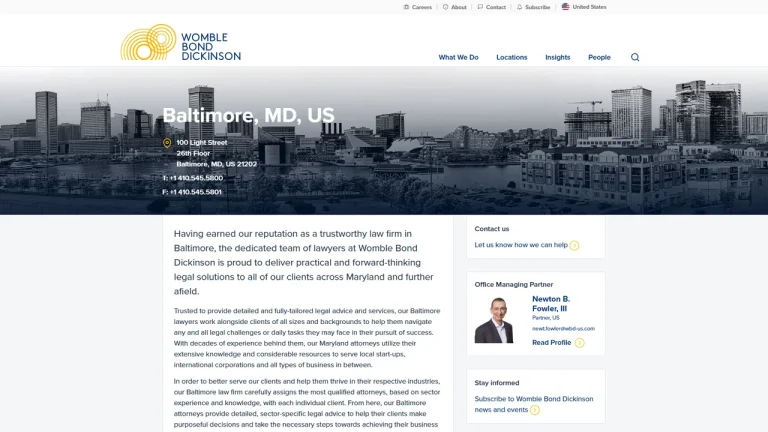
Womble Bond Dickinson (US) LLP - Baltimore, MD
Sanctuary Title and Legal - Baltimore, MD

Miles and Stockbridge - Baltimore, MD
Jan I. Berlage, Attorney at Law - Baltimore, MD
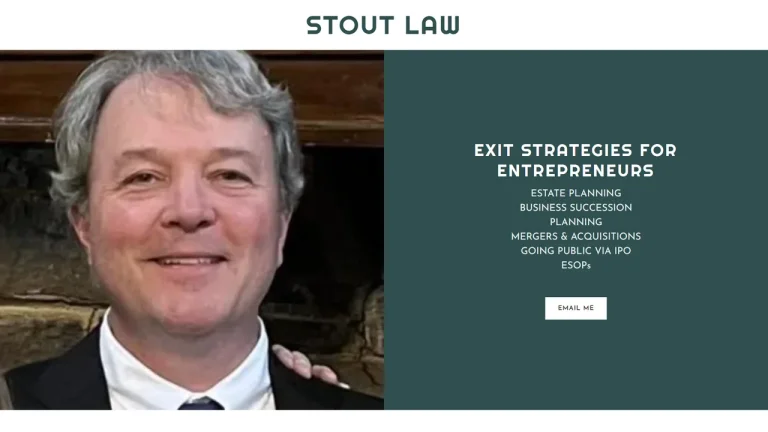
Matheau J. W. Stout - Baltimore, MD
Safeguarding Technological Innovation in Baltimore
Securing federal patent protection transforms innovative concepts into enforceable commercial assets. The patent acquisition process requires conducting comprehensive prior art examinations, drafting defensible patent claims, and prosecuting applications through the United States Patent and Trademark Office (USPTO). Engaging a qualified Baltimore patent attorney ensures your technological assets are protected from public disclosure risks and unauthorized infringement.
Patent litigation in Baltimore falls under exclusive federal jurisdiction. Infringement claims, preliminary injunction hearings, and trade secret disputes are litigated in the U.S. District Court for the District of Maryland, Northern Division, at the Edward A. Garmatz Federal Courthouse on West Lombard Street. Administrative patent validity challenges proceed before the Patent Trial and Appeal Board (PTAB).
Baltimore serves as a thriving epicenter for scientific research and technology, driven by world-class institutions like Johns Hopkins University and the University of Maryland BioPark. From biotechnology and medical devices to advanced robotics and software innovations across Canton and Harbor East, local inventors require counsel with both technical acumen and USPTO registration to secure patent exclusivity.
Legal Fee Structures for Baltimore Patent Representation
| Case Scenario | Fee Structure | Estimated Cost (USD) | Key Cost Determinants |
|---|---|---|---|
| Comprehensive Patentability Search & Legal Opinion | Flat Legal Fee | $1,500 - $3,000 | Technical field complexity, global prior art scope, patent landscape review, clearance opinion depth |
| Provisional Patent Application Preparation & Filing | Flat Legal Fee | $2,000 - $4,500 | Detailed technical drawings, specification depth, enablement documentation for one-year priority date |
| Non-Provisional Utility Patent Drafting & USPTO Prosecution | Staged Flat Fee / Hourly | $6,500 - $15,000+ | Number of independent claims, technical complexity, USPTO Office Action rejections and examiner interviews |
| Federal Patent Infringement Litigation & PTAB Defense | Hourly Retainer ($450 - $850/hr) | $25,000 - $75,000+ | Markman claim construction hearings, technical expert witness retention, discovery at Garmatz Courthouse |
Critical Legal Deadlines & Statutes in Maryland
Patent prosecution and enforcement are governed strictly by Title 35 of the United States Code. Under 35 U.S. Code § 101, an inventor may obtain a patent for any new and useful process, machine, manufacture, or composition of matter. To secure a valid patent, the invention must demonstrate novelty under 35 U.S. Code § 102 and non-obviousness pursuant to 35 U.S. Code § 103.
Timing is critical to preserving patent rights. Under 35 U.S. Code § 102, the United States operates under a first-inventor-to-file system with a strict one-year grace period. If an inventor publicly discloses, sells, or offers the invention for sale in Baltimore, a formal patent application must be filed within one year; failing to do so permanently dedicates the invention to the public domain. Provisional applications expire exactly twelve months from the filing date, requiring non-provisional conversion to preserve the priority date.
Drafting standards are strictly enforced under 35 U.S. Code § 112, which mandates a written description that enables a person skilled in the art to make and use the invention. Infringement claims are brought pursuant to 35 U.S. Code § 271, with damages authorized under 35 U.S. Code § 284, allowing patent holders to recover lost profits or reasonable royalties within a six-year statutory recovery window.
Small Claims Court Restrictions vs. Federal Patent Practice
Under Md. Code, Cts. & Jud. Proc. § 4-405, the Small Claims Division of the District Court of Maryland handles civil disputes up to $5,000. However, state courts have zero authority over patent rights. Under 28 U.S. Code § 1338(a), federal district courts possess exclusive original jurisdiction over any civil action arising under any Act of Congress relating to patents.
Attempting to prepare or prosecute a patent application pro se carries catastrophic risks. Drafting patent claims requires specialized admission to the USPTO Patent Bar, requiring demonstrated scientific and engineering credentials. Self-drafted patent filings frequently result in fatal Section 112 rejections or overly narrow claims that competitors can effortlessly circumvent without infringing. Furthermore, once an invention is publicly exhibited in Maryland without a provisional application on file, foreign patent rights are immediately forfeited. Retaining an experienced Baltimore patent attorney ensures your technological innovations are claimed broadly and defended in federal court.
Red Flags to Avoid When Selecting a Patent Attorney
Protecting proprietary intellectual property requires experienced and registered counsel. Beware of these critical warning signs during patent consultations:
- Unlicensed invention promotion companies: Steer clear of non-attorney marketing companies that advertise on late-night media; these entities charge steep fees without providing registered USPTO patent attorneys.
- Attorneys lacking USPTO Patent Bar registration: General corporate or litigation attorneys cannot prosecute patents; confirm that your attorney has an active registration number with the USPTO Office of Enrollment and Discipline.
- Mismatched technical background: A patent lawyer should possess degrees and background relevant to your invention, whether mechanical, biochemical, software, or electrical engineering.
- Guarantees that a patent will issue: The patent examination process involves rigorous scrutiny by federal examiners; no ethical patent attorney can guarantee that patent claims will be allowed without amendment.
Frequently Asked Questions
What is the difference between a provisional and non-provisional patent?
A provisional application secures a priority filing date for twelve months without formal claims, whereas a non-provisional application undergoes formal USPTO examination and can mature into an enforceable patent.
Where are patent infringement lawsuits filed in Baltimore?
Patent infringement lawsuits in Baltimore are filed in the U.S. District Court for the District of Maryland, located at the Edward A. Garmatz Federal Courthouse on West Lombard Street.
What is the one-year grace period for public disclosures in the U.S.?
Under 35 U.S. Code Section 102, an inventor has up to one year after their own public disclosure or commercial sale to file a U.S. patent application before forfeiting domestic patent rights.
How long does it take for a patent to issue from the USPTO?
Utility patent prosecution typically takes between eighteen months and three years from initial filing to final issuance, depending on the technological backlog in the assigned USPTO art unit.
Can an attorney who is not registered with the USPTO file my patent?
No, federal law requires practitioners representing inventors before the USPTO to pass the Patent Bar Examination and hold active registration with the Office of Enrollment and Discipline.