
Trademark Lawyers in Baltimore
Building a brand in Baltimore? Connect with top Maryland trademark lawyers to conduct clearance searches, file USPTO applications, and protect your brand assets. Experienced local attorneys resolve likelihood-of-confusion disputes, issue cease-and-desist demands, and protect commercial goodwill across state and federal courts. Browse our verified directory below to schedule an initial consultation with a dedicated trademark lawyer.
DLA Piper LLP - Baltimore, MD
Jan I. Berlage, Attorney at Law - Baltimore, MD
Hopkins IP, LLC - Baltimore, MD
Ned T. Himmelrich (Gordon Feinblatt LLC) - Baltimore, MD
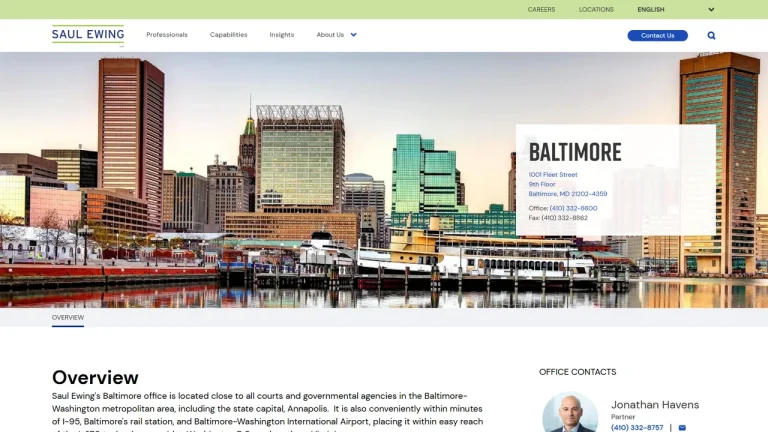
Saul Ewing LLP - Baltimore, MD
Venable LLP - Baltimore, MD
Maryland Volunteer Lawyers for the Arts - Baltimore, MD
Patent Insider - Baltimore, MD
Duane Morris LLP - Baltimore, MD
Gregory M. Stone - Whiteford, Taylor & Preston LLP - Baltimore, MD
Goldman & Minton PC - Baltimore, MD
Whiteford, Taylor & Preston LLP - Baltimore, MD
McGuireWoods LLP - Baltimore, MD
John Rizvi, P.A. - The Idea Attorneys - Baltimore, MD
Bold Patents Law Firm - Baltimore, MD

Miles and Stockbridge - Baltimore, MD
Baltimore Trademark Attorney - Baltimore, MD
Gordon Feinblatt LLC - Baltimore, MD
The CyberLaw Group - Baltimore, MD
Nelson Mullins Riley & Scarborough LLP - Baltimore, MD
Sanctuary Title and Legal - Baltimore, MD
Hogan Lovells - Baltimore, MD
Safeguarding Brand Equity & Trademarks in Baltimore
In an increasingly competitive marketplace, your business brand name, logo, and slogan represent critical commercial assets. Establishing robust trademark protection prevents competitors from trading on your goodwill or causing consumer confusion. Retaining an experienced Baltimore trademark lawyer ensures that your brand identifiers are properly cleared, registered with the USPTO, and fiercely protected against commercial infringement.
Trademark controversies involving Baltimore businesses are litigated across federal and state forums. Federal trademark infringement actions and Lanham Act unfair competition claims proceed in the U.S. District Court for the District of Maryland, Northern Division, at the Edward A. Garmatz Federal Courthouse on West Lombard Street. State common law claims and business disputes are heard in the Circuit Court for Baltimore City at the Clarence M. Mitchell Jr. Courthouse.
From craft breweries, culinary ventures, and apparel lines in Hampden and Fells Point to emerging biotech and digital brands in Canton and Locust Point, brand identity is key to business valuation. A local trademark attorney conducts comprehensive clearance searches, drafts persuasive responses to USPTO Office Actions, and polices the regional marketplace to preserve brand exclusivity.
Legal Fee Structures for Baltimore Trademark Matters
| Case Scenario | Fee Structure | Estimated Cost (USD) | Key Cost Determinants |
|---|---|---|---|
| Comprehensive Trademark Clearance Search & Opinion | Flat Legal Fee | $850 - $1,800 | Federal, state, and common law database screening, likelihood of confusion analysis, clearance risk rating |
| USPTO Federal Trademark Application (Per Class) | Flat Legal Fee | $950 - $2,200 | Use in commerce vs. intent-to-use, goods and services specification drafting, specimen evaluation |
| Trademark Trial and Appeal Board (TTAB) Opposition | Hourly Retainer ($350 - $550/hr) | $4,500 - $15,000+ | Notice of opposition drafting, discovery disclosures, trial briefs before USPTO administrative judges |
| Federal Court Infringement Litigation | Hourly Retainer ($400 - $700/hr) | $15,000 - $50,000+ | Preliminary injunction motions, consumer confusion surveys, formal trial at Garmatz Courthouse |
Critical Legal Deadlines & Statutes in Maryland
Federal trademark registration and protection are governed by the Lanham Act. Applications for federal registration are submitted under 15 U.S. Code § 1051, based on actual commercial use or a bona fide intent to use the mark in commerce. Infringement actions alleging consumer confusion are brought under 15 U.S. Code § 1114, while federal unfair competition and false designation of origin claims are codified at 15 U.S. Code § 1125(a).
Brand owners must adhere to strict maintenance deadlines to keep federal registrations active. Under 15 U.S. Code § 1058, the registrant must file a Section 8 Declaration of Continued Use between the fifth and sixth year following initial registration. Under 15 U.S. Code § 1059, a Section 9 renewal application must be submitted every ten years to maintain statutory ownership.
At the state level, brand marks used strictly within Maryland can be registered with the Secretary of State pursuant to the Maryland Trademark Statute under Md. Code, Bus. Reg. § 1-401. Civil remedies for infringement of Maryland-registered marks are enforced under Md. Code, Bus. Reg. § 1-411. Furthermore, general commercial torts and common law unfair competition claims are subject to Maryland's three-year statute of limitations under Md. Code, Cts. & Jud. Proc. § 5-101.
Small Claims Limitations vs. Federal Trademark Litigation
Under Md. Code, Cts. & Jud. Proc. § 4-405, the Small Claims Division of the District Court of Maryland handles matters capped at $5,000. However, small claims judges lack the statutory authority to issue equitable relief, such as enjoining an infringing business, canceling an infringing domain name, or ordering trademark cancellations.
Attempting to register a trademark pro se using basic online forms frequently results in substantive refusals. The USPTO regularly rejects applications on grounds of likelihood of confusion or mere descriptiveness. Unrepresented business owners often abandon valid marks because they lack the legal expertise to draft successful responses to examining attorney refusals. Furthermore, failing to conduct a common law search across Maryland can lead to costly rebranding if an unrecorded local brand asserts senior common law rights. Retaining a dedicated Baltimore trademark lawyer protects your brand investment, resolves USPTO hurdles, and ensures nationwide exclusivity.
Red Flags to Avoid When Hiring a Trademark Lawyer
Selecting experienced trademark counsel is essential for building a protectable brand. Beware of these red flags during attorney evaluations:
- Filing applications without comprehensive clearance searches: Law firms that file without searching state business registries and common law databases risk expensive infringement lawsuits from prior users.
- Automated online filing companies acting as law firms: Online legal services that merely type your information into the USPTO portal do not provide legal counsel, customized specimen analysis, or Office Action defense.
- Guarantees that a trademark will be approved: Examining attorneys at the USPTO exercise independent legal discretion; no ethical lawyer can promise guaranteed approval.
- Ignoring misleading solicitations: Fraudulent private entities regularly send fake invoices demanding hundreds of dollars for unofficial trademark directories; your lawyer should handle all legitimate USPTO correspondence.
Frequently Asked Questions
What is the difference between a trademark and a copyright?
A trademark protects brand identifiers such as names, logos, and slogans that identify the source of goods or services, whereas a copyright protects original creative works such as books, music, and software code.
What is the difference between the ™ and ® symbols?
The ™ symbol designates an unregistered common law brand mark, while the ® symbol is legally reserved exclusively for marks officially registered with the United States Patent and Trademark Office.
Where are federal trademark lawsuits heard in Baltimore?
Federal trademark infringement actions in Baltimore are litigated in the U.S. District Court for the District of Maryland, located at 101 West Lombard Street in downtown Baltimore.
What is an Intent-to-Use trademark application?
Under 15 U.S. Code Section 1051(b), an Intent-to-Use application allows a business to reserve a nationwide priority filing date for a brand name before actually launching commercial sales.
When must a federal trademark registration be renewed?
Under federal law, a trademark registrant must submit a Section 8 declaration between the fifth and sixth year after registration, and file a formal Section 9 renewal every ten years thereafter.