
Patent Attorneys in Maryland
Retain leading Maryland patent attorneys to protect your inventions, secure USPTO patents, and defend intellectual property rights across research corridors. Experienced patent counsel guides technology startups, biotech researchers, and federal contractors through patentability searches, applications, and dispute negotiations. Explore our verified statewide directory below to consult an authorized Maryland patent lawyer today.

Bass Patent Law, LLC - Frederick, MD
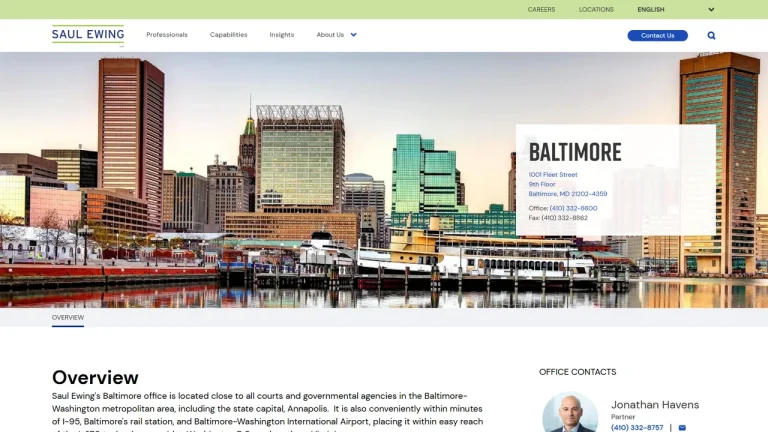
Saul Ewing LLP - Baltimore, MD
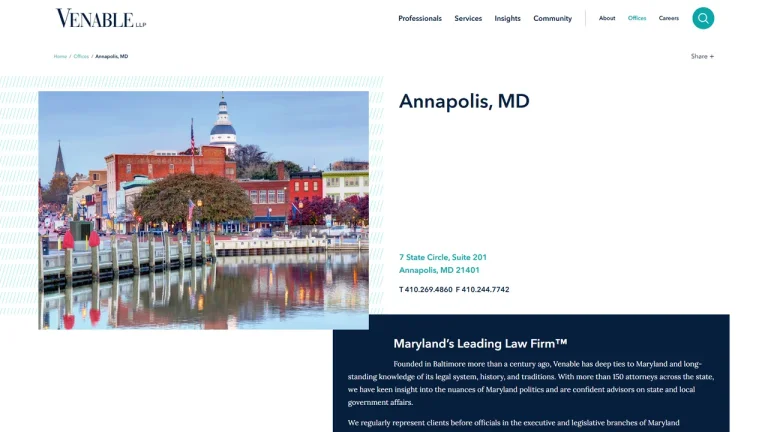
Venable LLP - Annapolis, MD

McGuireWoods LLP - Baltimore, MD

Maryland Ip Lawyers - Annapolis, MD

Gorman & Williams - Baltimore, MD
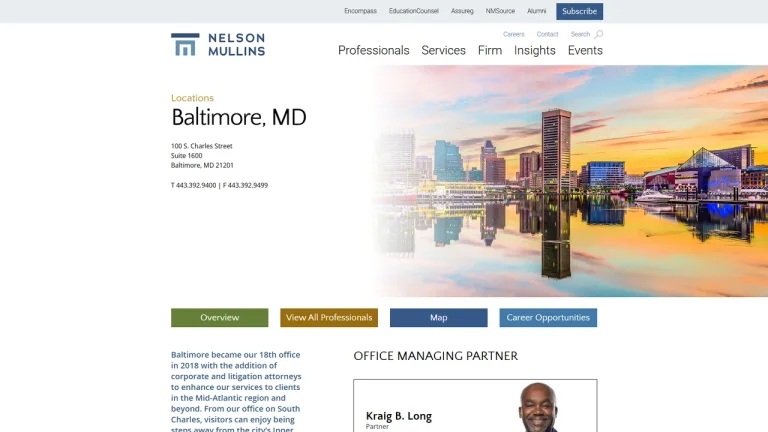
Nelson Mullins Riley & Scarborough LLP - Baltimore, MD
Patent Insider - Baltimore, MD

Laubscher & Fretwell, P.C. - Annapolis, MD
Ballard Spahr LLP - Baltimore, MD

Matheau J. W. Stout - Baltimore, MD

Duane Morris LLP - Baltimore, MD
On Call Attorneys - On Call Patents - Annapolis, MD

Venable LLP - Baltimore, MD
Gregory M. Stone - Whiteford, Taylor & Preston LLP - Baltimore, MD
John Rizvi, P.A. - The Idea Attorneys - Baltimore, MD
Womble Bond Dickinson (US) LLP - Baltimore, MD

Leveque IP Law, P.C. - Frederick, MD
Ned T. Himmelrich (Gordon Feinblatt LLC) - Baltimore, MD

Jan I. Berlage, Attorney at Law - Baltimore, MD
Whiteford, Taylor & Preston LLP - Baltimore, MD
Hogan Lovells - Baltimore, MD
Maryland Volunteer Lawyers for the Arts - Baltimore, MD
Safeguarding Inventions Across Maryland Research Corridors
Maryland is a powerhouse of scientific discovery, biotechnology innovation, aerospace engineering, cybersecurity, and federal contracting. From the I-270 Technology Corridor in Montgomery County to Johns Hopkins biomedical institutions in Baltimore and the cybersecurity cluster anchored near Fort Meade, securing robust patent protection is fundamental to commercializing high-value inventions.
Patent prosecution is exclusively governed by federal law. Legal practitioners must be registered patent attorneys or agents admitted to practice before the United States Patent and Trademark Office under 37 C.F.R. § 11.5. In addition, attorneys handling licensing agreements, trade secrets, and corporate intellectual property counseling within Maryland must maintain active licensure with the Maryland State Bar Association and the Supreme Court of Maryland.
When patent disputes lead to formal litigation, jurisdiction rests exclusively in the federal judiciary under 28 U.S. Code § 1338(a). In Maryland, patent infringement lawsuits are tried before the U.S. District Court for the District of Maryland, which maintains courthouses in Baltimore and Greenbelt. Seasoned patent litigators frequently resolve disputed infringement through inter partes review proceedings, licensing compacts, and structured mediation before reaching a federal jury.
Maryland Patent Legal Fee Structures & Cost Estimates
Patent prosecution and litigation require significant technical investment, with pricing determined by prior art density, drafting demands, and enforcement venues.
| Case Scenario | Fee Structure | Estimated Cost (USD) | Key Cost Determinants |
|---|---|---|---|
| Comprehensive Prior Art Search & Patentability Opinion | Flat Fee | $1,500 - $3,500 | Breadth of patent classifications, domestic and foreign database queries, and technical disclosure complexity. |
| Provisional Patent Application Drafting & Filing | Flat Fee or Hourly ($350 - $650/hr) | $3,500 - $7,000 | Depth of specification, mechanical versus algorithmic claims, and formal engineering drafting needs. |
| Non-Provisional Utility Patent Prosecution | Flat Fee / Staged Retainer | $9,000 - $18,000+ | USPTO office action response cycles, examiner interview frequency, and claim count adjustments. |
| Federal Patent Infringement Litigation / Defense | Hourly ($450 - $850/hr) or Hybrid | $60,000 - $250,000+ | Markman claim construction hearings, technical expert witness retainers, electronic discovery volume, and trial duration. |
Critical Legal Deadlines & Statutes in Maryland
Patent rights are governed by rigid federal statutes where missed deadlines can cause irreversible loss of rights. Under the Leahy-Smith America Invents Act, codified at 35 U.S. Code § 102, the United States follows a first-inventor-to-file regime. Inventors have a strict one-year grace period following their own public disclosure, commercial sale, or public use to file an application before patentability is permanently forfeited.
For provisional patent filings, 35 U.S. Code § 111(b) imposes a non-extendable twelve-month statutory window to file a corresponding non-provisional application to preserve the original provisional priority date.
When pursuing damages for patent infringement in federal court, 35 U.S. Code § 286 bars recovery for any infringement committed more than six years prior to filing the complaint. At the state level, trade secrets supporting proprietary inventions are protected under the Maryland Uniform Trade Secrets Act, codified at Md. Code, Com. Law § 11-1201, which enforces a three-year statute of limitations for misappropriation claims under Md. Code, Com. Law § 11-1206.
Small Claims Limitations vs. Federal Patent Representation
Under Md. Code, Cts. & Jud. Proc. § 4-405, small claims actions in the District Court of Maryland are restricted to controversies not exceeding $5,000. Maryland state small claims courts have no legal jurisdiction to adjudicate patent validity, infringement, or licensing injunctions due to exclusive federal jurisdiction under 28 U.S. Code § 1338(a).
Attempting to draft patent claims or navigate USPTO rejections without a registered patent attorney is fraught with peril. Flawed claim wording or improper disclosures can result in an unenforceable patent or total loss of international filing rights. A registered patent attorney licensed in Maryland ensures specifications are drafted with scientific precision, responds effectively to substantive office action rejections, and safeguards commercialization rights in federal court.
Red Flags to Watch for When Hiring a Maryland Patent Lawyer
- Absence of USPTO Registration Number: Ensure the attorney has an active registration number with the USPTO Office of Enrollment and Discipline; general litigators cannot prosecute patent applications before the USPTO.
- Invention Promotion Agency Connections: Steer clear of marketing companies that guarantee commercial success or patent issuance without rigorous prior art search documentation.
- Lack of Relevant Technical or Scientific Background: Ensure your patent attorney has academic training or engineering background matched to your specific field, such as biotechnology, chemistry, or software systems.
- Ambiguous Office Action Billing Terms: Confirm whether your retainer agreement includes responses to non-final and final USPTO office actions or bills them as separate unexpected expenses.
Frequently Asked Questions
What qualifications must a patent attorney have in Maryland?
A patent attorney in Maryland must hold a law degree, pass a state bar examination, and possess a recognized technical or scientific undergraduate degree to pass the USPTO registration exam.
Can a Maryland state court resolve a patent infringement case?
No. Federal courts have exclusive subject-matter jurisdiction over patent disputes. In Maryland, patent lawsuits are filed exclusively in the U.S. District Court for the District of Maryland.
What is the difference between a provisional and a non-provisional patent?
A provisional application establishes an early filing priority date for twelve months without formal claims, whereas a non-provisional application includes full formal claims examined by the USPTO for patent issuance.
How long does it take to secure an issued utility patent through the USPTO?
Obtaining a utility patent generally requires eighteen to thirty-six months from filing, depending on the technological classification, USPTO backlog, and examination complexity.
What is the lifespan of an issued United States utility patent?
A utility patent is enforceable for twenty years from its non-provisional filing date, subject to mandatory USPTO maintenance fee payments at 3.5, 7.5, and 11.5 years post-issuance.