
Wills, Estate Planning & Probate Lawyers in Boston
Securing your family's assets and navigating estate administration in Boston requires strict compliance with the Massachusetts Uniform Probate Code. Working with an experienced local probate attorney ensures that estate plans remain valid, tax liabilities are reduced, and estate disputes are resolved through negotiation before reaching the courtroom. Explore our verified directory below to schedule an estate planning consultation with a trusted Boston lawyer.

MPD Law, LLC - Boston, MA

Squillace & Associates, P.C. - Boston, MA

Law Offices of Edward Hung - Boston, MA

Mirick O'Connell - Boston, MA

Rudolph Friedmann, LLP - Boston, MA

Dunbar Law P.C. - Boston, MA

Russo, Frye & Associates, LLP - Boston, MA

Robinson & Cole LLP - Boston, MA

McLane Middleton, Professional Association - Boston, MA

Lurie, Lent & Friedman, LLP - Boston, MA

DarrowEverett LLP - Boston, MA

Sherman Law - Boston, MA

Hamel Marcin Dunn Reardon & Shea, P.C. - Boston, MA

Murtha Cullina LLP - Boston, MA

Partridge Snow & Hahn LLP - Boston, MA

Bond, Schoeneck & King PLLC - Boston, MA

Eckert Seamans - Boston, MA

Sassoon Cymrot Law, LLC - Boston, MA

Kahriman Law Firm, LLC - Boston, MA
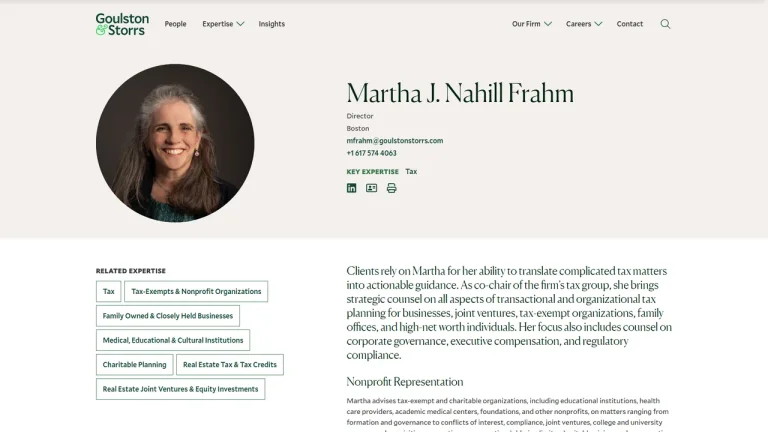
Martha Nahill Frahm, J.D. - Boston, MA
Hinckley Allen - Boston, MA

Grolman LLP - Boston, MA

Bellotti Law Group, P.C. - Boston, MA
Estate Planning and Probate Practice in Suffolk County
Administering a decedent's estate or drafting a resilient legacy plan in Boston demands deep familiarity with the Massachusetts court system. In Boston, all probate matters, will contests, guardianship petitions, and trust administrations fall under the direct jurisdiction of the Suffolk County Probate and Family Court, located at the Edward W. Brooke Courthouse on New Chardon Street in Downtown Boston. Estate planning attorneys serving this historic metro area routinely guide clients through the Massachusetts Uniform Probate Code to protect assets, preserve real property in neighborhoods like Beacon Hill, Back Bay, South Boston, and Dorchester, and ensure seamless wealth transfers.
Estate administration varies dramatically depending on whether a decedent leaves an uncontested will, establishes an active revocable living trust, or dies intestate. Local Boston probate lawyers represent personal representatives, heirs, and trustees before the Suffolk County Register of Probate. Legal counsel ensures proper filing through the MassCourts e-filing portal, coordinates required public notices in local newspapers, prepares formal estate inventories, and handles fiduciary accountings to protect family assets from undue delay or tax penalties.
Legal Fee Structures for Boston Estate Planning and Probate
| Case Scenario | Fee Structure | Estimated Cost (USD) | Key Cost Determinants |
|---|---|---|---|
| Basic Estate Planning Package (Will, Health Care Proxy, DPOA) | Flat Fee | $1,200 - $2,500 | Number of core documents, beneficiary complexity, individual vs. married couple planning. |
| Comprehensive Revocable Living Trust & Asset Transfer | Flat Fee | $3,500 - $7,000 | Real estate deed retitling, pour-over will drafting, state tax avoidance provisions, funding assistance. |
| Uncontested Formal / Informal Probate Administration | Hourly / Blended | $3,500 - $8,500 ($300 - $550/hr) | Suffolk Probate Court filing fees, creditor claims complexity, estate liquidation requirements. |
| Fiduciary Litigation & Contested Will / Trust Disputes | Retainer + Hourly | $10,000 - $35,000+ ($350 - $650/hr) | Undue influence claims, testamentary capacity challenges, deposition volume, duration of court trial. |
Critical Legal Deadlines & Statutes in Massachusetts
Estate planning and estate administration in Boston are governed by strict statutory timetables that can irrevocably bar claims if missed. Under Mass. Gen. Laws ch. 190B, § 3-108, an informal or formal probate proceeding or will submission must generally commence within 3 years of the decedent's death. Creditors wishing to recover debts from an estate must act swiftly; under Mass. Gen. Laws ch. 190B, § 3-803, general creditor claims are permanently extinguished unless formally brought within 1 year from the date of the decedent's death.
Surviving spouses seeking to assert statutory rights must adhere to strict filing procedures. Under Mass. Gen. Laws ch. 191, § 15, a surviving spouse who chooses to waive the provisions of a will must file an elective share claim within 6 months after the probate of the will is approved by the Suffolk County Probate and Family Court. Furthermore, personal representatives must file the Massachusetts Estate Tax return (Form M-706) within 9 months of the date of death pursuant to Mass. Gen. Laws ch. 62C, § 17 for estates exceeding the statutory exemption threshold established under Mass. Gen. Laws ch. 65C, § 2A.
Small Claims Limitations vs. Formal Probate Representation
In Boston, the Small Claims Division of the Boston Municipal Court handles civil money disputes capped at $7,000 pursuant to Mass. Gen. Laws ch. 218, § 21. However, small claims sessions have zero jurisdiction over probate matters, trust disputes, will contests, or guardianship appointments. All estate matters belong exclusively within the Suffolk County Probate and Family Court.
While small estates with personal property valued under $25,000 (excluding the value of one automobile) may qualify for informal voluntary administration without extensive attorney involvement under Mass. Gen. Laws ch. 190B, § 3-1201, estates holding real estate in Suffolk County or complex investment portfolios cannot utilize this simplified procedure. Hiring an experienced Boston estate planning lawyer prevents flawed deed conveyances, protects against personal liability for executors, and safeguards family wealth against prolonged judicial freezes.
Red Flags When Selecting a Boston Probate Attorney
- One-Size-Fits-All Living Trusts: Beware of practitioners who sell pre-packaged living trust forms without actively assisting in the deed transfer and account retitling required to fund the trust properly.
- Ignoring Massachusetts Estate Tax Thresholds: Avoid attorneys who fail to structure trusts around the specific statutory exemption limit set under state law, exposing beneficiaries to avoidable state-level estate tax liabilities.
- Unclear Probate Billing Practices: Avoid lawyers who refuse to provide itemized fee schedules or attempt to charge an arbitrary percentage of the estate value rather than reasonable hourly or transparent flat rates.
- Lack of Suffolk County Courthouse Experience: Avoid hiring attorneys without routine appearances before the judges and court clerks at the Edward W. Brooke Courthouse, where localized filing customs heavily impact case timelines.
Frequently Asked Questions
What is the difference between informal and formal probate in Boston?
Informal probate is an administrative process handled by a magistrate without court hearings when the original will is available, the heirs and beneficiaries agree, and there are no objections. Formal probate is conducted before a judge of the Suffolk County Probate and Family Court when there are contested wills, missing heirs, disputed fiduciary appointments, or unclear terms in testamentary documents.
Does owning real estate in Boston make probate mandatory?
If real property is held solely in the decedent's name, probate administration is necessary to clear title and legally transfer the property to beneficiaries or buyers. However, property titled in a revocable living trust or held with rights of survivorship bypasses probate entirely upon death.
How long does it take to settle an estate in Suffolk County?
An uncontested estate in Boston typically takes between 10 to 14 months to settle because the statutory creditor claim window remains open for 1 full year from the date of death under state law. Complex estates involving real estate sales, estate tax returns, or litigation can take two years or longer.
Can a personal representative be held personally liable for estate debts?
A personal representative is not personally responsible for a decedent's valid debts unless they breach fiduciary duties. If an executor distributes assets to heirs before the one-year creditor period expires and the estate cannot satisfy legitimate debts, the executor may face personal liability under Massachusetts probate law.
What happens if an individual passes away without a will in Boston?
When someone dies intestate in Boston, their estate is distributed according to the default Massachusetts Uniform Probate Code rules of intestate succession. The court appoints an administrator to oversee distribution strictly to surviving spouses, children, or closest blood relatives, regardless of the decedent's unwritten intentions.