
Domestic Violence Lawyers in Worcester
Retain top domestic violence lawyers in Worcester to secure emergency 209A restraining orders, defend against false claims, and protect your safety and future. Skilled Worcester County attorneys represent clients in 10-day extension hearings, criminal domestic assault charges, and protective order modifications at the Worcester Trial Court Complex. Explore our verified Worcester directory below to consult with dedicated domestic violence counsel.

Gordie Daniels Law Office - Worcester, MA

Hera Law Group Worcester Office - Worcester, MA

Cameron Moore Law, PLLC - Worcester, MA

Duquette Law Group, LLC - Worcester, MA

Ayvazian Law, P.L.L.C. - Worcester, MA
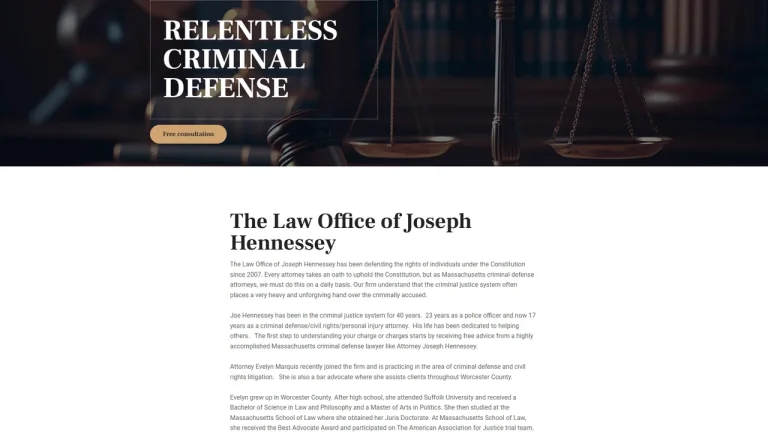
Law Office of Joseph Hennessey - Worcester, MA

Community Legal Aid - Worcester, MA

Adam D. Schmaelzle, Attorney At Law - Worcester, MA

Hebert Law Offices PLLC - Worcester, MA

Moreno Law Office, LLC - Worcester, MA

Turco Legal, P.C. - Worcester, MA

McGrail & McGrail - Worcester, MA

Anthony J. Luzzo, P.C. - Worcester, MA

Law Office of Barbara S. Liftman - Worcester, MA

Monopoli Law Office - Worcester, MA
Urgent Domestic Violence and Protective Order Representation in Worcester
Domestic violence allegations involve urgent personal safety issues, criminal exposure, and profound impacts on child custody and parental rights. Whether you need immediate court protection from an abusive partner or face false accusations stemming from a contentious divorce, decisive legal intervention in Worcester is essential.
Protective orders under Commonwealth law are heard concurrently in the Worcester District Court and the Worcester Probate and Family Court, both located within the Worcester Trial Court Complex at 225 Main Street. Criminal charges involving domestic assault and battery are prosecuted by the Worcester County District Attorney's Office, with initial investigations handled by the Worcester Police Department.
Retaining an experienced Worcester domestic violence attorney ensures immediate and strategic advocacy. Counsel assists victims in obtaining comprehensive 209A abuse prevention orders and vacate orders, or vigorously defends clients against baseless claims that threaten parental access, firearms licenses, and professional careers across Central Massachusetts.
Legal Fee Structures for Worcester Domestic Violence Matters
| Case Scenario | Fee Structure | Estimated Cost (USD) | Key Cost Determinants |
|---|---|---|---|
| 209A Restraining Order 10-Day Hearing | Flat Fee | $1,500 - $3,500 | Urgency of evidentiary preparation, text and audio cross-examination, and witness subpoenas. |
| Criminal Domestic Assault & Battery Defense | Flat Fee or Staged Retainer | $3,500 - $8,500 | Severity of charges under Section 13M, dangerousness hearings under 276 § 58A, and jury trial. |
| Order Modification or Motion to Vacate | Flat Fee or Hourly Retainer | $1,800 - $4,500 | Showing significant change in circumstances or demonstrating lack of reasonable fear of imminent harm. |
| Concurrent Divorce & 209A Custody Action | Hourly Retainer ($300 - $550/hr) | $4,000 - $15,000 | Supervised visitation terms, child custody disputes, and Probate and Family Court coordination. |
Critical Legal Deadlines & Statutes in Massachusetts
Domestic violence proceedings in Massachusetts operate under strict statutory deadlines. Under the Massachusetts Abuse Prevention Act, an emergency ex parte restraining order may be granted without prior notice to the defendant under Mass. Gen. Laws ch. 209A, § 4, but a formal two-party extension hearing must be held within 10 court business days. At this 10-day hearing, the plaintiff must prove by a preponderance of the evidence that they suffer from reasonable fear of imminent serious physical harm under Mass. Gen. Laws ch. 209A, § 3.
Orders can be extended for up to 1 year, or permanently if the court finds continued risk of abuse. Violating any term of a 209A protective order is a criminal offense carrying mandatory arrest and penalties including up to 2.5 years in a house of correction under Mass. Gen. Laws ch. 209A, § 7. When criminal charges are filed, defendants are charged under the domestic assault and battery statute pursuant to Mass. Gen. Laws ch. 265, § 13M or the felony domestic strangulation statute under Mass. Gen. Laws ch. 265, § 15D.
For individuals who do not share a family, marital, dating, or household relationship, protective relief must be sought under the Massachusetts Harassment Prevention Act pursuant to Mass. Gen. Laws ch. 258E, § 3, requiring proof of three or more separate acts of willful and malicious conduct aimed at the plaintiff. Furthermore, in cases of arrest, prosecutors frequently request pretrial detention without bail under the Massachusetts Dangerousness Statute pursuant to Mass. Gen. Laws ch. 276, § 58A.
Small Claims Limitations vs. Domestic Violence Trial Advocacy
The Small Claims Session of the Worcester District Court handles minor civil debts capped strictly at $7,000 under Mass. Gen. Laws ch. 218, § 21. Small claims courts have zero authority to issue protective restraining orders, vacate orders, criminal protective conditions, or child custody mandates. Domestic violence issues must be addressed in the District Court or Probate and Family Court.
Attempting to represent oneself in a 209A extension hearing or domestic violence matter carries extreme risks. For victims, failing to properly present evidence-such as timestamped text messages, voicemail recordings, and medical records-can lead to an order being dismissed, leaving the individual unprotected. For respondents, an issued 209A order enters the statewide Domestic Violence Registry (CARIE), requires immediate surrender of all firearms, and creates severe disadvantages in ongoing child custody litigation.
Retaining a seasoned Worcester domestic violence lawyer ensures complete protection of your rights and safety. Counsel prepares corroborating digital evidence, cross-examines opposing parties on timeline inconsistencies, navigates Section 58A dangerousness hearings, and advocates forcefully before Worcester judges.
Red Flags When Hiring a Worcester Domestic Violence Attorney
- Promising guaranteed dismissal of a 209A restraining order or criminal charge before reviewing police reports and hearing testimony.
- Confusing the distinct legal standards between Chapter 209A domestic orders and Chapter 258E civil harassment prevention orders.
- Advising a client to violate a restraining order to retrieve personal belongings without formal police escort or court modification.
- Lacking daily courtroom litigation experience in both the Worcester District Court and Worcester Probate Court at 225 Main Street.
Frequently Asked Questions
What is the difference between a 209A and a 258E order in Massachusetts?
A Chapter 209A order applies strictly to family members, spouses, cohabitants, or dating partners who face imminent physical harm. A Chapter 258E order applies to unrelated individuals (such as neighbors or coworkers) and requires proof of three separate acts of harassment.
What happens at a 10-day 209A restraining order hearing in Worcester?
Both parties appear before a judge with counsel to present testimony, text messages, photographs, and police reports. The judge decides whether to extend the protective order for up to one year, make it permanent, or vacate it entirely.
Does a 209A restraining order show up on a criminal record in Massachusetts?
A 209A civil restraining order is not a criminal conviction, but it is recorded in the statewide civil Domestic Violence Record Keeping System (CARIE), accessible by law enforcement and family court judges.
What penalties apply for violating a restraining order in Worcester?
Under Chapter 209A Section 7, violating an abuse prevention order is a criminal offense carrying mandatory arrest, up to 2.5 years in a house of correction, fines up to $5,000, and mandatory completion of a certified batterer's intervention program.
What is a Section 58A dangerousness hearing in a Worcester domestic case?
Under Massachusetts General Laws Chapter 276 Section 58A, the prosecutor can request an evidentiary hearing asking the judge to hold a domestic violence defendant in jail without bail for up to 120 days pending trial if no release conditions can guarantee safety.