
Tax Lawyers in Worcester
Resolving state and federal tax complications in Worcester requires sophisticated knowledge of Massachusetts and federal revenue codes. Experienced tax lawyers defend clients during audits, negotiate abatements, and manage complex estate tax planning. Explore our directory below to retain an accomplished Worcester tax attorney.

Prince Lobel - Worcester, MA
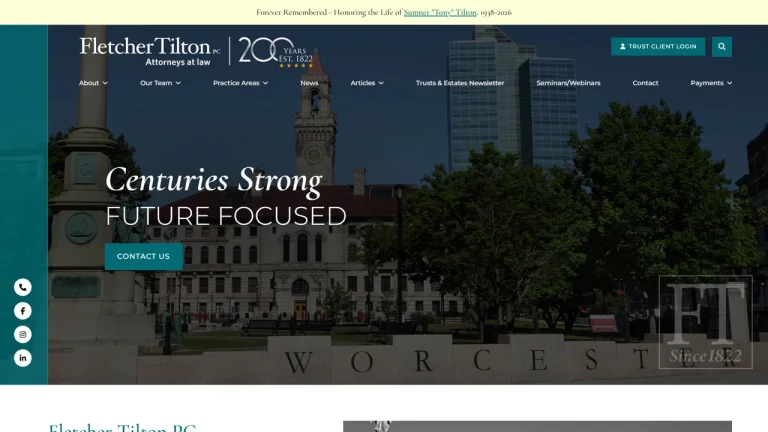
Fletcher Tilton PC - Worcester, MA

Law Office of Elizabeth A. Schwartz - Worcester, MA
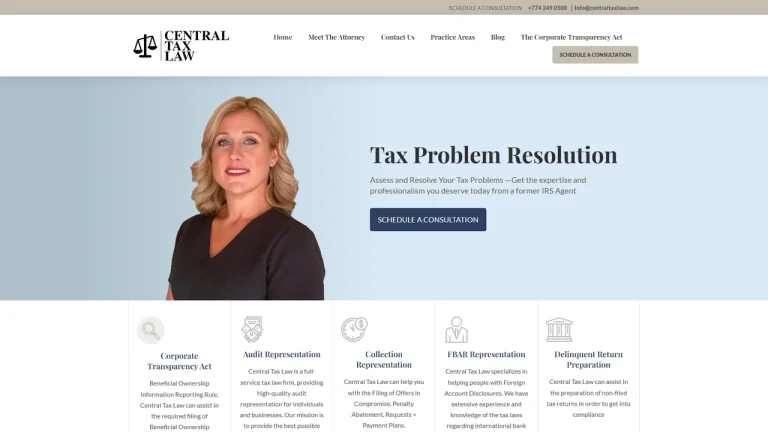
Central Tax Law, LLC - Worcester, MA

Law Office of Donald J. Peters - Worcester, MA
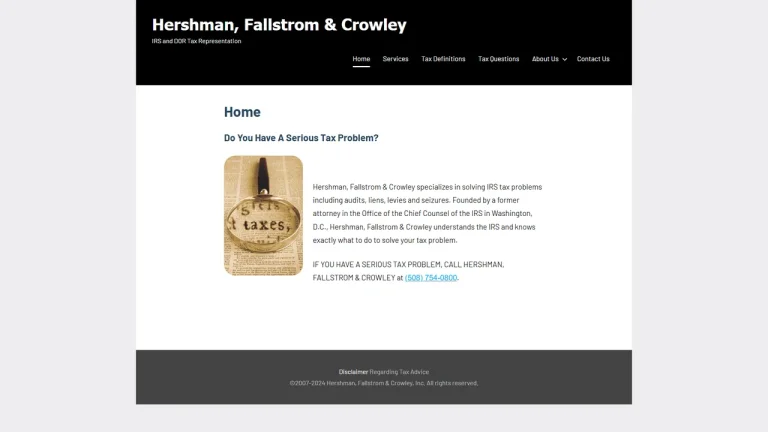
Hershman Fallstrom & Crowley - Worcester, MA

Mountain, Dearborn & Whiting LLP - Worcester, MA

Worcester Law Group: Attorney John Elloian - Worcester, MA

Partners Tax Attorneys - Worcester - Worcester, MA
State and Federal Tax Law Practice in Worcester
Managing individual, corporate, and estate tax liabilities in Worcester demands a comprehensive understanding of both federal statutes and Massachusetts tax law. Whether structuring pass-through business entities along the Route 9 commercial corridor, resolving state corporate excise taxes, or responding to high-stakes audits, taxpayers face substantial financial exposure. Worcester County taxpayers must comply with administrative oversight from both state and federal taxing authorities.
State tax administration in Massachusetts is directed by the Massachusetts Department of Revenue (DOR), which operates a regional office at 484 Main Street in downtown Worcester. When taxpayers dispute a Notice of Assessment or an audit adjustment from the Mass DOR, administrative appeals proceed through the DOR Office of Appeals. If a resolution is not achieved, formal litigation is conducted before the Massachusetts Appellate Tax Board (ATB), an administrative tribunal with jurisdiction to hear tax appeals across the Commonwealth.
Federal tax matters fall under the authority of the Internal Revenue Service, which maintains a local Taxpayer Assistance Center at 120 Front Street in Worcester. When federal tax disputes cannot be settled through administrative appeals, petitions must be filed in the United States Tax Court. Retaining an experienced Worcester tax attorney provides attorney-client privilege during sensitive audits, protecting confidential financial records in ways that standard accounting representation cannot match.
Fee Schedules for Worcester Tax Legal Representation
| Case Scenario | Fee Structure | Estimated Cost (USD) | Key Cost Determinants |
|---|---|---|---|
| Massachusetts DOR Audit Defense & Abatement | Hourly Retainer | $2,500 - $6,500 | Corporate vs. personal income tax scope, sales/use tax records, nexus determinations, and penalty abatement documentation. |
| Corporate Excise & Pass-Through Entity Structuring | Flat / Hourly Fee | $3,000 - $7,500 | Multi-entity apportionment formulas, pass-through entity (PTE) excise election filings, and commercial transaction structuring. |
| High-Net-Worth Massachusetts Estate Tax Planning | Fixed Flat Fee | $3,500 - $8,000 | Marital deduction trust drafting, real estate deed conveyances, lifetime gifting strategies, and Massachusetts tax thresholds. |
| Massachusetts Appellate Tax Board (ATB) Litigation | Hourly Retainer | $7,500 - $20,000+ | Formal vs. informal procedure docket election, expert economic testimony, motion practice, and evidentiary hearings. |
Critical Legal Deadlines & Statutes in Massachusetts
Taxpayers in Worcester must comply with rigorous statutory deadlines to preserve their rights to contest state and federal assessments. When contesting an erroneous tax liability assessed by the Massachusetts Department of Revenue, a taxpayer must file an Application for Abatement under Mass. Gen. Laws ch. 62C, § 37. The application must be filed within three years from the date the return was filed, within two years from the date the tax was assessed, or within one year from the date the tax was paid, whichever is latest.
If the Massachusetts DOR denies the abatement application, an appeal must be filed with the Massachusetts Appellate Tax Board within 60 calendar days of the notice of denial pursuant to Mass. Gen. Laws ch. 58A, § 7. Failure to file the appeal within this 60-day window permanently extinguishes the taxpayer's right to challenge the assessment. Massachusetts state personal income taxation is governed by Mass. Gen. Laws ch. 62, § 4, while business corporations are taxed on corporate excise under Mass. Gen. Laws ch. 63, § 38.
For estate tax matters, Massachusetts imposes a distinct state estate tax under Mass. Gen. Laws ch. 65C, § 2A for gross estates exceeding the statutory threshold of $2,000,000, requiring an estate tax return (Form M-706) to be filed within nine months of the decedent's date of death. At the federal level, the IRS is generally barred from assessing additional tax after three years from the date a return is filed pursuant to 26 U.S. Code § 6501, unless there is a substantial omission or fraud.
Small Claims Limitations vs. Tax Dispute Counsel
The small claims session of the Worcester District Court operates under Mass. Gen. Laws ch. 218, § 21, handling localized monetary claims up to $7,000. However, local small claims sessions hold zero statutory jurisdiction over state or federal tax assessments, abatements, or collection disputes.
Under the doctrine of sovereign immunity and the federal Anti-Injunction Act, 26 U.S. Code § 7421, taxpayers cannot sue revenue agencies in small claims courts to stop tax assessments or collections. All state tax appeals must proceed exclusively through the Massachusetts Appellate Tax Board under Mass. Gen. Laws ch. 58A, § 7. Furthermore, retaining a licensed tax attorney ensures that communications regarding unreported income or aggressive deductions remain protected under attorney-client privilege, a legal safeguard not extended to certified public accountants during criminal tax fraud investigations.
Red Flags When Hiring a Worcester Tax Lawyer
- Non-Lawyer Representation in Audits: Beware of CPAs or tax resolution companies that claim to provide full legal protection; only licensed attorneys can assert attorney-client privilege in high-exposure tax investigations.
- Promises of Guaranteed Abatements: Avoid legal advisors who promise guaranteed tax reductions before reviewing audit reports and determining if statutory grounds for reasonable cause exist under Massachusetts law.
- Unfamiliarity with Mass DOR Procedures: Massachusetts state tax procedure differs substantially from federal IRS rules; ensure your attorney has experience with the Mass DOR Office of Appeals and Appellate Tax Board dockets.
- Lack of Transparent Fee Structures: Complex tax controversy matters require structured retainers; avoid firms that fail to provide detailed monthly statements outlining hourly work and court filing expenses.
Frequently Asked Questions
What is the difference between a tax lawyer and a CPA in Worcester?
A CPA prepares returns and analyzes financial statements, while a tax lawyer provides legal representation in tax controversies, negotiates settlements, and litigates before the Massachusetts Appellate Tax Board and U.S. Tax Court. Tax attorneys also provide full attorney-client privilege.
What is the deadline to file a Massachusetts tax abatement?
Under Mass. Gen. Laws ch. 62C, § 37, an Application for Abatement must be filed with the Massachusetts Department of Revenue within three years from the date the return was filed, within two years from the assessment date, or within one year from the payment date, whichever is latest.
What is the Massachusetts estate tax exemption amount?
Under Mass. Gen. Laws ch. 65C, § 2A, the Massachusetts estate tax exemption threshold is $2,000,000. Estates valued above this amount must file a Massachusetts Estate Tax Return (Form M-706) within nine months of the date of death.
Where are Massachusetts state tax appeals heard?
Disputes with the Massachusetts Department of Revenue that cannot be settled administratively are appealed to the Massachusetts Appellate Tax Board (ATB) pursuant to Mass. Gen. Laws ch. 58A, § 7. The ATB is a quasi-judicial agency dedicated to hearing state tax cases.
Can a Massachusetts tax dispute be heard in Worcester District Court?
No. Worcester District Court and its small claims division have no jurisdiction over tax disputes under Mass. Gen. Laws ch. 218, § 21. Taxpayers must exhaust administrative remedies with the Mass DOR and appeal to the Appellate Tax Board.