
Commercial Real Estate Lawyers in Michigan
Hire top Michigan commercial real estate lawyers to navigate complex acquisitions, commercial leases, zoning approvals, and environmental due diligence. Experienced commercial property attorneys structure triple net leases, secure municipal site plan approvals, and draft construction contracts to protect your capital. Browse our verified statewide directory below to consult an authoritative Michigan commercial real estate lawyer today.
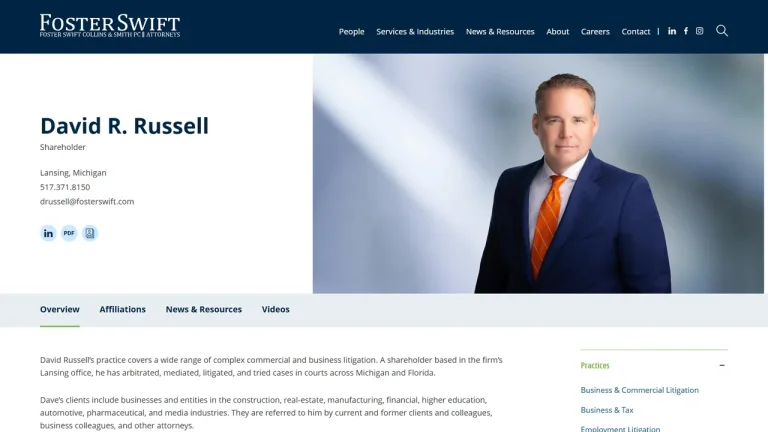
David R. Russell, Attorney - Lansing, MI

Rassam Law - Detroit, MI

Warner Norcross and Judd LLP - Detroit, MI

Lubienski Paul M - Dearborn, MI
Hooper Hathaway, P.C. - Ann Arbor, MI
Verspoor Waalkes PC - Grand Rapids, MI
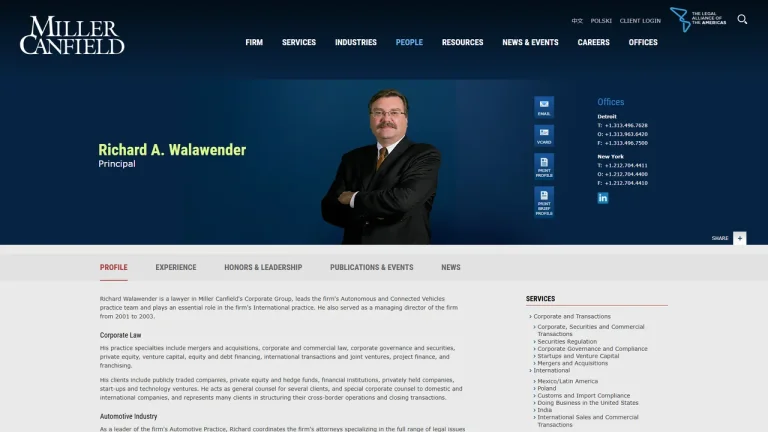
Richard A. Walawender - Miller Canfield - Detroit, MI

Thacker Sleight PC - Grand Rapids, MI

Harris Arbitration - Detroit, MI
ABMD Law - Lansing, MI
Miller Canfield PLC - Grand Rapids, MI

MJ Law, PLC - Dearborn, MI

Shaheen Jacobs & Ross - Detroit, MI

Upton Law, PLLC - Detroit, MI

Jill E. Boone, Attorney - Lansing, MI
Pear Sperling Eggan & Daniels, P.C. - Ann Arbor, MI

Lasky Fifarek & Hogan PC - Lansing, MI

The Hájek Firm, PLLC - Detroit, MI

Schenk & Bruetsch PLC - Detroit, MI
McGinty, Hitch, Person, Anderson and Revore, P.C. - Lansing, MI

Okasinski Law, PLC - Detroit, MI

Schnelker, Rassi & McConnell PLC - Grand Rapids, MI

Butzel Long - Lansing, MI

Navigating Commercial Real Estate & Land Development in Michigan
Developing, leasing, or acquiring commercial property across Michigan involves complex regulatory frameworks, industrial environmental liabilities, and sophisticated contractual structures. From manufacturing and logistics hubs in Wayne, Macomb, and Oakland Counties to corporate redevelopments in Downtown Detroit, Grand Rapids, and Ann Arbor, commercial transactions demand rigorous legal guidance.
High-stakes commercial property disputes are resolved in specialized judicial venues. Many Michigan Circuit Courts maintain dedicated Business Courts established under MCL § 600.8031-such as the Wayne County Business Court or Kent County Business Court-which specialize in complex commercial contracts, construction liens, and commercial landlord-tenant controversies.
Retaining an attorney admitted to the State Bar of Michigan protects commercial developers, property managers, and investors from costly liabilities. Experienced commercial practitioners regularly negotiate favorable purchase option terms, handle municipal zoning variances, and resolve tenant defaults through structured workouts, avoiding prolonged courtroom litigation while preserving project financing.
Michigan Commercial Real Estate Fee Structures & Cost Estimates
Commercial real estate legal counsel in Michigan operates on hourly rates or project-based retainers calibrated to transaction size and litigation exposure.
| Case Scenario | Fee Structure | Estimated Cost (USD) | Key Cost Determinants |
|---|---|---|---|
| Commercial Lease Drafting & Triple-Net (NNN) Review | Flat Fee or Hourly ($300 - $550/hr) | $1,500 - $4,500 | Square footage, CAM reconciliation terms, tenant improvement work letters, and personal guaranty clauses. |
| Commercial Purchase & Sale Due Diligence (Phase I / BEA) | Retainer + Hourly ($325 - $600/hr) | $4,500 - $14,000+ | Environmental review under NREPA Part 201, title and ALTA survey analysis, and municipal zoning compliance. |
| Municipal Zoning Variance & Special Land Use Approval | Hourly ($300 - $550/hr) or Retainer | $3,500 - $10,000 | City council hearings, planning commission presentations, and neighborhood impact studies. |
| Construction Lien Recording & Foreclosure Litigation | Hourly ($325 - $600/hr) or Retainer | $5,000 - $25,000+ | Michigan Construction Lien Act compliance, notice of commencement verification, and priority disputes. |
Critical Legal Deadlines & Statutes in Michigan
Commercial real estate transactions in Michigan are governed by strict statutory rules and environmental compliance timelines. Under Part 201 of Michigan's Natural Resources and Environmental Protection Act (NREPA), codified at MCL § 324.20126, commercial purchasers can obtain an exemption from baseline environmental cleanup liability by conducting a Baseline Environmental Assessment (BEA) prior to or within forty-five days of the purchase date, and submitting the BEA to the Michigan Department of Environment, Great Lakes, and Energy (EGLE).
Construction and mechanics' liens are strictly regulated by the Michigan Construction Lien Act. Under MCL § 570.1111, a contractor, subcontractor, or supplier must record a claim of lien with the county register of deeds within ninety days after the last date of furnishing labor or materials. Under MCL § 570.1117, an action to enforce the construction lien through judicial foreclosure must be filed in Circuit Court within one year after the lien is recorded.
Commercial lease enforcement and breach of contract actions carry a six-year statute of limitations under MCL § 600.5807(8). Appellants challenging a municipal Zoning Board of Appeals (ZBA) decision must file a claim of appeal in the county Circuit Court within thirty days of the ZBA's written decision pursuant to the Michigan Zoning Enabling Act, codified at MCL § 125.3606.
Small Claims Division Limits vs. Commercial Real Estate Representation
Under MCL § 600.8401, small claims divisions in Michigan District Courts have a strict monetary recovery cap of $7,000. Furthermore, under MCL § 600.8408, corporations and LLCs cannot be represented by attorneys in small claims hearings, and non-attorney agents have limited standing.
Commercial real estate controversies invariably exceed small claims ceilings and involve equitable remedies such as specific performance, commercial lease evictions (summary proceedings), or lien foreclosures that must be filed in regular District or Circuit Courts. In high-value business disputes, cases exceeding $25,000 are assigned to the specialized Business Court docket under MCL § 600.8031, where experienced counsel is essential to handle complex corporate depositions, electronic discovery, and commercial contract interpretation.
Red Flags to Watch for When Hiring a Michigan Commercial Real Estate Lawyer
- Overlooking Michigan's Baseline Environmental Assessment (BEA): In Michigan, purchasing contaminated industrial property without filing a BEA under MCL § 324.20126 within forty-five days creates permanent environmental cleanup liability.
- Missing Strict Construction Lien Deadlines: The 90-day recording deadline under MCL § 570.1111 is strictly construed; failure to verify notice of commencement filings can invalidate entire liens.
- Inexperience in Municipal Land Use Practice: Ensure your attorney has practical experience presenting before planning commissions and zoning boards in Michigan cities and townships.
- One-Size-Fits-All Commercial Leases: Commercial leases must be customized for Michigan property taxes, specific maintenance allocations, and CAM audits rather than utilizing generic boilerplates.
Frequently Asked Questions
What is a Baseline Environmental Assessment (BEA) in Michigan?
A BEA is a technical environmental assessment conducted under Michigan NREPA Part 201 that allows a buyer or tenant to acquire contaminated commercial or industrial real estate without becoming liable for pre-existing environmental contamination.
What is the deadline to record a construction lien in Michigan?
Under MCL Section 570.1111, a claimant must record a Claim of Lien with the county register of deeds within ninety days of the date the last labor or materials were furnished to the project.
What are Michigan Business Courts?
Business Courts are specialized divisions established within Michigan Circuit Courts under MCL Section 600.8031 designed to resolve business and commercial property lawsuits exceeding $25,000 efficiently with specialized judges.
How long do I have to appeal a municipal zoning board decision in Michigan?
Under the Michigan Zoning Enabling Act, an appeal of a Zoning Board of Appeals decision must be filed in Circuit Court within thirty days after the board approves the minutes of its decision.
What is the difference between a gross lease and a triple-net (NNN) lease?
In a gross lease, the tenant pays a flat rent and the landlord covers operating expenses; in a triple-net (NNN) lease, common in Michigan retail and industrial properties, the tenant also pays their proportionate share of real estate taxes, building insurance, and common area maintenance (CAM).