
Business Litigation Lawyers in Detroit
Retain aggressive business litigation lawyers in Detroit, Michigan, to protect commercial interests, resolve contract disputes, and enforce corporate rights. Experienced trial attorneys represent enterprises across Wayne County in shareholder battles, trade secret claims, and supply chain conflicts through negotiation or trial. Explore our verified directory below to consult an established Detroit commercial litigation attorney.
Barris, Sott, Denn & Driker, P.L.L.C. - Detroit, MI
Miller Johnson - Detroit, MI

Warner Norcross and Judd LLP - Detroit, MI
Litigation Associates, PLLC - Detroit, MI
Oberheiden P.C. - Detroit, MI

Garan Lucow Miller, P.C. - Detroit, MI
Joshua F. Opperer - Detroit, MI
Foley & Lardner LLP - Detroit, MI
Perkins Law Group, PLLC - Detroit, MI
Clark Hill - Detroit, MI

Troutman Pepper Locke - Detroit, MI

Law Office of Matthew S. Erard, PLLC - Detroit, MI
Nemeth Bonnette Brouwer PC - Detroit, MI

Lawrence R. Shoffner - Detroit, MI
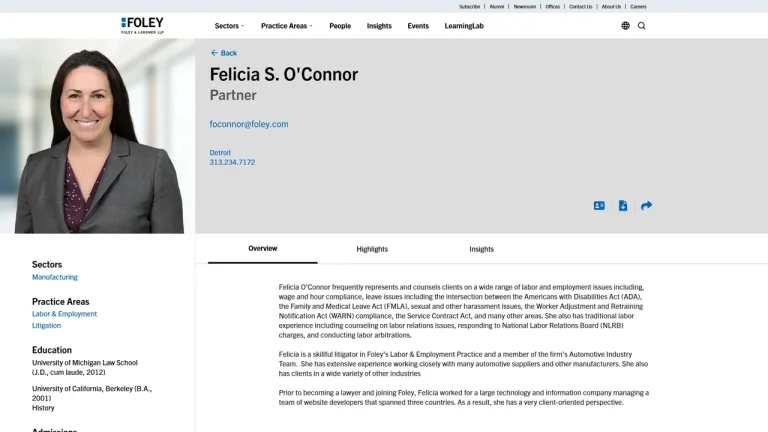
Felicia O'Connor - Foley and Lardner LLP - Detroit, MI
Foster Swift Collins & Smith, P.C. - Detroit, MI
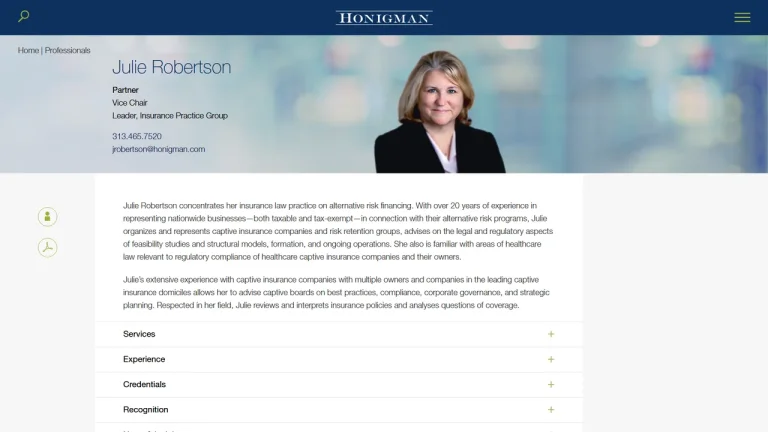
Julie E. Robertson - Detroit, MI

Harris Arbitration - Detroit, MI
Donald B. Miller - Detroit, MI

Attisha Law PLC - Detroit, MI
Miller Canfield PLC - Detroit, MI
T R Perkins Law Office - Detroit, MI
Great Lakes Law Practice LLC - Detroit, MI
Commercial Litigation in Detroit and Wayne County
Operating a business in Detroit involves navigating complex supply networks, commercial partnerships, and contractual relationships. From downtown financial firms and tech startups in Midtown to manufacturing and logistics facilities along the Detroit River, commercial disputes can threaten operational stability and financial solvency. When commercial negotiations break down, securing skilled business litigation counsel is critical to safeguarding company assets, enforcing contractual agreements, and defending corporate reputations.
Business litigation in Detroit is governed by specialized court divisions designed to handle commercial matters efficiently. In state court, high-stakes corporate disputes are assigned to the specialized Business Court of the 3rd Judicial Circuit Court of Wayne County, located at the Coleman A. Young Municipal Center on Woodward Avenue. For disputes involving federal statutes, intellectual property infringement, or diversity jurisdiction, proceedings take place before the U.S. District Court for the Eastern District of Michigan at the Theodore Levin U.S. Courthouse in downtown Detroit.
Local Detroit commercial litigators provide tactical representation across various industries, including automotive tier suppliers, construction firms, commercial real estate developers, and healthcare enterprises. Whether litigating emergency motions for preliminary injunctions or resolving member oppression disputes under Michigan corporate statutes, experienced local counsel ensures your company's interests are protected under Michigan procedural rules.
Detroit Commercial Litigation Fees and Case Scenarios
| Case Scenario | Fee Structure | Estimated Cost (USD) | Key Cost Determinants |
|---|---|---|---|
| Commercial Breach of Contract & Vendor Dispute | Hourly Retainer | $5,000 - $25,000+ | Ambiguity of contractual terms, volume of discovery documents, UCC warranties, settlement conference readiness. |
| Shareholder Oppression & Partnership Dissolution | Retainer / Hourly | $10,000 - $40,000+ | Forensic business valuation requirements, minority shareholder freeze-out evidence, buyout agreement complexity. |
| Emergency Injunction & Trade Secret Enforcement | Hourly Retainer | $7,500 - $30,000 | Speed of filing TRO and preliminary injunction motions, non-compete enforceability, forensic data recovery. |
| Automotive Tier-Supplier Delivery & Pricing Conflict | Hourly / Blended | $15,000 - $60,000+ | Risk of assembly plant shutdown, just-in-time supply terms, Wayne County Business Court emergency hearings. |
Critical Legal Deadlines & Statutes in Michigan
Commercial litigation in Detroit is subject to strict statutory deadlines that govern filing requirements and evidentiary obligations. Specialized commercial disputes with amounts in controversy exceeding $25,000 fall under the Wayne County Business Court docket pursuant to MCL § 600.8031 et seq. For commercial contract claims, Michigan law establishes a 6-year statute of limitations under MCL § 600.5807(8), but contracts involving the sale of goods governed by Article 2 of the Uniform Commercial Code carry a shorter 4-year limitations period pursuant to MCL § 440.2725. Shareholder and LLC member oppression lawsuits are litigated under MCL § 450.1489 and MCL § 450.4515, requiring rapid evidentiary preservation before corporate records can be altered. Claims alleging trade secret misappropriation under the Michigan Uniform Trade Secrets Act must be brought within 3 years of discovery under MCL § 445.1907, while general commercial torts such as tortious interference with business relations carry a 3-year limitations window under MCL § 600.5805(2).
Small Claims Limitations vs. Wayne County Business Court Representation
While the 36th District Court in Detroit operates a Small Claims Division capped at $7,000 pursuant to MCL § 600.8401, that venue is incapable of handling complex corporate litigation. Attorneys are statutorily prohibited from appearing in small claims hearings, and the court possesses zero authority to issue temporary restraining orders, dissolve corporate entities, or award damages exceeding statutory caps. Furthermore, under Michigan law, corporate entities such as LLCs and corporations cannot represent themselves in circuit or federal court and must appear through a licensed attorney. Commercial litigation routinely involves intricate electronic discovery (ESI), depositions of corporate officers, and dispositive motions under Michigan Court Rule MCR 2.116(C)(10). Retaining an experienced Detroit business litigation attorney ensures your claims are positioned effectively before Wayne County Business Court judges.
Red Flags When Hiring a Detroit Business Litigation Lawyer
- Absence of Case Budgeting: Professional commercial litigators provide realistic litigation budgets and phased cost projections rather than open-ended billing with no financial boundaries.
- Lack of Wayne County Business Court Familiarity: The specialized business docket at the Coleman A. Young Municipal Center operates under specific case management protocols; verify your counsel regularly practices before these judges.
- Guaranteed Trial Success: Litigation outcomes cannot be guaranteed; reputable business counsel presents objective risk assessments, evaluates alternative dispute resolution, and analyzes counterclaims candidly.
- Failure to Implement Immediate Litigation Holds: Failure to promptly issue formal written litigation holds to preserve corporate emails and internal records can expose your business to severe spoliation sanctions under Michigan court rules.
Frequently Asked Questions
What qualifies a lawsuit for the Wayne County Business Court?
Under MCL § 600.8031, an action qualifies for the Wayne County Business Court if all parties are business enterprises, or if the case involves internal business governance, corporate transactions, commercial financing, or trade secrets with an amount in controversy exceeding $25,000.
What is shareholder or member oppression under Michigan law?
Oppression occurs when controlling shareholders or managers engage in acts that are illegal, fraudulent, or willfully unfair and oppressive to the company or minority owners, such as improper dividend withholding or wrongful termination, actionable under MCL § 450.1489.
Can a Detroit corporation represent itself in court without an attorney?
No. Under Michigan law, a corporation, LLC, or partnership is an artificial entity that cannot appear in circuit court or federal court pro se through its owners or officers; it must be represented by a licensed attorney.
How quickly can a business obtain a Temporary Restraining Order (TRO) in Detroit?
In emergency circumstances where immediate and irreparable injury will result before the opposing party can be heard, a motion for an ex parte TRO can be filed and heard within 24 to 48 hours in the 3rd Judicial Circuit Court or federal court pursuant to Michigan Court Rule MCR 3.310.
What is the statute of limitations for commercial contracts in Michigan?
Under MCL § 600.5807(8), general commercial breach of contract actions must be filed within six years. However, contracts involving the sale of commercial goods governed by the Uniform Commercial Code carry a four-year limitations period under MCL § 440.2725.