
Business Formation Lawyers in Lansing
Connect with top Lansing business formation lawyers to structure limited liability companies, draft operating agreements, and secure state regulatory filings. Working with an experienced Ingham County attorney ensures compliance with Michigan licensing statutes and resolves partnership structuring questions out of court. Explore our directory below to consult verified legal professionals serving Lansing, East Lansing, and the Capitol business community.

Greater Lansing Legal Services PLLC - Lansing, MI
Dykema Gossett PLLC - Lansing, MI
Smith & Johnson Attorneys PC - Lansing, MI
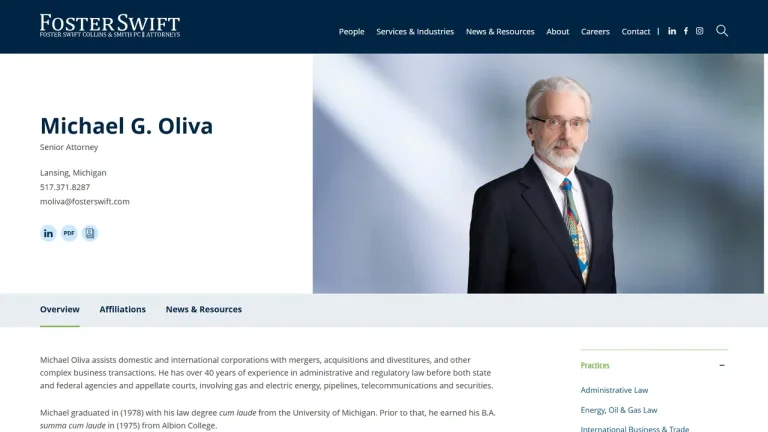
Michael G. Oliva - Lansing, MI
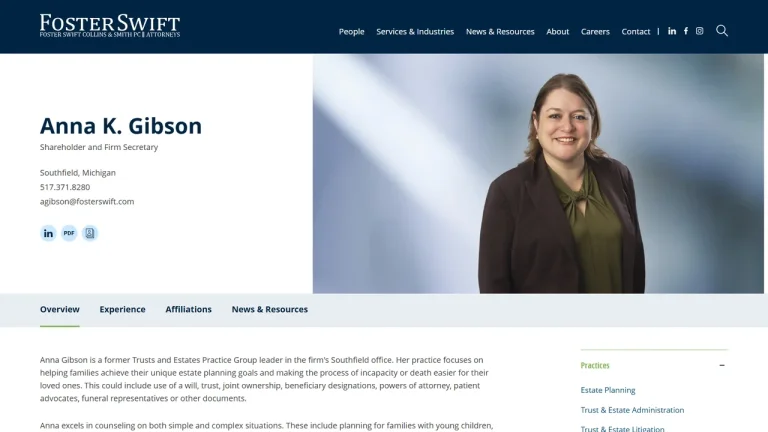
Anna K. Gibson, Attorney - Lansing, MI
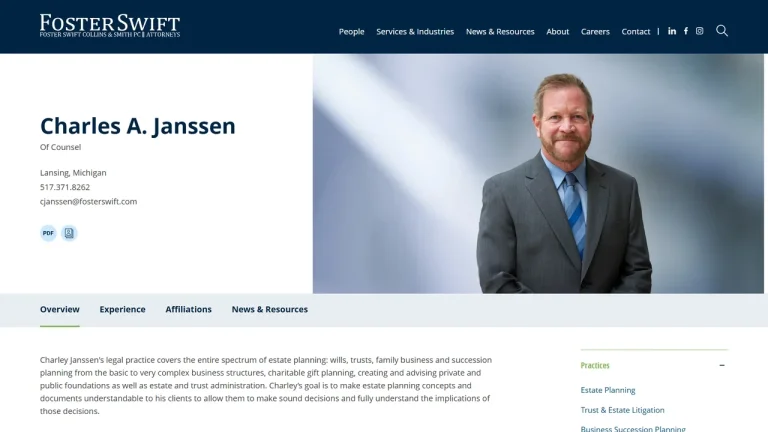
Charles A. Janssen, Attorney - Lansing, MI

Hude Legal Services, PLLC - Lansing, MI
Matt G. Hrebec, Attorney - Lansing, MI
Kelley Cawthorne - Lansing, MI

Lindsey M. Mead - Lansing, MI
Cohl, Stoker and Toskey, P.C. - Lansing, MI

Prosperity Law Center, PLLC - Lansing, MI
Taylor A. Gast, Attorney - Lansing, MI

Babbitt Legal Group, PC - Lansing, MI
Barkford Legal PLC - Lansing, MI

Cummins Woods - Lansing, MI
The Law Office of Reid Felsing, PLC - Lansing, MI
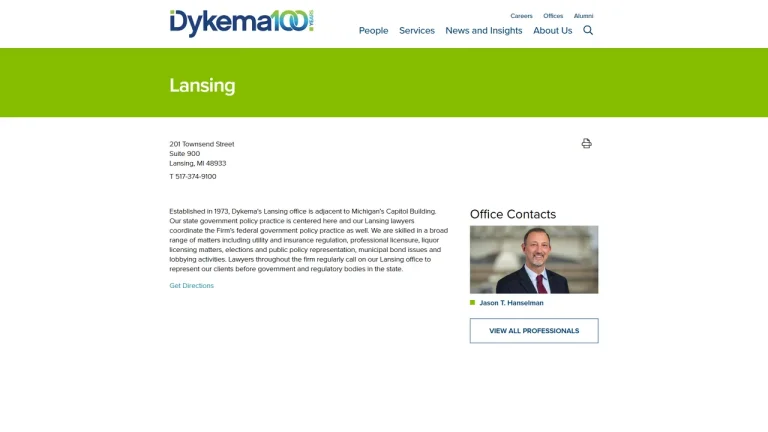
Dykema Gossett PLLC - Lansing, MI
Mark T. Koerner, Attorney - Lansing, MI
Dykema Gossett PLLC - Lansing, MI
Warner Norcross + Judd LLP - Lansing, MI
Clark Hill - Lansing, MI
Mark A. Hilpert, Attorney - Lansing, MI
Entity Structuring & Corporate Jurisdiction in Lansing
Lansing's central role as Michigan's state capital offers a distinct commercial landscape for entrepreneurs, government contractors, technology startups, and local retailers across Downtown Lansing, Old Town, and the Stadium District. Properly structuring your business entity from inception is critical to shielding personal assets, optimizing tax liability, and establishing sustainable corporate governance.
Corporate entity formation in Michigan is administered directly in Lansing by the Department of Licensing and Regulatory Affairs (LARA), Corporations, Securities & Commercial Licensing Bureau, located at 611 West Ottawa Street. Limited liability companies are formed pursuant to the Michigan Limited Liability Company Act under MCL § 450.4101, while corporations are established under the Michigan Business Corporation Act at MCL § 450.1101.
Internal corporate disputes, equity deadlocks, and judicial dissolutions for Ingham County companies fall under the jurisdiction of the 30th Judicial Circuit Court of Michigan at the Veterans Memorial Courthouse on West Kalamazoo Street. Engaging a Lansing business formation attorney ensures that your Articles of Organization and operating agreements satisfy state mandates while preventing future disputes between founding partners.
Common Business Formation Scenarios & Legal Fees in Lansing
| Case Scenario | Fee Structure | Estimated Cost (USD) | Key Cost Determinants |
|---|---|---|---|
| Single-Member LLC Formation & LARA State Filing | Flat Fee | $600 - $1,500 | Articles of Organization drafting, registered agent selection, and LARA expedited processing fees. |
| Multi-Member LLC with Customized Operating Agreement | Flat Fee / Hourly | $1,500 - $3,800 | Capital contribution tiers, voting rights, member buy-sell restrictions, and dispute deadlock protocols. |
| S-Corporation or C-Corporation Formation with Bylaws | Flat Fee / Hourly | $2,000 - $4,500 | Share class structures, board governance resolutions, shareholder agreements, and IRS tax elections. |
| Professional Limited Liability Company (PLLC) Structuring | Flat Fee | $1,200 - $2,800 | Professional licensing compliance through LARA occupational boards for medical, legal, or accounting firms. |
Critical Legal Deadlines & Statutes in Michigan
Organizing a business in Lansing requires strict compliance with statutory filing procedures and ongoing corporate maintenance deadlines. When organizing an LLC, Articles of Organization must be officially accepted and endorsed by LARA under MCL § 450.4203 before the company possesses formal legal existence and limited liability protections.
Ongoing compliance is strictly monitored by the State of Michigan. Under MCL § 450.4909, all Michigan limited liability companies must file an annual statement with LARA by February 15th of each calendar year. Professional limited liability companies (PLLCs) must certify annually that all members remain licensed in their respective professions. For Michigan corporations, an annual report must be filed by May 15th pursuant to MCL § 450.1911. Failure to submit reports and fees for two consecutive years results in automatic administrative dissolution under MCL § 450.1922.
Businesses operating under a trade name or fictitious name must file an Assumed Name Certificate with LARA under MCL § 450.4206 or with the Ingham County Clerk under MCL § 445.1. Assumed name certificates expire on December 31st of the fifth year following the year of filing and must be timely renewed to preserve exclusive regional rights to the trade name.
Small Claims Limitations vs. Professional Formation Counsel
The Small Claims Division of the 54A District Court, located at Lansing City Hall, is restricted to basic monetary recovery claims up to $7,000 under MCL § 600.8401. However, small claims courts possess zero jurisdiction to order corporate equitable relief, decree judicial dissolutions under MCL § 450.4802, or interpret fiduciary governance provisions. In addition, attorneys are prohibited from representing clients in Small Claims Division hearings pursuant to MCL § 600.8408.
Entrepreneurs who rely on generic, unvetted online formation templates routinely adopt standard provisions that fail to address key business contingencies, such as member death, disability, or equity transfers under MCL § 450.4509. Retaining an experienced Lansing business formation lawyer ensures your corporate veil remains impenetrable against personal creditors and provides ironclad governance documents tailored to Michigan corporate law.
Red Flags & Vetting Local Legal Counsel
Selecting the right corporate attorney is essential for safeguarding your enterprise from future legal liability. Verify that prospective counsel is an active member of the State Bar of Michigan with specific transactional experience in Ingham County. Watch for these common warning signs when consulting counsel:
- Generic Boilerplate Agreements: Avoid firms that provide one-size-fits-all operating agreements that omit specific Michigan statutory references or fail to detail custom capital call procedures.
- Overlooking Annual LARA Requirements: Inexperienced advisors may neglect to inform you of the strict February 15th or May 15th annual reporting deadlines under MCL § 450.4909, risking corporate dissolution.
- Failing to Address Buy-Sell Mechanisms: Multi-owner entities must include explicit valuation and buyout procedures to prevent expensive judicial dissolution in the 30th Judicial Circuit Court.
- Neglecting Municipal and Tax Filings: In addition to LARA state filings, counsel must guide your business through registration with the Michigan Department of Treasury and the Lansing City Clerk.
Frequently Asked Questions
What is the difference between an LLC and a corporation in Michigan?
An LLC formed under MCL § 450.4101 offers flexible management and pass-through taxation without rigid corporate formalities. A corporation formed under MCL § 450.1101 requires a formal board of directors, annual meetings, and corporate bylaws, which may be advantageous for businesses seeking outside equity investment.
Where are corporate formation documents filed for Lansing businesses?
Formation documents are filed directly in Lansing with the Michigan Department of Licensing and Regulatory Affairs (LARA), Corporations, Securities & Commercial Licensing Bureau, located at 611 West Ottawa Street.
What happens if an LLC misses its annual filing with LARA?
Under MCL § 450.4909, if an LLC fails to file its annual statement by February 15th, it falls out of good standing. Continued failure to file can lead to the loss of entity protections and eventual administrative dissolution under state law.
Why is a written operating agreement necessary for a Lansing LLC?
Although Michigan law does not strictly mandate filing the operating agreement with LARA, having a comprehensive written agreement establishes ownership percentages, outlines voting protocols, protects the corporate veil, and prevents statutory default rules from controlling your business.
Can a non-resident form a business entity in Lansing, Michigan?
Yes. Non-residents may form an entity in Michigan, provided the company maintains a registered office and appoints a designated resident agent physically located within the state pursuant to MCL § 450.4207.