
Probate Lawyers in Lansing
Navigating estate administration in Lansing? An experienced probate attorney guides you through Ingham County Probate Court proceedings and resolves disputes. Skilled counsel handles creditor notifications, asset distribution, and fiduciary filings efficiently, avoiding family friction and prolonged delays. Explore our directory below to consult with top-rated Ingham County probate lawyers today.

Addison & Conklin - Lansing, MI
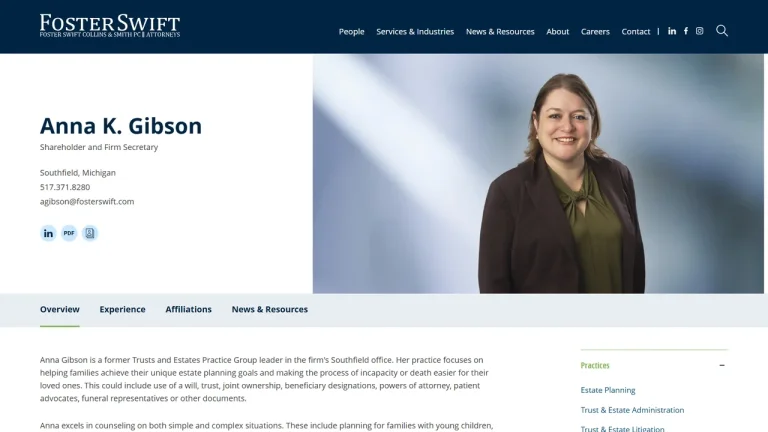
Anna K. Gibson, Attorney - Lansing, MI
Foster Swift Collins & Smith PC - Lansing, MI

Tri-County Guardianship Services, PLLC - Lansing, MI

Moore & Kerbawy Counselors at Law - Lansing, MI

Grua, Tupper & Young PLC - Lansing, MI
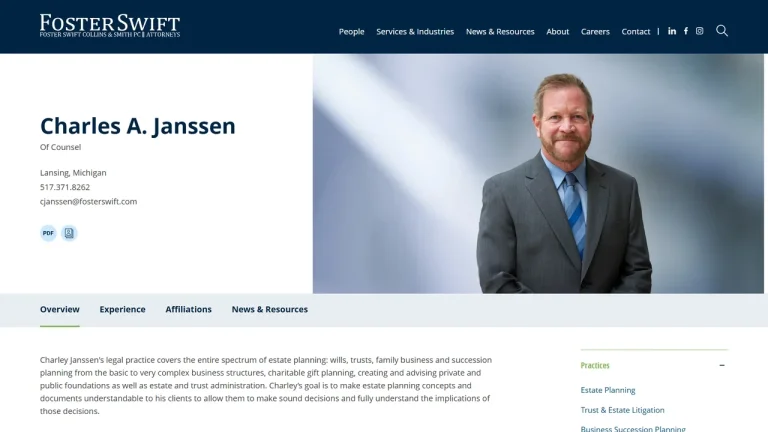
Charles A. Janssen, Attorney - Lansing, MI
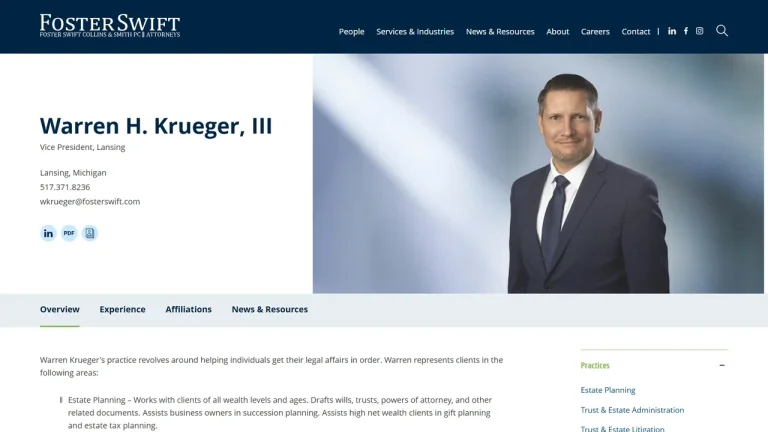
Warren H. Krueger, III, Attorney - Lansing, MI

Elias Kafantaris, Attorney At Law - Lansing, MI

Coles Law PLLC - Lansing, MI

Marlaine C. Teahan, Attorney at Law - Lansing, MI

The People's Firm PLLC - Lansing, MI

Melvin S McWilliams PC - Lansing, MI

Law Office of Samantha Sprague - Lansing, MI

Bohnhoff and Mahoney, PLC - Lansing, MI

Sonnenberg Law Offices, PLLC - Lansing, MI

Kallman Legal Group, PLLC - Lansing, MI

Babbitt Legal Group, PC - Lansing, MI
Foster Swift Collins & Smith, PC (Douglas A. Mielock) - Lansing, MI

Glassen Rhead McLean Campbell - Lansing, MI
Grace Legal Services, PLC - Lansing, MI
Knaggs Brake PC - Lansing, MI

Cummins Woods - Lansing, MI

Probate Administration in Lansing and Ingham County
The loss of a loved one brings significant emotional distress, which is often compounded by the legal complexities of settling an estate. In Lansing-spanning urban residential neighborhoods, historical districts in Old Town, and surrounding rural communities across Ingham County-decedent estates must follow formal statutory settlement procedures. Whether an estate involves an uncontested will, intestate distribution, or high-conflict disputes over property, having qualified probate counsel ensures fiduciary duties are properly fulfilled.
All decedent estate proceedings originating in Lansing are handled by the Ingham County Probate Court. Hearings and filings occur at the Veterans Memorial Courthouse, located at 313 W. Kalamazoo Street in Lansing, with administrative records maintained at the Ingham County Courthouse at 341 S. Jefferson Street in Mason. The probate court oversees the validation of wills, grants Letters of Authority to personal representatives, resolves disputed creditor claims, and approves final accountings.
Local probate attorneys possess comprehensive experience navigating the Ingham County probate docket and the state's MiFILE electronic system. From publishing mandatory notices to creditors in local Ingham County legal publications to managing real estate transfers and estate tax filings, engaging a seasoned local probate attorney protects personal representatives from personal liability and expedites inheritance distribution.
Typical Fee Structures for Lansing Probate Services
| Case Scenario | Fee Structure | Estimated Cost (USD) | Key Cost Determinants |
|---|---|---|---|
| Small Estate Assignment (MCL 700.3982) | Flat Legal Fee | $750 - $1,800 | Preparation of Petition and Order for Assignment, death certificate review, and funeral cost verification. |
| Informal Uncontested Probate Administration | Hourly or Staged Retainer | $2,500 - $6,000 | Letters of Authority issuance, publication of creditor notice, estate inventory valuation, and final accounting. |
| Contested Will Challenge or Fiduciary Dispute | Hourly Retainer | $5,000 - $20,000+ | Undue influence claims, testamentary capacity evaluations, evidentiary hearings, and bench trial duration. |
| Supervised Administration & Ingham County Court Audit | Hourly Retainer | $4,000 - $10,000 | Mandatory court review of all disbursements, real estate sales approval petitions, and formal bond requirements. |
Critical Legal Deadlines & Statutes in Michigan
Estate administration in Lansing is regulated under the Estates and Protected Individuals Code (EPIC), codified at Mich. Comp. Laws § 700.1101. When formal or informal probate is initiated under Mich. Comp. Laws § 700.3301 or Mich. Comp. Laws § 700.3401, personal representatives must publish a notice to creditors in an approved Ingham County newspaper. Pursuant to Mich. Comp. Laws § 700.3801, creditors have exactly four months from the date of publication to present claims; claims not submitted within this window are permanently barred.
For smaller estates that fall below Michigan's annual inflation-adjusted statutory threshold, an expedited summary process is available through a Petition and Order for Assignment under Mich. Comp. Laws § 700.3982. Furthermore, personal representatives must submit an inventory of estate assets to the court within 91 days of receiving Letters of Authority and pay the mandatory statutory inventory fee calculated under Mich. Comp. Laws § 600.871 before the estate can be closed. Adhering to these strict timeframes protects the fiduciary from statutory penalties and personal surcharge.
Small Claims Court Limitations vs. Ingham County Probate Court
Lansing's 54A District Court operates a Small Claims Division subject to a $7,000 jurisdictional ceiling under Mich. Comp. Laws § 600.8401. By Michigan statute, attorneys are prohibited from appearing in small claims court, and the division has zero subject-matter jurisdiction over probate, decedent estates, or the appointment of fiduciaries.
All estate matters must be adjudicated exclusively within the Ingham County Probate Court. Small claims courts cannot issue Letters of Authority, authenticate wills, or resolve inheritance disputes. Administering an estate without legal counsel carries major risks for personal representatives, including personal financial liability for misallocated estate funds, improperly paid creditor claims, or unresolved state and federal tax debts. Retaining a probate lawyer ensures that fiduciary accounts are audited, filings comply with EPIC standards, and the estate closes cleanly.
Red Flags When Hiring a Lansing Probate Lawyer
- Attorneys who charge an arbitrary percentage of the total gross estate rather than transparent hourly rates or reasonable task-based fees.
- Lawyers who fail to publish the required creditor notice promptly, unnecessarily leaving the estate vulnerable to late-surfacing creditor claims for up to three years.
- Practitioners lacking regular trial experience in the Ingham County Probate Court at the Veterans Memorial Courthouse in Lansing.
- Failing to inform the family of simplified small estate alternatives under MCL 700.3982 when qualifying assets make full probate administration unnecessary.
Frequently Asked Questions
What is the difference between informal and formal probate in Michigan?
Informal probate is an administrative procedure conducted through the Ingham County probate register without court hearings, suitable for uncontested estates with clear wills. Formal probate requires a hearing before a probate judge, typically used when the will is contested or beneficiary identities are disputed.
What is the small estate limit in Michigan?
Michigan provides a simplified small estate process under MCL 700.3982 for estates whose net value (after funeral and burial expenses) falls below an annual inflation-adjusted statutory cap. This process bypasses full administration and allows rapid asset transfer via a single court order.
How long does the probate process take in Ingham County?
A standard uncontested probate estate in Lansing typically takes between six to twelve months to close. This timeline is largely dictated by Michigan's mandatory four-month creditor notice period, asset appraisal times, and final tax filing requirements.
Can a personal representative be held personally liable for mistakes?
Yes. A personal representative is a fiduciary under Michigan law. If you disburse funds to beneficiaries before paying valid creditor claims, mismanage estate investments, or fail to file required tax returns, the Ingham County Probate Court can surcharge you personally.
How are probate attorney fees paid in Michigan?
Attorney fees incurred during probate administration are considered legitimate administrative expenses of the estate and are paid directly from estate funds, rather than out of the personal representative's personal pocket, subject to reasonableness standards under Michigan law.