
Tax Lawyers in Lansing
Retaining a tax lawyer in Lansing ensures your interests are protected during state and federal tax audits, assessments, or administrative appeals. Local counsel possesses direct access to Michigan Department of Treasury proceedings and the Michigan Tax Tribunal. Explore our directory below to schedule a case review with trusted Lansing tax attorneys today.

Partners Tax - Lansing, MI

Marlaine C. Teahan, Attorney at Law - Lansing, MI

Lothamer Tax Resolution - Lansing, MI
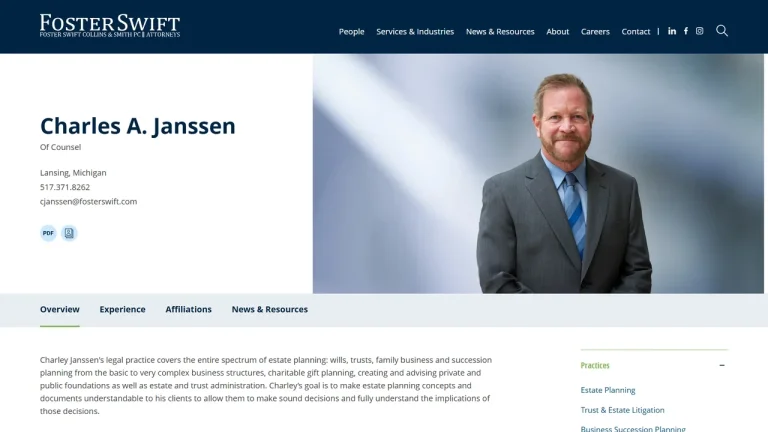
Charles A. Janssen, Attorney - Lansing, MI
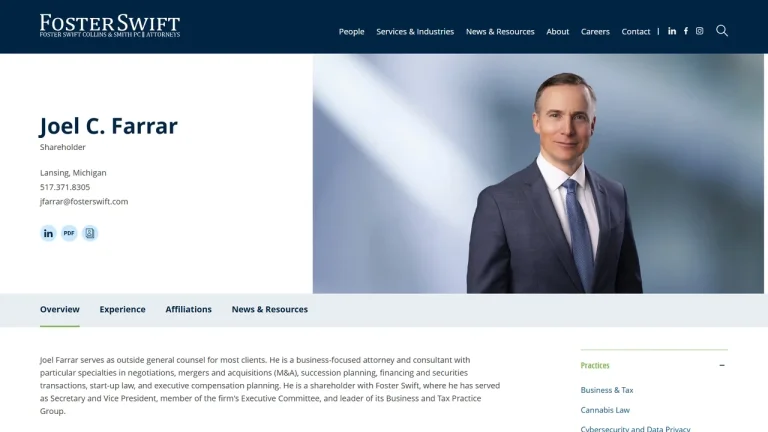
Joel C. Farrar (Foster Swift) - Lansing, MI
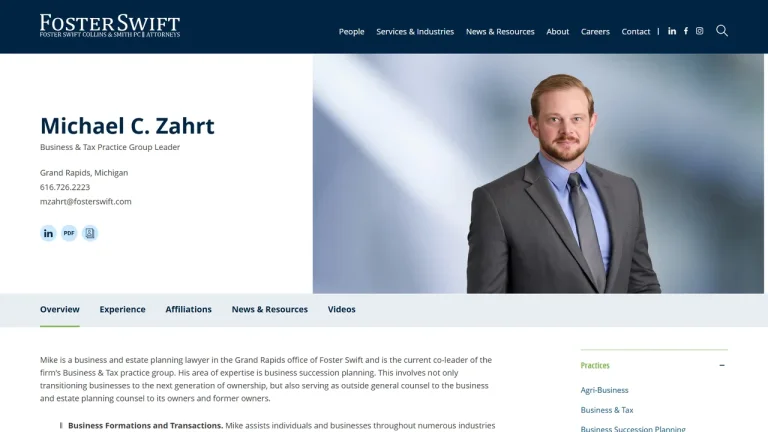
Michael C. Zahrt, Attorney - Lansing, MI
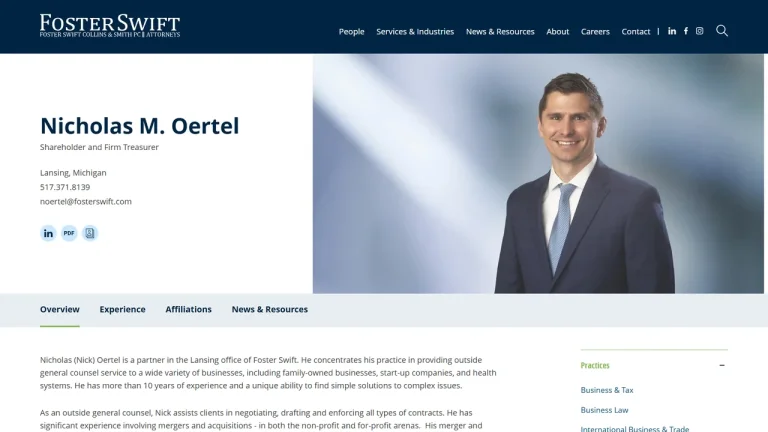
Nicholas M. Oertel, Attorney - Lansing, MI

Barrett Law, PLLC - Lansing, MI

Dickinson Wright - Lansing, MI

Austin and Larson Tax Resolution - Lansing, MI

Alan M. Valade, Attorney - Lansing, MI

Lasky Fifarek & Hogan PC - Lansing, MI
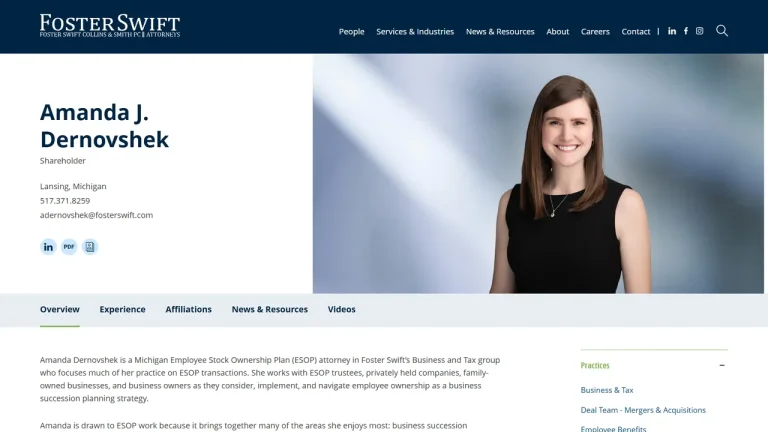
Amanda J. Dernovshek, Attorney - Lansing, MI
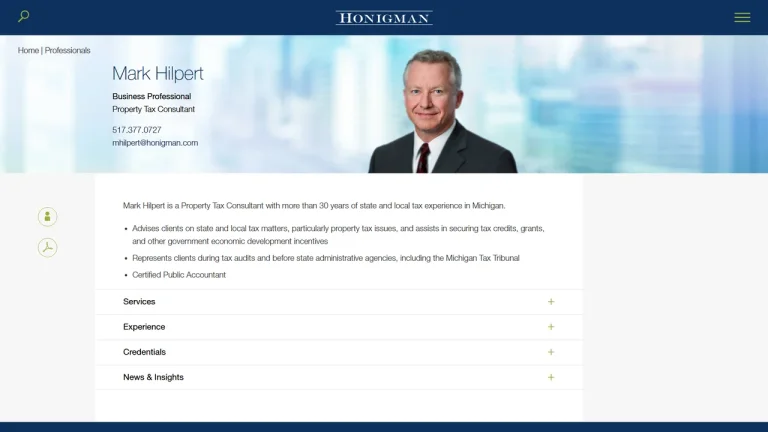
Navigating State and Federal Tax Controversies in Lansing
As Michigan's state capital, Lansing serves as the direct administrative epicenter for state taxation, regulatory oversight, and statutory enforcement. Individuals and businesses in Lansing-spanning commercial corridors along Michigan Avenue, Saginaw Street, and neighboring Ingham County municipalities-interact directly with state tax agencies that oversee income taxes, corporate income taxes, and sales, use, and withholding (SUW) obligations. Navigating tax controversies requires an understanding of administrative review procedures centralized within state capital agencies.
State tax administration is headquartered in Lansing at the Michigan Department of Treasury inside the Richard H. Austin Building on West Allegan Street. If an audit or assessment cannot be resolved administratively, appeals are heard by the Michigan Tax Tribunal (MTT), which is headquartered in Lansing and holds exclusive administrative jurisdiction over state and local tax disputes. For judicial litigation involving the Department of Treasury, cases proceed to the Michigan Court of Claims, which operates out of the 30th Judicial Circuit Court facility at 313 West Kalamazoo Street. Federal tax controversies are supported locally by the IRS Taxpayer Assistance Center on Allegan Street and adjudicated by the United States Tax Court.
Retaining a Lansing tax attorney gives individuals and business entities a strategic advantage when facing audits or notices of intent to assess. A local lawyer ensures that evidentiary requests are structured properly, statutory conference deadlines are met, and corporate officers are shielded from personal assessment under Michigan's officer liability statutes.
Lansing Tax Legal Fees & Administrative Appeal Scenarios
Legal fees for tax representation in Lansing vary based on whether a controversy involves state administrative conferences, complex commercial property tax appeals, or litigation before the Court of Claims. The table below outlines common fee conventions across Ingham County.
| Case Scenario | Fee Structure | Estimated Cost (USD) | Key Cost Determinants |
|---|---|---|---|
| Michigan Department of Treasury Audit & Informal Conference | Hourly ($300 - $550/hr) | $3,500 - $8,500 | Audit documentation volume, sales/use tax sampling methodology, 60-day conference request compliance |
| Michigan Tax Tribunal (MTT) Entire Tribunal Appeal | Hourly Retainer ($325 - $600/hr) | $5,000 - $18,000 | Commercial property valuation appraisals, statutory exemption arguments, pre-hearing discovery practice |
| Michigan Court of Claims State Tax Lawsuit | Hourly Retainer ($350 - $650/hr) | $7,500 - $25,000+ | Constitutional statutory challenges, statutory refund claims, formal dispositive motion briefing |
| Corporate Tax Structuring & Pass-Through Planning | Flat Fee / Hourly | $2,500 - $7,000 | Entity classification, Michigan Flow-Through Entity tax elections, apportionment across multi-tier entities |
Critical Legal Deadlines & Statutes in Michigan
Taxation in Michigan is governed by the Michigan Revenue Act under Mich. Comp. Laws § 205.1. When the Michigan Department of Treasury determines an alleged tax deficiency, it issues a Notice of Intent to Assess. Under Mich. Comp. Laws § 205.21, the taxpayer has strictly 60 calendar days from the date of the notice to submit a written request for an informal conference with the department. Missing this statutory window forfeits your administrative right to negotiate before a final assessment is entered.
Once a Final Assessment is issued, strict appeal deadlines take effect under Mich. Comp. Laws § 205.22: the taxpayer must file an appeal with the Michigan Tax Tribunal within 35 calendar days, or pay the uncontested tax and file an action for a refund in the Michigan Court of Claims within 90 calendar days. The jurisdiction and proceedings of the tribunal are governed by the Tax Tribunal Act under Mich. Comp. Laws § 205.735a. For corporate failures, the state may hold corporate officers personally liable for unpaid trust taxes under Mich. Comp. Laws § 205.27a. For federal audits, taxpayers have strictly 90 days from the mailing of a Statutory Notice of Deficiency to petition the U.S. Tax Court under 26 U.S. Code § 6213.
Small Claims Limits vs. Professional Legal Representation
In Michigan, small claims matters are limited to $7,000 pursuant to Mich. Comp. Laws § 600.8401. By express statutory prohibition under Mich. Comp. Laws § 600.8408, licensed attorneys cannot represent claimants or defendants in the Small Claims Division of the 54A District Court. That municipal division is designed exclusively for minor, self-represented civil disputes.
Municipal small claims courts have zero subject-matter jurisdiction over state tax assessments, Michigan Treasury audits, or federal tax liabilities. State and federal tax controversies involve complex statutory interpretation, specialized discovery rules, and administrative hearings before specialized tribunals. The Department of Treasury wields aggressive collection powers, including automated tax liens recorded with county registers of deeds and state vendor payment intercepts. Retaining an experienced Lansing tax attorney ensures that administrative conference requests are timely filed, corporate officers are protected, and formal appeals are prosecuted effectively before the Michigan Tax Tribunal or the Court of Claims.
Red Flags When Hiring a Lansing Tax Lawyer
- Non-attorney tax preparation services or unlicensed debt settlement firms claiming they can appear in the Michigan Court of Claims.
- Attorneys who fail to track the strict 60-day informal conference deadline under MCL 205.21, inadvertently allowing assessments to become final.
- Lawyers lacking direct familiarity with the administrative rules and referee hearing procedures of the Michigan Tax Tribunal in Lansing.
- Firms that do not explain personal officer liability risks under Michigan law when representing distressed corporate businesses.
Frequently Asked Questions
How do I appeal a tax assessment from the Michigan Department of Treasury?
Upon receiving a Notice of Intent to Assess, you have strictly 60 days to request an informal conference under Mich. Comp. Laws § 205.21. If a Final Assessment is issued, you must appeal to the Michigan Tax Tribunal within 35 days or pay the uncontested portion and sue in the Court of Claims within 90 days under Mich. Comp. Laws § 205.22.
What is the function of the Michigan Tax Tribunal in Lansing?
The Michigan Tax Tribunal, established under Mich. Comp. Laws § 205.735a, is an administrative court headquartered in Lansing that resolves appeals regarding state and local taxes, including real property valuations, corporate taxes, and sales and use taxes.
Can corporate officers in Lansing be held personally liable for business taxes?
Yes. Under Mich. Comp. Laws § 205.27a, officers who have control or supervision over filing returns or making tax payments can be held personally liable for unpaid sales, use, or withholding taxes if the corporation fails to pay.
When should I file a tax claim in the Michigan Court of Claims?
Under Mich. Comp. Laws § 205.22, taxpayers challenging a final assessment who wish to raise constitutional claims or seek a direct monetary refund from the state may file in the Court of Claims within 90 days, provided they pay the uncontested portion of the tax first.
How long does the IRS give a taxpayer to petition the U.S. Tax Court?
Pursuant to 26 U.S. Code § 6213, a taxpayer has strictly 90 calendar days from the date of the Statutory Notice of Deficiency to file a formal petition with the United States Tax Court.