
Trusts Lawyers in Lansing
Protect your family wealth and bypass probate in Lansing. A trusted trusts lawyer creates enforceable trusts and safeguards your assets under Michigan law. Experienced legal counsel ensures seamless trust administration and shields beneficiaries from costly probate disputes and administrative delays. Explore our directory below to consult with top-rated Ingham County trust attorneys today.

Howard ”Jack” Weyers Jr. Attorney and Counselor - Lansing, MI

Melvin S McWilliams PC - Lansing, MI
Charles A. Janssen, Attorney - Lansing, MI
Michael C. Zahrt, Attorney - Lansing, MI
Family Wills & Trusts, PLC - Lansing, MI

Annette E. Skinner, Attorney at Law, PLLC - Lansing, MI
Foster Swift Collins & Smith PC - Lansing, MI

Elias Kafantaris, Attorney At Law - Lansing, MI
Marlaine C. Teahan, Attorney at Law - Lansing, MI
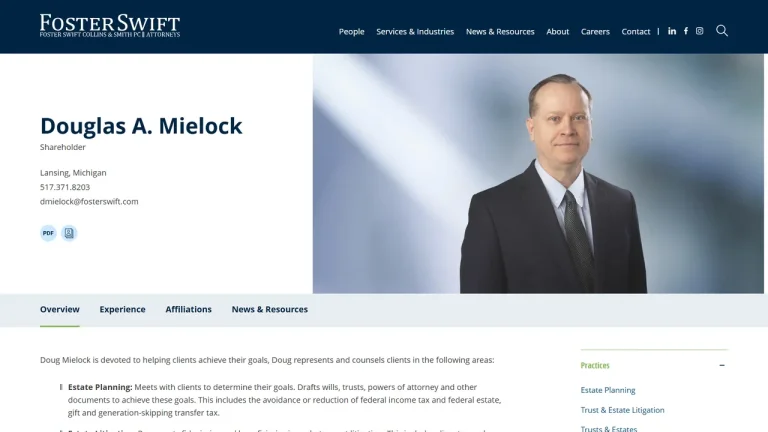
Foster Swift Collins & Smith, PC (Douglas A. Mielock) - Lansing, MI
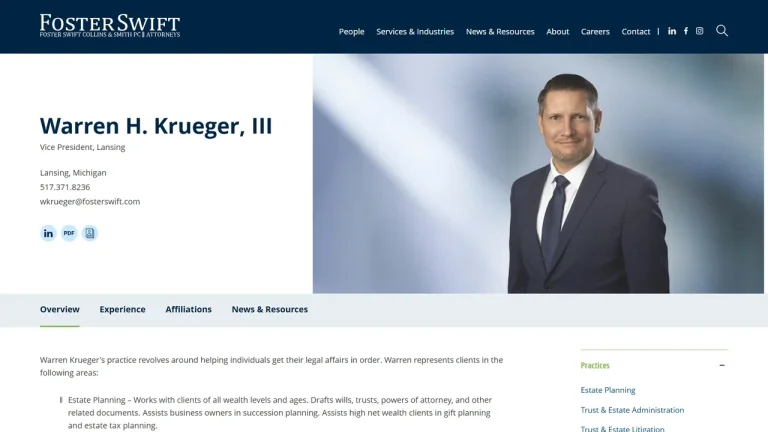
Warren H. Krueger, III, Attorney - Lansing, MI

Fraser Trebilcock - Lansing, MI

Babbitt Legal Group, PC - Lansing, MI
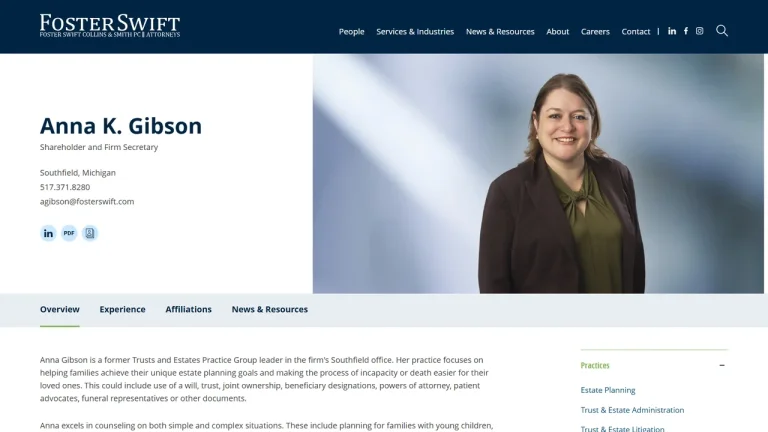
Anna K. Gibson, Attorney - Lansing, MI

Frank J. Nerat, Jr., Attorney at Law - Lansing, MI

Law Office of Samantha Sprague - Lansing, MI

The People's Firm PLLC - Lansing, MI

Coles Law PLLC - Lansing, MI

Comprehensive Trust Structuring and Administration in Lansing
Lansing serves as Michigan's center of state government and public policy, housing a community of civil servants, university professionals from nearby East Lansing, healthcare workers, and multi-generational business owners across Downtown, Old Town, and REO Town. When establishing a wealth preservation strategy, establishing a legally sound trust is often the most effective method to safeguard assets, protect vulnerable family members, and prevent private financial matters from entering the public probate record.
Trust governance and dispute resolution for Lansing residents fall under the jurisdiction of the Ingham County Probate Court. The court conducts proceedings at the Veterans Memorial Courthouse, located at 313 W. Kalamazoo Street in Lansing, as well as the historic Ingham County Courthouse in Mason. Whether your goal is establishing a revocable living trust to avoid court administration or resolving a contested breach of fiduciary duty among co-trustees, skilled legal representation ensures compliance with Michigan trust standards.
Local trust attorneys possess detailed insight into the Michigan Trust Code and the court rules applied by Ingham County probate judges. Utilizing the state's MiFILE electronic filing platform, local practitioners assist settlors, trustees, and beneficiaries with asset funding, real property deed transfers through the Ingham County Register of Deeds, and navigating probate disputes with efficiency.
Common Fee Structures for Lansing Trust Services
| Case Scenario | Fee Structure | Estimated Cost (USD) | Key Cost Determinants |
|---|---|---|---|
| Revocable Living Trust Comprehensive Package | Flat Legal Fee | $1,800 - $4,500 | Number of real property deeds, pour-over will drafting, and complexity of beneficiary distribution provisions. |
| Irrevocable Asset Protection or Medicaid Trust | Flat Fee or Staged Retainer | $3,500 - $8,500 | Long-term care look-back planning, capital gains tax basis considerations, and third-party trustee provisions. |
| Special Needs Trust (First-Party or Third-Party) | Flat Legal Fee | $2,000 - $5,000 | Preservation of SSI/Medicaid entitlement, payback requirements, and court approval mandates if funded by lawsuit. |
| Post-Death Trust Administration & Fiduciary Defense | Hourly Retainer | $3,000 - $12,500+ | Trustee accounting disputes, beneficiary releases, creditor notice, and Ingham County Probate Court litigation. |
Critical Legal Deadlines & Statutes in Michigan
Trust creation and dispute resolution in Lansing are governed by Article VII of the Estates and Protected Individuals Code (EPIC), known as the Michigan Trust Code, codified at Mich. Comp. Laws § 700.7101. Under Mich. Comp. Laws § 700.7601, a settlor must possess the same mental capacity required to execute a will to create, amend, or revoke a revocable trust. Trustees are held to strict standards of care, prudence, and loyalty under Mich. Comp. Laws § 700.7801.
Strict statutory time limits govern actions to challenge the validity of a trust. Pursuant to Mich. Comp. Laws § 700.7604, a person must commence a judicial proceeding to contest the validity of a revocable trust within the earlier of two years after the settlor's death, or six months after the trustee provides the beneficiary with a formal notice containing trust terms and notification of the contest period. Furthermore, trustees face limitations on liability under Mich. Comp. Laws § 700.7905 once a final accounting is formally delivered. Missing these deadlines permanently bars claims of undue influence, lack of capacity, or fraud.
Small Claims Court Limitations vs. Trust Court Jurisdiction
The Small Claims Division of Lansing's 54A District Court, located at 124 W. Michigan Avenue, resolves minor monetary disputes capped at $7,000 under Mich. Comp. Laws § 600.8401. Michigan statute prohibits attorney representation during small claims hearings, and the division has zero jurisdiction over equitable matters, trust interpretation, or fiduciary accounts.
Trust governance belongs exclusively to the Ingham County Probate Court. Matters involving fiduciary accounting, interpretation of ambiguous trust terms, or removal of an unfaithful trustee cannot be resolved in district court. Attempting to draft a trust without professional counsel often leads to unfunded trusts-where real estate and financial accounts remain in the decedent's individual name, forcing the family into the very probate administration the trust was intended to avoid. Retaining an attorney ensures proper legal execution and asset funding under Michigan law.
Red Flags When Hiring a Lansing Trust Attorney
- Non-attorney "trust mills" or online template services that sell standardized document binders without formally transferring your real estate deeds into the trust.
- Attorneys who promise complete elimination of federal estate taxes without examining current federal statutory exemption limits or capital gains basis adjustments.
- Practitioners lacking courtroom experience in the Ingham County Probate Court when representing trustees facing contested beneficiary claims.
- Firms charging open-ended percentage fees based on total estate value rather than reasonable hourly or transparent flat rates for trust creation.
Frequently Asked Questions
What is the main benefit of a revocable living trust over a will in Michigan?
A revocable living trust allows your estate to bypass the Ingham County Probate Court entirely, keeping your asset distribution private, avoiding statutory court inventory fees, and enabling immediate asset management upon your death or incapacity.
What does funding a trust mean in Michigan?
Funding a trust is the essential legal process of transferring ownership of your assets into the trust. This includes executing quitclaim or lady bird deeds for Lansing real estate with the Ingham County Register of Deeds and updating beneficiary designations on bank accounts and investments.
Can a trust protect assets from Michigan Medicaid nursing home costs?
A standard revocable living trust does not protect assets from Medicaid eligibility calculations because you maintain control over the funds. Asset protection typically requires an irrevocable trust structured to comply with Michigan Medicaid's strict five-year look-back period.
Can a trustee be sued for mishandling trust funds in Lansing?
Yes. Under the Michigan Trust Code, trustees owe fiduciary duties of impartiality, loyalty, and prudent investment. Beneficiaries can file a petition in Ingham County Probate Court to compel an accounting, surcharge the trustee for losses, or remove the trustee from office.
How long does a trust dispute take to resolve in Ingham County?
Uncontested trust modifications or standard fiduciary accountings are often resolved in a few months. However, contested trust validity lawsuits involving undue influence or capacity challenges may take nine to eighteen months to proceed through formal discovery and trial.