
Wills, Estate Planning & Probate Lawyers in Lansing
Retaining an experienced Lansing wills, estate planning, and probate lawyer safeguards your family assets under the Michigan Estates and Protected Individuals Code. Skilled estate attorneys establish comprehensive revocable trusts, powers of attorney, and guide executors smoothly through Ingham County Probate Court proceedings. Explore our verified directory below to schedule an estate planning consultation with a trusted local attorney.

Law office of Neal Wilensky - Lansing, MI
Anna K. Gibson, Attorney - Lansing, MI

Vuckovich Legal - Lansing, MI

Wilson & Brown Law Offices, PLLC - Lansing, MI
ABMD Law - Lansing, MI

Prosperity Law Center, PLLC - Lansing, MI

Babbitt Legal Group, PC - Lansing, MI

McGinty, Hitch, Person, Anderson and Revore, P.C. - Lansing, MI
Grua, Tupper & Young PLC - Lansing, MI
Tri-County Guardianship Services, PLLC - Lansing, MI

Bohnhoff and Mahoney, PLC - Lansing, MI
Sixty Plus, Inc. Elder Law Clinic - Lansing, MI
Melvin S McWilliams PC - Lansing, MI

Kallman Legal Group, PLLC - Lansing, MI

Lansing Legal Group - Lansing, MI
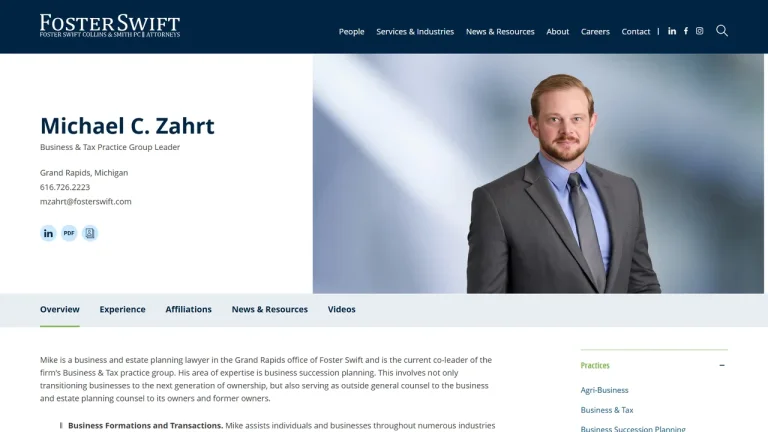
Michael C. Zahrt, Attorney - Lansing, MI

Cummins Woods - Lansing, MI

Charles A. Janssen, Attorney - Lansing, MI

Addison & Conklin - Lansing, MI

Coles Law PLLC - Lansing, MI

Speaker Law Firm, PLLC - Lansing, MI

Frank J. Nerat, Jr., Attorney at Law - Lansing, MI
The Kraft Law Firm PLLC - Lansing, MI

Estate Planning and Probate Administration in Lansing and Ingham County
Planning an estate or administering a decedent's assets in Lansing requires navigating Michigan probate jurisprudence alongside Ingham County's unique administrative environment. As the state capital, Lansing encompasses a diverse population of state government professionals, university-affiliated personnel, healthcare executives, and multi-generational business owners residing in communities like Old Town, the Westside neighborhood, and surrounding Ingham County areas like Mason and Okemos.
All probate administrations, will contests, conservatorships, and trust adjudications originating in Lansing fall under the exclusive jurisdiction of the Ingham County Probate Court. The court conducts proceedings at the Veterans Memorial Courthouse, situated at 313 West Kalamazoo Street in downtown Lansing, as well as the historic Ingham County Courthouse at 341 South Jefferson Street in Mason.
Estate disputes and estate planning in Michigan are regulated under the Estates and Protected Individuals Code. Working with a dedicated Lansing estate planning attorney ensures that testamentary documents, patient advocate directives, and revocable living trusts comply with statutory drafting requirements, shielding surviving beneficiaries from preventable tax burdens and prolonged probate disputes.
Typical Fee Structures and Legal Costs for Estate Planning & Probate
| Case Scenario | Fee Structure | Estimated Cost (USD) | Key Cost Determinants |
|---|---|---|---|
| Basic Estate Planning Package | Flat Fee | $1,200 - $2,500 | Number of documents, minor guardianship provisions, healthcare directives. |
| Comprehensive Revocable Living Trust | Flat Fee | $2,500 - $5,500 | Real property deed transfers, trust funding coordination, tax strategies. |
| Uncontested Probate Administration | Hourly Retainer ($250 - $400/hr) | $3,500 - $8,500 | Volume of creditor claims, estate asset liquidity, inventory complexity. |
| Contested Will or Trust Litigation | Hourly Retainer | $8,000 - $25,000+ | Undue influence allegations, capacity evaluations, court hearings in Mason. |
Critical Legal Deadlines & Statutes in Michigan
Estate planning and probate matters in Lansing must comply strictly with the Michigan Estates and Protected Individuals Code, codified at Mich. Comp. Laws § 700.1101. For a last will and testament to be valid under Michigan law, it must satisfy execution mandates set forth in Mich. Comp. Laws § 700.2502, requiring a written instrument signed by the testator and witnessed by at least two competent individuals.
During probate administration, personal representatives must adhere to statutory notice deadlines. Under Mich. Comp. Laws § 700.3801, personal representatives must publish notice to creditors in a recognized county newspaper and serve direct notice to known creditors, providing a strict four-month window for creditors to file claims against the estate. Individuals seeking to establish healthcare decision-makers must execute a Patient Advocate Designation pursuant to Mich. Comp. Laws § 700.5506, while financial authority is granted through a Durable Power of Attorney under Mich. Comp. Laws § 700.5501. For smaller estates with limited personal property and no real estate, summary transfer procedures may be utilized under Mich. Comp. Laws § 700.3982.
Small Claims Limits vs. Professional Representation in Lansing
The 54A District Court Small Claims Division, located within Lansing City Hall at 124 West Michigan Avenue, resolves small debt and contract claims up to $7,000 under Mich. Comp. Laws § 600.8401. By statute under Mich. Comp. Laws § 600.8408, practicing attorneys are prohibited from appearing in small claims trials.
However, district courts and small claims divisions have zero subject-matter jurisdiction over trusts, wills, or estate administration. Exclusive legal authority over probate matters belongs to the Ingham County Probate Court pursuant to Mich. Comp. Laws § 700.1302. Attempting to draft complex trust agreements or administer an estate without counsel often leads to asset distribution errors, personal fiduciary liability for executors, and costly litigation. A licensed Lansing probate lawyer ensures estate inventories, tax returns, and fiduciary accountings comply with Michigan court rules.
Red Flags When Hiring a Lansing Estate Planning Lawyer
- Non-attorney service companies selling generic, one-size-fits-all revocable trust forms that fail to account for Michigan property tax reassessment rules.
- Estate planners who prepare trust agreements but fail to assist clients with transferring real estate deeds and retitling accounts to fund the trust.
- Attorneys who fail to provide clear, written retainer agreements outlining flat-fee deliverables versus hourly probate administration rates.
- Probate litigators who promise guaranteed outcomes in contested will challenges without examining medical records or testamentary capacity evidence.
Frequently Asked Questions
What is the difference between a will and a revocable living trust in Michigan?
A will takes effect only after death and must pass through the Ingham County Probate Court, while a properly funded revocable living trust manages assets during your lifetime and transfers property directly to beneficiaries without court supervision.
How long do creditors have to file a claim against an estate in Ingham County?
Under Mich. Comp. Laws § 700.3801, creditors have four months from the date of published notice or one month from the date of direct mail notice to assert a claim against the estate.
What qualifies as a small estate in Michigan to avoid formal probate?
Under Mich. Comp. Laws § 700.3982, estates valued under the statutory threshold set annually by the state treasurer and containing no real property can be transferred via an expedited petition or affidavit.
What is a Patient Advocate Designation in Michigan?
Codified under Mich. Comp. Laws § 700.5506, a Patient Advocate Designation is a legal instrument that authorizes a chosen individual to make medical treatment and life-support decisions if you become incapacitated.
Where are probate matters filed for Lansing residents?
Probate petitions for Lansing residents are filed with the Ingham County Probate Court, located at the Veterans Memorial Courthouse in Lansing or the Ingham County Courthouse in Mason.