
Criminal Defense Lawyers in Minnesota
Facing criminal charges in Minnesota threatens your liberty, career, and reputation under strict state sentencing guidelines. An experienced defense attorney can challenge evidence at your Omnibus Hearing, negotiate pre-trial diversion, and resolve allegations before trial. Explore our verified directory below to schedule a confidential case review with a trusted Minnesota criminal defense lawyer.

Blades Law PLLC - Minneapolis, MN

De León & Nestor, LLC - Minneapolis, MN

Olson Law Firm - Bloomington, MN

Kennedy & Cain, PLLC - Minneapolis, MN

Capitol City Law Group - St Paul, MN

Collins, Buckley, Sauntry & Haugh, PLLP - St Paul, MN
Jason Kohlmeyer - Divorce & Family Attorney - Rochester, MN

Earl Gray Defense - St Paul, MN

Keller Criminal Defense Attorneys - Saint Paul, MN

Arneson & Geffen, PLLC - Minneapolis, MN

Brodin Legal - Minneapolis, MN
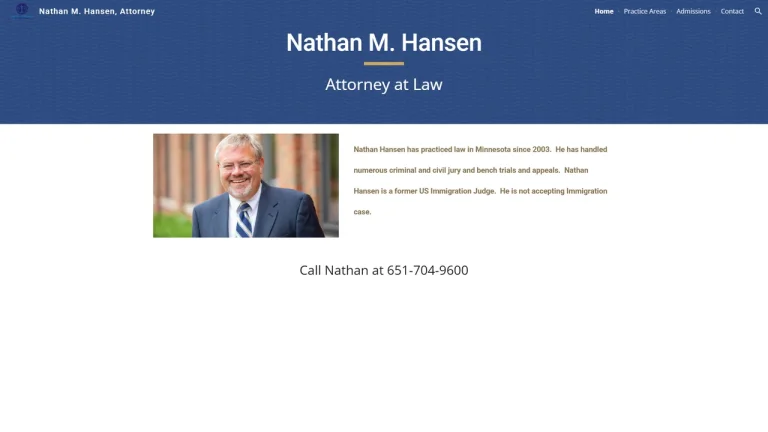
Nathan M. Hansen, Attorney at Law - North St Paul, MN

Johnson/Turner - Rochester, MN
The Law Offices of David C. Keegan and Mikkel A. Long - Duluth, MN

Malban David J Attorney - Duluth, MN

Perrin Law Office - Saint Paul, MN
Martine Law, PLLC - Duluth, MN

SRL Law - St. Paul, MN
Zajac Law Firm - Minneapolis, MN

Moulton Law Office - Rochester, MN
Law Office of Joshua R. Williams - Minneapolis, MN

Judith Samson, Attorney at Law - Minneapolis, MN
Rivers Law Firm - Minneapolis Criminal Defense Lawyer - Minneapolis, MN

The Critical Role of Minnesota Criminal Defense Counsel
Facing criminal allegations in Minnesota places you directly within a structured and aggressive prosecutorial system. Criminal charges are litigated across the state's 10 Judicial Districts, including the 4th Judicial District in Hennepin County, the 2nd Judicial District in Ramsey County, and regional district courts serving Dakota, Anoka, Olmsted, and St. Louis counties.
Minnesota law categorizes offenses under Minn. Stat. § 609.02 into petty misdemeanors, misdemeanors carrying up to 90 days in jail, gross misdemeanors carrying up to 364 days, and serious felonies punishable by multi-year state prison commitments. In felony matters, judicial sentencing is strictly guided by the Minnesota Sentencing Guidelines Commission grid, where an individual's criminal history score and the offense severity level dictate presumptive prison sentences.
Securing private legal counsel at the earliest opportunity is critical to safeguarding your constitutional rights. A skilled Minnesota defense attorney conducts independent investigations, cross-examines arresting officers, and identifies violations of Fourth Amendment protections. Counsel represents you during the critical contested Omnibus Hearing, seeking to suppress tainted evidence, dismiss charges for lack of probable cause, or negotiate statutory diversion programs.
Minnesota Criminal Defense Legal Fees and Representation Tiers
| Case Scenario | Fee Structure | Estimated Cost (USD) | Key Cost Determinants |
|---|---|---|---|
| Misdemeanor Defense (DWI, Theft, Assault) | Flat Retainer | $1,500 - $4,000 | First-offense diversion eligibility, squad dashcam review, chemical breath test challenges. |
| Gross Misdemeanor Defense (Repeat DWI, Weapons) | Structured Retainer | $3,500 - $8,500 | Mandatory minimum sentencing risks, contested Omnibus motions, probation negotiation. |
| Non-Capital Felony Defense (Drugs, Property, Financial) | Staged Retainer / Hourly ($275 - $500/hr) | $6,000 - $18,000 | Sentencing guidelines grid ranking, independent forensic accounting, expert witness retainers. |
| Major Felony & Violent Crime Jury Trial | Complex Trial Retainer | $15,000 - $50,000+ | Multi-week jury trial in District Court, forensic pathology review, private investigator fees. |
Critical Legal Deadlines & Statutes in Minnesota
Criminal prosecutions in Minnesota are subject to strict statutory limitations. Under Minn. Stat. § 628.26, the state must initiate prosecution within three years for general felony offenses and within three years for gross misdemeanors and misdemeanors, while homicide charges carry no limitation period. Missing this statutory window requires the court to dismiss all pending charges.
Procedural timelines require aggressive case management under the Minnesota Rules of Criminal Procedure. Under Minn. R. Crim. P. 11, felony and gross misdemeanor defendants are entitled to an Omnibus Hearing to challenge probable cause and litigate constitutional suppression motions. If an incarcerated defendant enters a formal demand for a speedy trial on the record pursuant to Minn. R. Crim. P. 11.09, trial must commence within 60 days unless the court finds good cause for delay.
For qualifying non-violent matters, statutory alternatives provide a path to case dismissal. Under Minn. Stat. § 609.095, courts and prosecutors may agree to a stay of adjudication, placing the defendant on probation without entering a conviction, resulting in dismissal upon successful completion of probationary terms.
Conciliation Court Limits vs. Minnesota Criminal Defense Advocacy
Minnesota Conciliation Court handles small claims matters capped at $15,000 pursuant to Minn. Stat. § 491A.01. However, Conciliation Court has zero legal authority over criminal offenses, bail determinations, or constitutional rights. Criminal cases must be defended within the trial divisions of Minnesota District Courts.
Attempting to handle criminal charges pro se exposes defendants to catastrophic risks. A criminal conviction carries potential incarceration in county workhouses or Minnesota Department of Corrections facilities, mandatory restitution, and a permanent entry on the public Minnesota Bureau of Criminal Apprehension (BCA) record that damages employment and housing prospects.
A knowledgeable Minnesota defense lawyer challenges unlawful police seizures under Article I, Section 10 of the Minnesota Constitution, negotiates stays of imposition under Minn. Stat. § 609.135 to reduce felony dispositions to misdemeanors upon discharge, and protects your permanent record.
Red Flags to Avoid When Selecting a Minnesota Criminal Defense Lawyer
- Guaranteed acquittals or dismissals: Promising a specific legal verdict violates the Minnesota Rules of Professional Conduct and misrepresents the discretionary authority of judges and prosecutors.
- Reluctance to litigate Omnibus Hearings: An attorney who routinely waives the contested Omnibus Hearing under Minn. R. Crim. P. 11 forfeits the opportunity to suppress tainted evidence.
- Unfamiliarity with the Sentencing Guidelines Grid: Your lawyer must know how to accurately calculate your criminal history score to negotiate downward dispositional or durational departures.
- Opaque fee agreements: Ensure your written contract clearly specifies whether jury trial representation, investigator retainers, and expert fees are covered by your initial retainer.
Frequently Asked Questions
What is an Omnibus Hearing in Minnesota?
Governed by Minn. R. Crim. P. 11, an Omnibus Hearing is a critical pre-trial proceeding in felony and gross misdemeanor cases where the judge determines probable cause and rules on defense motions to suppress unconstitutionally obtained evidence.
What is the difference between a stay of imposition and a stay of execution in Minnesota?
Under Minn. Stat. § 609.135, a stay of imposition means no prison sentence is pronounced, and upon successful completion of probation, the felony conviction is deemed a misdemeanor. A stay of execution pronounces a prison sentence but suspends it while the defendant completes probation.
What are the maximum penalties for a Gross Misdemeanor in Minnesota?
Under Minn. Stat. § 609.02, a gross misdemeanor carries a statutory maximum penalty of up to 364 days in a local detention facility and a fine of up to $3,000.
How quickly must a trial take place after a speedy trial demand in Minnesota?
Under Minn. R. Crim. P. 11.09, once a defendant demands a speedy trial following a not guilty plea, the trial must begin within 60 days unless the court finds good cause for an extension.
Can a criminal charge in Minnesota be expunged from my record?
Yes. Minnesota expungement laws permit individuals with dismissed charges, completed stays of adjudication, or qualifying misdemeanor and non-violent felony convictions to petition the court to seal their judicial and BCA records.