
Business Litigation Lawyers in Saint Paul
Retaining an experienced Saint Paul business litigation lawyer protects your enterprise from contractual liabilities and shareholder disputes in Minnesota courts. Seasoned commercial counsel navigates complex corporate statutes, preserves key commercial relationships, and resolves contentious disputes through mediation and trial advocacy. Explore our verified directory below to schedule an initial consultation with trusted Ramsey County commercial litigators.

Collins, Buckley, Sauntry & Haugh, PLLP - St Paul, MN
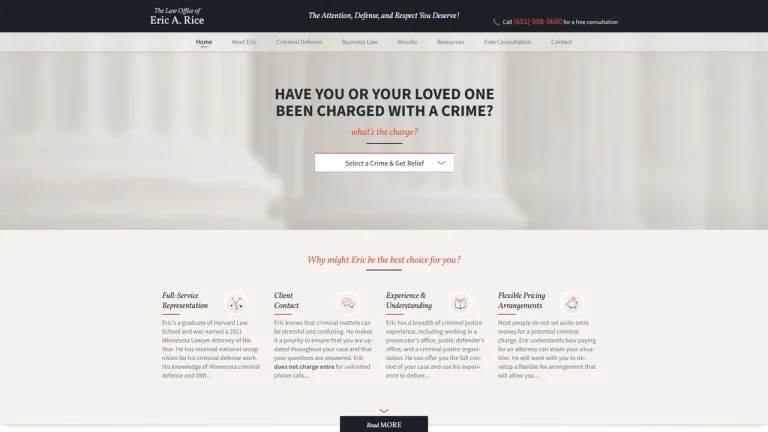
Law Office of Eric A. Rice - St. Paul, MN

Ceiba Fôrte Law Firm - Saint Paul, MN

Seiler Law, PLLC - St. Paul, MN

Trott Law, P.C. - St Paul, MN
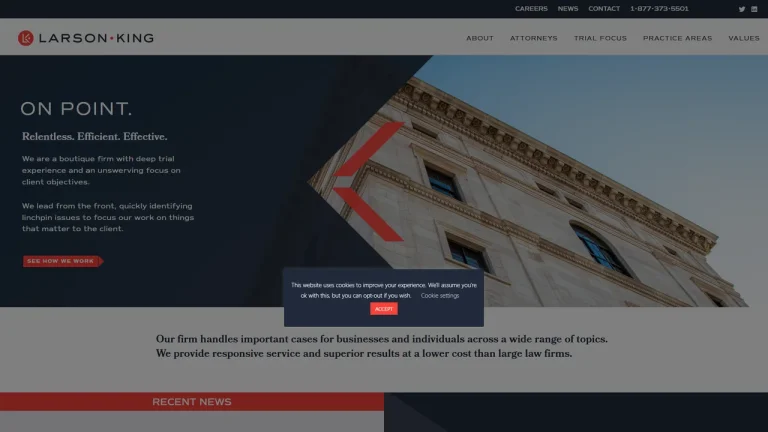
Larson King, LLP - Saint Paul, MN
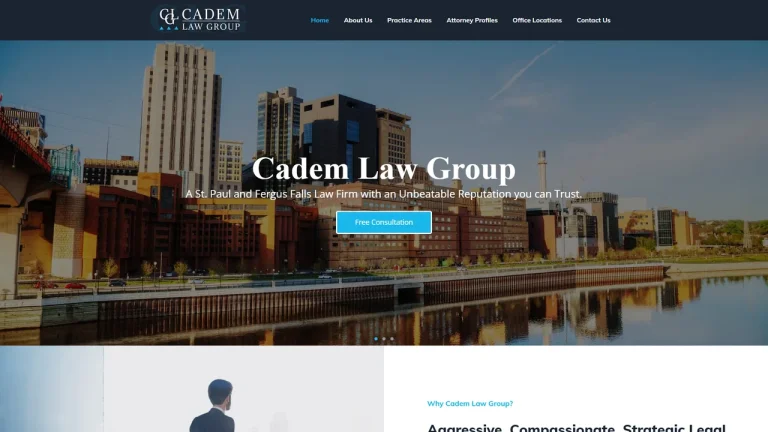
Cadem Law Group, PLLC - Saint Paul, MN

Ferdinand F. Peters Law Firm - St. Paul, MN

Trautmann Martin Law PLLC - Saint Paul, MN

Meier, Kennedy & Quinn - St. Paul, MN

PLOEN LAW FIRM - Saint Paul, MN

Commercial Litigation Practice & Judicial Authority in Saint Paul
Commercial litigation in Saint Paul involves resolving high-stakes corporate disputes within Ramsey County and the East Metro commercial sector. The local economy encompasses advanced manufacturing along the Interstate 94 corridor, technology and healthcare enterprises in Downtown Saint Paul, and thriving retail ventures throughout Grand Avenue, Highland Park, and the West Seventh commercial corridor. Corporate conflicts in this region demand aggressive trial advocacy and sound strategic counsel.
Primary state-level commercial lawsuits in Ramsey County are litigated in the Second Judicial District of Minnesota at the Ramsey County Courthouse, situated at 15 West Kellogg Boulevard inside Saint Paul City Hall. Complex commercial actions involving corporate governance, breach of contract, shareholder buyouts, and business torts are heard before the court's civil trial judges. Federal commercial disputes are adjudicated at the United States District Court for the District of Minnesota, located at the Warren E. Burger Federal Building and U.S. Courthouse at 316 North Robert Street.
Under Minnesota practice, business entities facing commercial litigation require advocates who understand local judicial assignment protocols and pre-trial scheduling orders. Local litigators utilize preliminary injunctive relief, temporary restraining orders, and structured alternative dispute resolution to secure tactical leverage, striving to achieve cost-effective out-of-court resolutions while remaining prepared for bench or jury trials.
Business Litigation Fee Schedules & Representation Scenarios
| Case Scenario | Fee Structure | Estimated Cost (USD) | Key Cost Determinants |
|---|---|---|---|
| Closely Held Shareholder Dispute / Freeze-Out Action | Hourly Retainer ($350 - $650/hr) | $15,000 - $45,000+ | Forensic financial accounting, company stock valuation, evidentiary hearings at 15 W Kellogg Blvd. |
| Commercial Breach of Contract & Vendor Default | Hourly Retainer ($325 - $550/hr) | $10,000 - $30,000+ | Electronic discovery volume, deposition counts, contractual limitation of liability clauses, UCC issues. |
| Non-Compete & Trade Secret Preliminary Injunction | Hourly Retainer ($375 - $650/hr) | $8,500 - $25,000+ | Emergency temporary restraining order filings, proving irreparable harm under state law, expedited witness hearings. |
| Commercial Debt Recovery & Prejudgment Attachment | Hourly Retainer or Contingency ($300 - $500/hr) | $4,500 - $15,000 | Asset tracing, prejudgment attachment motions under Chapter 570, debtor solvency reviews. |
Critical Legal Deadlines & Statutes in Minnesota Business Litigation
Navigating commercial litigation in Saint Paul requires strict adherence to Minnesota procedural timelines and limitation statutes. Under Minn. Stat. § 541.05, actions based on breach of a written or oral contract must be commenced within six years from the date the cause of action accrues. However, when a transaction involves the commercial sale of goods under the Uniform Commercial Code, the statute of limitations is four years pursuant to Minn. Stat. § 336.2-725.
For commercial fraud, misrepresentation, and business torts, actions must be brought within six years under Minn. Stat. § 541.05, running from the discovery by the aggrieved party of the facts constituting the fraud. In disputes involving closely held corporations, minority shareholders seeking relief against oppressive or unfairly prejudicial conduct must file under the Minnesota Business Corporation Act pursuant to Minn. Stat. § 302A.751, which authorizes buyouts, equitable remedies, and corporate dissolutions.
Litigating restrictive covenants requires compliance with Minnesota employment laws. Under Minn. Stat. § 181.988, employee non-compete agreements entered into on or after July 1, 2023, are void and unenforceable, though non-disclosure covenants and non-solicitation provisions remain subject to judicial enforcement. To secure assets during ongoing litigation, creditors may seek prejudgment attachment under Minn. Stat. § 570.02 upon demonstrating an intentional effort to defraud or conceal property.
Conciliation Court Limits vs. District Court Commercial Advocacy
In Minnesota, small civil claims are heard in Conciliation Court pursuant to Minn. Stat. § 491A.01, which establishes a jurisdictional limit of $15,000 for general civil disputes and $4,000 for consumer credit matters. An individual sole proprietor attempting to collect a modest unpaid invoice may use the informal conciliation process at the Ramsey County Courthouse without retaining legal counsel.
However, for business entities organized as corporations or limited liability companies, procedural rules are strict. Under Minn. Stat. § 481.02 and established Minnesota Supreme Court precedent, corporations and LLCs cannot appear pro se in the Minnesota District Court; business entities must be represented by a licensed attorney. High-stakes disputes involving substantial contract damages, trademark infringement, shareholder freeze-outs, or commercial lease cancellations exceed the conciliation limit and fall under the exclusive trial jurisdiction of the Second Judicial District.
Attempting to manage complex corporate litigation without experienced counsel exposes a business to severe procedural risks. Minnesota civil procedure requires formal pleading standards, mandatory discovery disclosures, and expert witness qualifications. Missing a filing deadline or failing to respond to discovery can lead to default judgments or judicial sanctions. Retaining an experienced Saint Paul commercial litigator safeguards corporate assets, ensures compliance with court rules, and positions the company for favorable settlement or trial verdicts.
Red Flags When Selecting a Saint Paul Business Litigator
- Transactional Lawyers Lacking Courtroom Experience: Avoid hiring a lawyer whose practice consists entirely of corporate formation or contract drafting to handle contested litigation. Commercial disputes require seasoned trial lawyers familiar with Ramsey County judges and trial procedure.
- Failing to Account for Minnesota Non-Compete Bans: Verify that your attorney understands the provisions of Minn. Stat. § 181.988, as attempting to enforce void post-2023 non-compete clauses exposes employers to statutory attorney fee awards.
- Unsubstantiated Guarantees of Immediate Victory: Beware of counsel who promises guaranteed trial outcomes or immediate dismissals. Litigation involves unpredictable discovery phases, evidentiary disputes, and broad judicial discretion.
- Opaque Litigation Budgets: Reject law firms that bill open-ended hourly fees without providing a phased litigation budget for initial pleadings, document discovery, depositions, alternative dispute resolution, and trial preparation.
Frequently Asked Questions
Where are commercial business lawsuits litigated in Saint Paul?
State commercial lawsuits in Saint Paul are heard in the Second Judicial District at the Ramsey County Courthouse at 15 West Kellogg Boulevard. Federal commercial cases are adjudicated at the Warren E. Burger Federal Building at 316 North Robert Street.
Can a Minnesota corporation or LLC represent itself in court?
No. Under Minnesota law and Section 481.02, corporations and limited liability companies cannot proceed pro se in the Minnesota District Court. They must appear through a licensed attorney admitted to the Minnesota Bar.
What remedies are available for oppressed minority shareholders in Minnesota?
Under Minnesota Statutes Section 302A.751, a court may grant equitable relief, mandate the buyout of a minority shareholder's shares at fair market value, appoint a receiver, or order corporate dissolution if controlling shareholders act unfairly prejudicial.
What is the statute of limitations for breach of contract in Minnesota?
Under Minnesota Statutes Section 541.05, the general statute of limitations for breach of a written or oral contract is six years. Contracts for the sale of goods under the UCC have a four-year statute of limitations under Section 336.2-725.
Are non-compete agreements enforceable under Minnesota law?
Under Minnesota Statutes Section 181.988, employee non-compete agreements entered into on or after July 1, 2023, are void and unenforceable, though non-solicitation, confidentiality agreements, and covenants entered prior to that date remain valid.