
Bankruptcy Lawyers in Kansas City, MO
Filing for bankruptcy in Kansas City halts creditor harassment, foreclosures, and wage garnishments immediately through the federal automatic stay. A seasoned local bankruptcy attorney helps you leverage statutory Missouri exemptions to protect your home, vehicle, and retirement assets. Browse our directory below to connect with qualified legal professionals in Jackson County for a dedicated case review.

Watton Law Group - Kansas City, MO
Roach Bankruptcy Center, LLC - Jason Roach - Kansas City, MO

Stephanie M. Burton, LLC - Kansas City, MO
Holcomb Law Office, P.C. - Kansas City, MO
Krigel Nugent + Moore, P.C. - Kansas City, MO

W M Law - Northland Office - Kansas City, MO

Castle Law Office - Kansas City, MO

Lindsey Wyatt Attorney at Law - Kansas City, MO

Law Office of R. Aaron Hargis, LLC - Kansas City, MO

Knipp Law - Kansas City, MO
Sanderford Law Office - Kansas City, MO
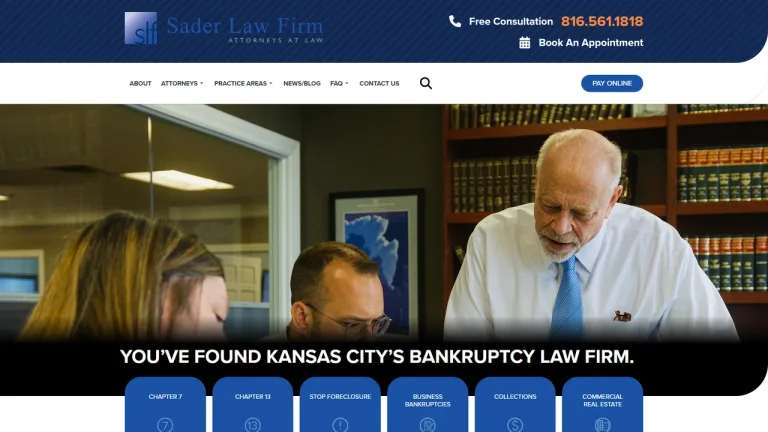
Sader Law Firm - Kansas City, MO

The Law Offices of Tracy L. Robinson, LC - Kansas City, MO

Law In Kansas City - Kansas City, MO
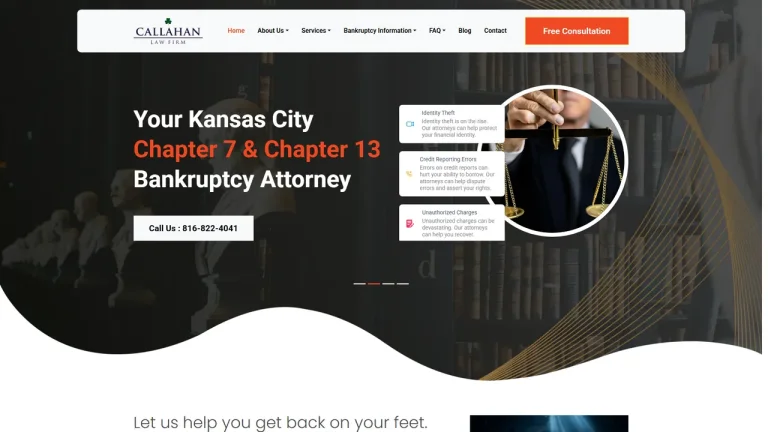
Callahan Law Firm - Kansas City, MO
Navigating Debt Relief in the Western District of Missouri
Experiencing insurmountable debt creates intense personal anxiety and financial disruption, but federal bankruptcy protection provides an orderly, legally structured path to an economic fresh start. For individuals, families, and business proprietors across Kansas City, filing a bankruptcy petition triggers the powerful federal automatic stay under 11 U.S. Code § 362. This statutory injunction halts pending foreclosure actions, stops bank account levies, and terminates active wage garnishments originating from state trial courts.
Bankruptcy proceedings for residents of Jackson County, as well as adjacent Clay and Platte counties, are adjudicated under the federal jurisdiction of the United States Bankruptcy Court for the Western District of Missouri, centered at the Charles Evans Whittaker U.S. Courthouse on East 9th Street in Downtown Kansas City. All bankruptcy filings must be submitted via the federal CM/ECF electronic filing portal. A knowledgeable local attorney manages the submission of complex schedules, liaises with court-appointed trustees, and represents you at the mandatory Section 341 Meeting of Creditors.
Because Missouri has enacted an exemption opt-out statute, Kansas City debtors cannot claim standard federal bankruptcy exemptions and must instead navigate state statutory exemption laws. Skilled bankruptcy counsel applies these Missouri exemptions strategically, ensuring your home equity, family motor vehicle, tools of the trade, and retirement savings remain shielded from liquidation by the Chapter 7 trustee or factored equitably into a Chapter 13 repayment plan.
Estimated Bankruptcy Costs & Legal Fee Frameworks
| Case Scenario | Fee Structure | Estimated Cost (USD) | Key Cost Determinants |
|---|---|---|---|
| Individual Chapter 7 Liquidation | Flat Fee | $1,200 - $2,200 | Means testing complexity, number of unsecured creditors, total exempt property calculations, clean financial asset profile. |
| Chapter 13 Debt Reorganization | Court-Approved Flat Fee | $3,500 - $4,500 | Western District of Missouri standard guideline fee, mortgage arrearage calculations, 36 to 60 month plan administration. |
| Subchapter V Small Business Reorganization | Retainer + Hourly | $8,500 - $22,000 | Commercial cash collateral motions, equity structuring, debtor-in-possession operational reporting, trustee coordination. |
| Adversary Proceeding Defense | Hourly Rate ($275 - $450/hr) | $3,500 - $12,000+ | Allegations of fraud under Section 523, non-dischargeability complaints, discovery depositions, formal evidentiary trial. |
Critical Legal Deadlines & Statutes in Missouri
Navigating bankruptcy in Kansas City requires strict adherence to federal procedural timelines alongside Missouri exemption laws. Pursuant to Mo. Rev. Stat. § 513.427, Missouri debtors are restricted to state-level statutory exemptions. The Missouri homestead exemption allows an individual to protect up to $15,000 of equity in a primary residence under Mo. Rev. Stat. § 513.475. In addition, personal property exemptions under Mo. Rev. Stat. § 513.430 permit protection for a motor vehicle up to $3,000, as well as specific household goods and tools used in a profession.
Prior to submitting any bankruptcy petition, debtors must complete an approved credit counseling course within the 180 days preceding the filing date as mandated by 11 U.S. Code § 109(h). Following the Section 341 Meeting of Creditors, Chapter 7 filers must complete an approved debtor education course and submit Form 423 within 60 days to secure their final discharge under 11 U.S. Code § 727(a)(11). Creditors seeking to challenge the dischargeability of a specific obligation must file an adversary complaint within 60 days after the initial date set for the creditors' meeting pursuant to Fed. R. Bankr. P. 4007(c).
Jackson County Associate Court vs. Federal Bankruptcy Protection
When debt collectors pursue consumer claims in the 16th Judicial Circuit Court of Jackson County, cases involving amounts up to $5,000 are often routed through the Small Claims Division pursuant to Mo. Rev. Stat. § 482.305. While self-representation is permitted in these municipal small-claims settings, an unrepresented debtor facing multiple judgment creditors quickly becomes vulnerable. Once a creditor obtains a state court judgment, they can execute wage garnishments and freeze bank balances under Missouri civil procedure rules.
A state small-claims court lacks the legal authority to discharge debts or order injunctive stays against multiple creditors. Initiating federal bankruptcy protection in the Western District of Missouri immediately neutralizes all concurrent state lawsuits and garnishments through federal supremacy. Because federal bankruptcy schedules demand exhaustive financial disclosure under penalty of perjury, attempting to file pro se frequently results in dismissal, asset loss, or the forfeiture of exemptions. Engaging a dedicated Kansas City bankruptcy lawyer guarantees all property rights are defended under Missouri statutory caps.
Red Flags to Watch for When Hiring a Bankruptcy Attorney
- Bankruptcy mills where attorneys assign entire petitions to paralegals and fail to appear personally at your Section 341 Meeting.
- Firms that do not thoroughly analyze the Missouri opt-out exemption rules, placing home equity or vehicles at risk of liquidation.
- Unethical promises guaranteeing a total debt discharge before reviewing your federal tax returns, bank statements, and recent transactions.
- Attorneys who conceal mandatory statutory court filing fees ($338 for Chapter 7 and $313 for Chapter 13) or mandate undisclosed administrative charges.
Frequently Asked Questions
Will filing bankruptcy stop an active wage garnishment in Kansas City?
Yes, filing a bankruptcy petition triggers the federal automatic stay, which legally mandates the immediate cessation of all ongoing wage garnishments, bank executions, and creditor collection suits issued by the Jackson County Circuit Court or other municipal bodies.
Can I keep my house and car if I file Chapter 7 bankruptcy in Missouri?
Missouri exemption laws allow debtors to shield up to $15,000 of home equity under Mo. Rev. Stat. § 513.475 and up to $3,000 of vehicle equity under Mo. Rev. Stat. § 513.430. If your equity falls within these statutory boundaries and you remain current on secured loan payments, you generally retain both assets.
What is the difference between Chapter 7 and Chapter 13 in Kansas City?
Chapter 7 is a liquidation proceeding designed for qualifying low-to-moderate income filers that eliminates unsecured debts within four to six months. Chapter 13 involves a court-supervised three-to-five-year repayment plan, permitting higher earners to catch up on delinquent mortgages and keep non-exempt property.
Where is the bankruptcy court located in Kansas City?
The United States Bankruptcy Court for the Western District of Missouri is located inside the Charles Evans Whittaker U.S. Courthouse at 400 East 9th Street in Downtown Kansas City, where federal judges preside over contested hearings and confirmation proceedings.
How does the Means Test determine my eligibility for Chapter 7 in Missouri?
The Means Test evaluates your average gross household income over the six calendar months prior to filing against the median income for a household of comparable size in Missouri. If your income falls below the median, you qualify automatically; if above, deductions for living expenses determine eligibility.