
Divorce Lawyers in Kansas City, MO
Retaining a skilled Kansas City divorce lawyer ensures your assets and parental rights are fully protected under Missouri law. Experienced attorneys frequently resolve property division and spousal maintenance through negotiation and mediation, avoiding contentious court trials. Explore our verified directory below to schedule a confidential consultation with a trusted local divorce attorney.

Mark A. Wortman, Attorney at Law, LC - Kansas City, MO

Law Office of Jill Turner, LLC - Kansas City, MO

Drama-Free Divorce LLC - Kansas City, MO

Berkowitz Cook Gondring Driskell & Drobeck, LLC. - Kansas City, MO

Law Office of Jonathan Laurans - Kansas City, MO

Pingel Family Law - Kansas City, MO

The Law Office of Ronald Nguyen, LLC - Kansas City, MO

Banks Law Firm LLC - Kansas City, MO

Crozier Law, LLC - Kansas City, MO

Joseph, Hollander & Craft LLC - Kansas City, MO

Family First Law LLC - Kansas City, MO

Resolve Legal Services, LLC - Kansas City, MO
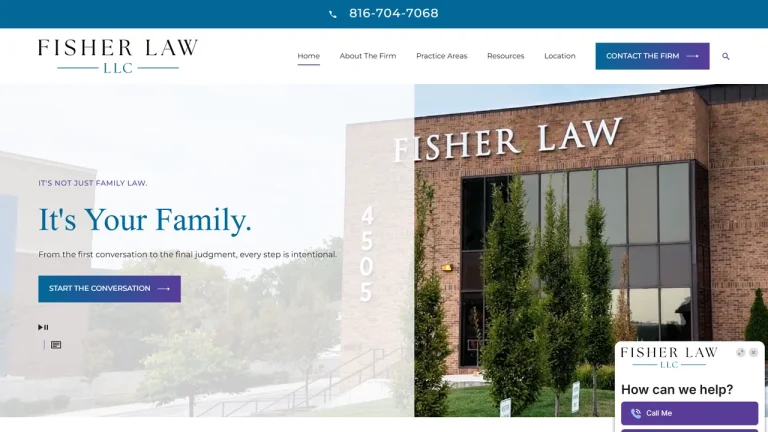
Fisher Law LLC - Kansas City, MO

Keenan & Bhatia, LLC - Kansas City, MO

The O'Connor Law Firm, P.C. - Kansas City, MO

Christen D Shepherd Law Office - Kansas City, MO

The Reynolds Law Firm, LLC - Kansas City, MO

Legal Aid of Western Missouri - Kansas City, MO
Abernathy Law Firm, LLC - Kansas City, MO

Jackoboice Law Firm - Kansas City, MO

Lawson Jadric Sorensen, LLC - Kansas City, MO

Talbert Divorce and Family Law LLC - Kansas City, MO

Cornerstone Law Firm - Kansas City, MO

Divorce Litigation and Settlement in Jackson County Courts
Dissolving a marriage in Kansas City involves navigating specific procedural rules and judicial expectations unique to western Missouri. Divorce cases originating in Kansas City fall under the jurisdiction of the 16th Judicial Circuit Court of Missouri. Marital dissolution matters are heard within the Jackson County Family Court Division, with proceedings conducted at the Jackson County Courthouse in Downtown Kansas City and the Eastern Jackson County Courthouse in Independence.
Missouri law treats marital dissolution as an equitable proceeding rather than a punitive one. Spouses living across Kansas City-from the Country Club Plaza and Midtown to River Market and Brookside-must resolve complex questions of property characterization, valuation of marital businesses, allocation of marital debt, and post-divorce financial maintenance. Jackson County judges expect transparent financial disclosures and strongly encourage alternative dispute resolution before allowing cases to proceed to formal trial.
Retaining a seasoned Kansas City divorce lawyer ensures that your financial interests and future security remain paramount. A local attorney with daily courtroom experience in the 16th Judicial Circuit understands how individual judges assess marital misconduct, assign separate property values, and evaluate maintenance claims. Through proactive negotiation and strategic representation, your attorney can help you secure an out-of-court separation agreement that avoids months of stressful litigation.
Estimated Legal Fees for Kansas City Divorce Cases
| Case Scenario | Fee Structure | Estimated Cost (USD) | Key Cost Determinants |
|---|---|---|---|
| Uncontested Marital Dissolution | Flat Fee / Low Retainer | $1,500 - $3,500 | Complete agreement on all property, debt division, and absence of spousal support disputes. |
| Contested High-Net-Worth Divorce | Hourly Retainer | $7,500 - $30,000+ | Business equity appraisals, forensic asset tracking, executive compensation packages, trial preparation. |
| Spousal Maintenance & Debt Dispute | Hourly Retainer | $5,000 - $18,000 | Earning capacity evaluations, standard of living analysis, contentious temporary support hearings. |
| Post-Decree Enforcement or QDRO Filing | Flat Fee / Hourly | $2,000 - $6,000 | Retirement account division through Qualified Domestic Relations Orders, enforcement of transfer orders. |
Critical Legal Deadlines & Statutes in Missouri
Before filing for divorce in Kansas City, spouses must satisfy statutory residency rules. Under Mo. Rev. Stat. § 452.305, at least one spouse must have resided in Missouri for a minimum of 90 days immediately preceding the filing of the petition. Furthermore, the statute mandates a strict 30-day waiting period from the date of filing before the circuit court has jurisdiction to enter a final decree of dissolution, even in fully uncontested cases.
Property division is governed by Mo. Rev. Stat. § 452.330, which requires the court to divide marital property equitably after setting aside each spouse's separate non-marital property. Missouri does not require an automatic 50/50 split; judges evaluate economic circumstances, contributions to property acquisition, and marital conduct. Requests for spousal support are determined under Mo. Rev. Stat. § 452.335, requiring the requesting spouse to demonstrate that they lack sufficient property to provide for reasonable needs and are unable to support themselves through appropriate employment.
Small Claims Limits vs. Professional Legal Representation
Under Mo. Rev. Stat. § 482.305, the Small Claims Division of the Circuit Court in Missouri is restricted to actions for the recovery of money only, subject to a statutory ceiling of $5,000. Small Claims Court has no legal authority to dissolve a marriage, award spousal maintenance, divide retirement plans, or quiet title to real estate.
Every divorce petition in Kansas City must be adjudicated in the 16th Judicial Circuit Court of Missouri. Proceeding without an attorney creates severe vulnerabilities, particularly regarding pension rights, tax liabilities, and real estate transfers. A poorly drafted separation agreement cannot be easily corrected after entry of final judgment. Qualified counsel ensures equitable property valuations, drafts binding separation contracts, and secures necessary Qualified Domestic Relations Orders to protect retirement benefits.
Red Flags & Hiring Considerations
- Lawyers who guarantee permanent maintenance payments or exact asset percentages before reviewing financial statements.
- Attorneys who churn billable hours by litigating personal disputes or minor furnishings instead of focusing on major assets.
- Practitioners unfamiliar with the local rules and judicial preferences of the Jackson County Family Court Division.
- Firms that fail to discuss the tax consequences of liquidating retirement funds or transferring real estate during property distribution.
Frequently Asked Questions
What is the minimum residency requirement to file for divorce in Kansas City, Missouri?
Under Mo. Rev. Stat. § 452.305, at least one spouse must be a resident of the state of Missouri for a minimum of 90 days prior to filing the petition for dissolution of marriage with the Jackson County Circuit Clerk.
How does Missouri law determine whether property is marital or separate?
Pursuant to Mo. Rev. Stat. § 452.330, all property acquired by either spouse during the marriage is presumed to be marital property. Property acquired prior to marriage, or obtained through gift, bequest, or inheritance, is classified as separate property, provided it has not been commingled with marital funds.
How is spousal maintenance calculated in a Missouri divorce?
Missouri does not use a rigid mathematical formula for spousal maintenance. Under Mo. Rev. Stat. § 452.335, judges evaluate statutory factors including the financial resources of each party, duration of the marriage, standard of living, age, physical condition, and the time required for the recipient spouse to acquire necessary education or job training.
How quickly can a Kansas City divorce be completed if both parties agree?
Even in an uncontested divorce with an agreed marital settlement, Missouri law requires a mandatory 30-day waiting period from the date of filing under Mo. Rev. Stat. § 452.305. Most uncontested divorces in Jackson County take between 30 and 60 days to process and receive final judicial sign-off.
Can retirement accounts be divided in a Missouri divorce without tax penalties?
Yes, qualified retirement plans like 401(k)s and pensions can be divided without tax penalties through a Qualified Domestic Relations Order (QDRO). A QDRO instructs the plan administrator to allocate a specified portion of the account to the former spouse pursuant to the divorce decree.