
Estate Planning Lawyers in Kansas City, MO
Establishing a comprehensive estate plan in Kansas City protects your hard-earned assets and ensures your healthcare preferences are strictly honored under Missouri law. Experienced estate attorneys guide families through probate avoidance, trusts, and beneficiary designations while keeping administration private and cost-effective. Explore our verified directory below to schedule a case review with trusted local professionals.

Fairfield Law Office - Kansas City, MO

Janssen Estate Probate & Elder Law - Kansas City, MO
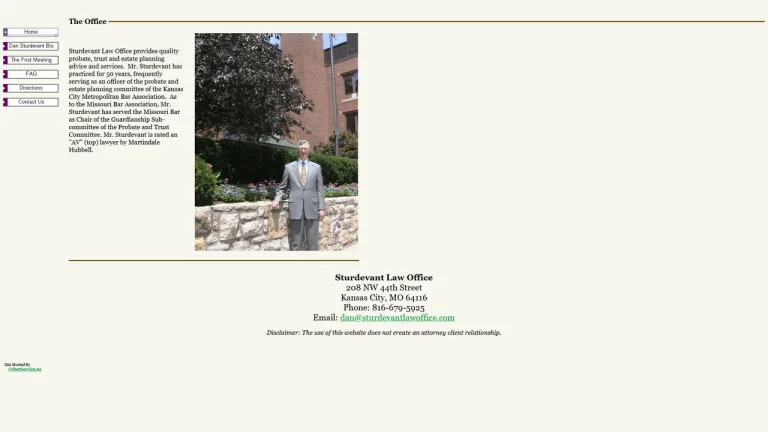
Sturdevant Law Office: Sturdevant Dan - Kansas City, MO

Lifescape Elder Care Law & Estate Planning, LLC - Kansas City, MO

Bruchman Law Firm, LLC - Kansas City, MO

Aimee the Attorney - Kansas City, MO

The Binder Firm - Kansas City, MO

Crozier Law, LLC - Kansas City, MO

The O'Malley Law Firm - Kansas City, MO

Hubbard & Kurtz LLP - Kansas City, MO

Hartmann Law Office LLC - Kansas City, MO

Craig Associates, P.C. - Kansas City, MO

Complete Estate & Probate Law, LLC - Kansas City, MO

Moore Legacy Law - Attorneys Curtis Moore & Dan Stuart - Kansas City, MO

Quinn & Quinn Law, P.C. - Kansas City, MO

PathGuide Law LLC - Kansas City, MO

Shell Law & Tax - Kansas City, MO

The Probate Law Center - Kansas City, MO

The Hood Law Group - Kansas City, MO

Alfano Probate and Estate Planning - Kansas City, MO

Kentner Law LLC - Kansas City, MO
Reaves Law Firm - Kansas City, MO

Lawson Jadric Sorensen, LLC - Kansas City, MO
Navigating Estate Planning in Kansas City and Missouri Courts
Developing a forward-looking estate plan in Kansas City requires a nuanced understanding of Missouri probate statutes and local judicial practices across Jackson County, Clay County, and Platte County. Whether your real estate holdings are situated in Midtown, Brookside, the River Market, or the Northland, estate planning is not merely about drafting documents; it is about shielding your loved ones from costly delays and intrusive public court oversight.
Without structured legal instruments such as revocable living trusts, pour-over wills, and beneficiary deeds, your personal estate becomes subject to default statutory administration under the Probate Division of the 16th Judicial Circuit Court of Missouri, located at the Jackson County Courthouse in Downtown Kansas City, or the 7th Judicial Circuit in Liberty. Local attorneys understand how county-level recordation requirements and court administrative procedures dictate seamless asset transfers upon incapacity or passing.
Missouri property titles, family business successions, and blended family dynamics demand customized legal architecture. Retaining an attorney who actively practices within the Kansas City metropolitan area ensures that every instrument aligns seamlessly with the Missouri Uniform Trust Code and state property statutes.
Typical Estate Planning Costs and Fee Structures in Kansas City
Estate planning attorneys in Kansas City generally offer fixed-fee arrangements for comprehensive legacy packages, while complex tax or multi-entity business planning is billed hourly. Below is an overview of standard legal fee structures in the region.
| Case Scenario | Fee Structure | Estimated Cost (USD) | Key Cost Determinants |
|---|---|---|---|
| Individual Basic Will Package | Flat Fee | $950 - $1,800 | Number of specific bequests, guardian designations, and standard advance healthcare directives. |
| Couple Revocable Living Trust Portfolio | Flat Fee | $2,400 - $5,500 | Real estate deed retitling across Jackson or Clay counties, pour-over wills, and asset schedules. |
| Irrevocable or Special Needs Trust | Flat Fee / Blended | $3,500 - $7,500 | Preservation of public benefits, Medicaid asset protection, spendthrift protections, and tax shielding. |
| Comprehensive Business Succession & Estate Advisory | Hourly Rate | $300 - $550/hr | Operating agreement buy-sell provisions, multi-tiered LLC assignments, and valuation coordination. |
Critical Legal Deadlines & Statutes in Missouri
Missouri laws impose firm statutory timelines on estate administration and trust administration that must be accommodated when structuring an estate plan:
- Will Delivery Mandate: Any individual having custody of a decedent's will must deliver it to the Probate Division within 30 days after receiving knowledge of the death, as codified in Mo. Rev. Stat. § 473.050.
- One-Year Probate Limitation: A will cannot be probated nor letters testamentary granted unless an application is presented within one year from the decedent's date of death under Mo. Rev. Stat. § 473.050. Failing this deadline means the estate passes strictly by Missouri intestate laws.
- Nonprobate Real Estate Transfers: A beneficiary deed transferring Kansas City real estate without probate must be executed and recorded before the grantor's death in the local County Recorder of Deeds pursuant to Mo. Rev. Stat. § 461.025.
- Trust Contest Limitations: Under the Missouri Uniform Trust Code, actions contesting the validity of a revocable trust must generally be commenced within the earlier of one year after the settlor's death or 120 days after receiving formal statutory notice under Mo. Rev. Stat. § 456.6-604.
Small Claims Limitations vs. Professional Estate Representation
In Missouri, the Small Claims Division of the Circuit Court is restricted under Mo. Rev. Stat. § 482.305 to monetary claims not exceeding $5,000. Small claims courts have zero legal authority to interpret wills, supervise trust accountings, validate nonprobate deeds, or issue letters of administration.
Attempting to handle estate matters without an attorney exposes families to substantial administrative pitfalls. Do-it-yourself online templates frequently omit state-mandated execution formalities or fail to properly fund living trusts through real property deed re-conveyance. Retaining an estate planning lawyer ensures that your deeds are properly recorded in the Jackson County or Clay County land records, tax considerations are vetted, and your surviving heirs avoid contentious litigation in the 16th Judicial Circuit Court.
Red Flags When Selecting an Estate Planning Attorney
Protecting your legacy requires partnering with a licensed Missouri attorney who adheres to high ethical benchmarks. Be cautious of the following practices:
- Trust-Mill Workshops: Avoid non-attorney entities or high-pressure seminar promoters offering standardized revocable living trusts that fail to accommodate Missouri property and tax laws.
- Unfunded Trust Delivery: Be wary of practitioners who hand over trust binders without assisting in or providing explicit instructions for re-titling Jackson County real estate, financial accounts, and beneficiary designations.
- Hidden Implementation Fees: Ensure your attorney provides a written fee agreement defining whether deed recording fees, notary charges, and future document amendments are covered in the flat rate.
- Lack of Local Probate Practice: Estate planning counselors should possess deep familiarity with the Probate Division of the 16th Judicial Circuit to ensure their drafted documents withstand judicial scrutiny.
Frequently Asked Questions
What is the difference between a will and a revocable living trust in Missouri?
A last will and testament only takes effect upon your death and must proceed through the public probate court process in the Jackson County Circuit Court. In contrast, a revocable living trust takes effect upon creation, manages assets during incapacity, and distributes property privately outside of probate immediately following death under Mo. Rev. Stat. § 456.4-401.
How does a Missouri Beneficiary Deed keep Kansas City real estate out of probate?
Under Mo. Rev. Stat. § 461.025, a Beneficiary Deed allows a property owner to name a primary or contingent grantee who automatically receives title upon the owner's death without probate court supervision. The deed must be recorded with the Jackson County or Clay County Recorder of Deeds prior to the grantor's death.
Can a spouse be completely disinherited under Missouri estate planning laws?
No. Missouri law protects surviving spouses through the statutory elective share codified in Mo. Rev. Stat. § 474.160. A surviving spouse generally has the right to elect against a will to receive one-third of the net estate if there are surviving descendants, or one-half of the net estate if there are no surviving descendants, unless a valid prenuptial agreement waives this entitlement.
What happens if I pass away without an estate plan in Kansas City?
If you die without a will or trust, your estate is declared intestate. Your assets will be distributed according to rigid state statutes governed by Mo. Rev. Stat. § 474.010 through the Jackson County Probate Court, which may result in distributions contrary to your personal wishes and create significant delays for your relatives.
How often should I review and update my estate planning documents in Kansas City?
It is recommended to review your estate plan every three to five years, or immediately following major life events such as marriage, divorce, birth of a child, purchase of real property in the Kansas City metro, or significant changes in state or federal tax statutes.