
Probate Lawyers in Missouri
Find trusted Missouri probate lawyers to handle estate administration, resolve creditor claims, and represent heirs in court proceedings statewide. Experienced attorneys guide personal representatives through supervised and independent probate to distribute assets efficiently. Browse our verified directory below to consult an attorney.

The Hood Law Group - Kansas City, MO

Rooney McBride & Smith, LLC - Springfield, MO

Dunn Law Firm LLC - Springfield, MO

Modern Business & Estate Planning Law, LLC - Springfield, MO

Jones & Ueligger Law - Columbia, MO
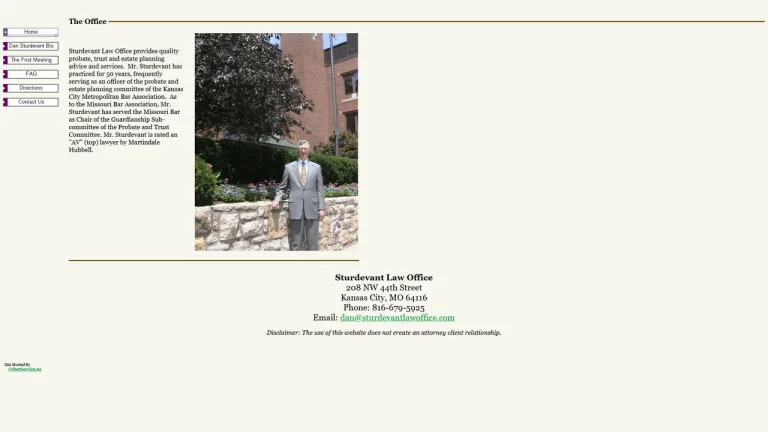
Sturdevant Law Office: Sturdevant Dan - Kansas City, MO

Reaves Law Firm - Kansas City, MO

Law Office of Todd Miller, LLC - Jefferson City, MO

Markell Estate Planning & Elder Law LC - Springfield, MO

Law Office of Gregg E. Stade - Springfield, MO

Andereck, Evans, Lewis, Figg & Battagler LLC - Jefferson City, MO

Hubbard & Kurtz LLP - Kansas City, MO

Moore Legacy Law - Attorneys Curtis Moore & Dan Stuart - Kansas City, MO

Assertion Law Firm LLC and 417 Business & Elder Law - Springfield, MO
Van Matre Law Firm, P.C. - Columbia, MO
Inglish & Monaco, P.C. - Jefferson City, MO

The Probate Law Center - Kansas City, MO
Stewart Cook Constance Minton - Independence, MO
J. Martin Kerr, Attorney at Law, PC - Independence, MO
The Elder Firm, LLC - Columbia, MO

The O'Malley Law Firm - Kansas City, MO
Ozarks Elder Law - Springfield, MO
Farrow Shane L - Jefferson City, MO
Navigating Missouri Estate Administration and Probate Court Proceedings
Probate administration in Missouri is the formal judicial process required to validate a decedent's will, appoint a personal representative, inventory property, settle creditor claims, and transfer residual assets to heirs or beneficiaries. Across Missouri, exclusive jurisdiction over decedents' estates rests with the Probate Division of the County Circuit Courts, including the 22nd Judicial Circuit serving the City of St. Louis and county circuits throughout Kansas City, St. Charles, Springfield, and Columbia.
Navigating the Missouri Probate Code requires adherence to statewide filing procedures managed through the Missouri Court Automation electronic system (Case.net). Retaining a knowledgeable probate lawyer ensures that personal representatives obtain Letters Testamentary or Letters of Administration without costly delays. Legal counsel determines whether an estate qualifies for streamlined nonprobate procedures, petitions for independent administration to avoid constant judicial supervision, and shields fiduciaries from personal liability when handling estate debts or disputing questionable creditor claims.
Missouri Probate Administration Case Scenarios and Fee Structures
| Case Scenario | Fee Structure | Estimated Cost (USD) | Key Cost Determinants |
|---|---|---|---|
| Small Estate Affidavit Proceeding (Under $40,000) | Flat Fee | $750 - $1,800 | Real estate title clearance, number of distributees, clerk filing fees ($50 - $150), surety bond requirements |
| Independent Probate Administration (Testate or Intestate) | Statutory Fee / Hourly | $3,500 - $8,500 (or Statutory Rate) | Inventory complexity, creditor claim negotiations, real estate sales, beneficiary consents |
| Supervised Probate Administration | Statutory Fee / Hourly ($275 - $475/hr) | $5,000 - $15,000+ | Mandatory court approval hearings, formal annual settlement filings, judicial sales of assets |
| Contested Will, Breach of Fiduciary Duty, or Discovery of Assets | Hourly ($300 - $550/hr) or Contingency | $10,000 - $50,000+ | Capacity expert evaluations, deposition transcripts, trial duration in the Probate Division |
Critical Legal Deadlines & Statutes in Missouri
Strict limitation periods dictate every phase of Missouri probate practice. Under Mo. Rev. Stat. § 473.050, a decedent's will must be presented for probate to the Probate Division within one year after the date of the decedent's death. If a will is not presented within this one-year period, it is barred forever, and the estate must be administered and distributed under the laws of intestate succession.
Creditor claim management operates under similarly rigid deadlines. Pursuant to Mo. Rev. Stat. § 473.360, all creditor claims against a decedent's estate are barred unless filed within six months from the date of the first published notice of letters testamentary or of administration, or within two months from the date of actual notice for known creditors. Under Mo. Rev. Stat. § 473.444, all claims are barred one year after death regardless of notice. If an interested party wishes to dispute the validity of a will, they must file a will contest petition in the Probate Division within six months after the first publication of the notice of letters under Mo. Rev. Stat. § 473.083. Attorney and personal representative fees in formal probate are guided by the statutory compensation schedule in Mo. Rev. Stat. § 473.153.
Small Claims Limitations vs. Formal Probate Representation
In Missouri, the Small Claims Division of the Associate Circuit Court possesses an austere jurisdictional ceiling of $5,000 under Mo. Rev. Stat. § 482.305. Small claims courts have zero legal authority to open estates, issue letters of administration, or interpret testamentary documents. Furthermore, Missouri probate practice rules generally require a personal representative in a formal estate to be represented by a licensed attorney unless the representative is the sole beneficiary and no creditor debts exist.
Managing probate without experienced legal counsel poses severe financial risks for personal representatives. Under the Missouri Probate Code, fiduciaries must file detailed inventories within 30 days, publish notices in qualified local newspapers, notify the MO HealthNet Division regarding estate recovery claims, and prepare intricate annual or final settlements. If a personal representative makes distributions prematurely or pays inferior debts before satisfying statutory exempt property and family allowances under Mo. Rev. Stat. § 474.250 and Mo. Rev. Stat. § 474.260, the representative can be held personally liable for the resulting shortfall.
Red Flags When Hiring a Missouri Probate Attorney
- Overlooking Small Estate Affidavit Opportunities: Beware of lawyers who insist on full probate administration for net probate estates valued under $40,000 that qualify for simplified affidavits under Mo. Rev. Stat. § 473.097.
- Failing to Advise on Independent Administration: A knowledgeable attorney should always seek independent administration to reduce court oversight and unnecessary legal costs when heirs consent or the will authorizes it.
- Missing the Strict One-Year Will Filing Window: Ensure the attorney immediately files the original will with the Probate Division before the statutory bar in Mo. Rev. Stat. § 473.050 lapses.
- Lack of Case.net e-Filing Fluency: Choose a firm actively admitted to The Missouri Bar with routine experience navigating local court rules in your county's Probate Division.
Frequently Asked Questions
What qualifies as a small estate in Missouri to avoid formal probate?
In Missouri, an estate qualifies for expedited small estate administration if the total net value of the decedent's probate assets does not exceed $40,000, excluding liens, encumbrances, and statutory allowances. An affidavit must be filed with the Probate Division after 30 days have elapsed from the date of death.
How are attorney fees determined in Missouri probate estates?
Attorney compensation in formal Missouri probate proceedings is governed by a statutory minimum fee schedule based on the value of personal property and real estate sold. Alternatively, the personal representative and attorney may agree to reasonable hourly rates subject to court review.
What is the difference between independent and supervised probate in Missouri?
Independent administration allows the personal representative to manage estate property, pay creditors, and distribute assets with minimal court intervention and lower legal expenses. Supervised administration requires formal court hearings and prior judicial approval before the personal representative can sell assets or disburse funds.
What is the deadline to contest a will in Missouri?
Under Missouri law, an interested party must file a petition contesting the validity of a will in the Circuit Court Probate Division within six months after the date of the first publication of the notice of granting letters testamentary.
How long do creditors have to file claims against a Missouri estate?
Creditors generally have six months from the date of first published notice of letters testamentary to file claims in the Probate Division. Known creditors who receive direct notice have two months from the date of mailing. All claims are completely barred one year after the decedent's death.