
DUI/DWI Defense Lawyers in Nebraska
Retain skilled Nebraska DUI/DWI defense lawyers to challenge breath test results, protect your driver's license, and contest criminal charges statewide. Experienced attorneys navigate mandatory administrative revocation deadlines and negotiate charge reductions across county courts. Explore our verified directory below to consult an attorney licensed with the Nebraska State Bar Association.
Lancaster County Public Defender - Lincoln, NE

Reiman Law Office - Lincoln, NE
Liberty Law Group - Omaha, NE

Polaris Law Group LLC Lincoln, NE
Federal Public Defender - Lincoln, NE
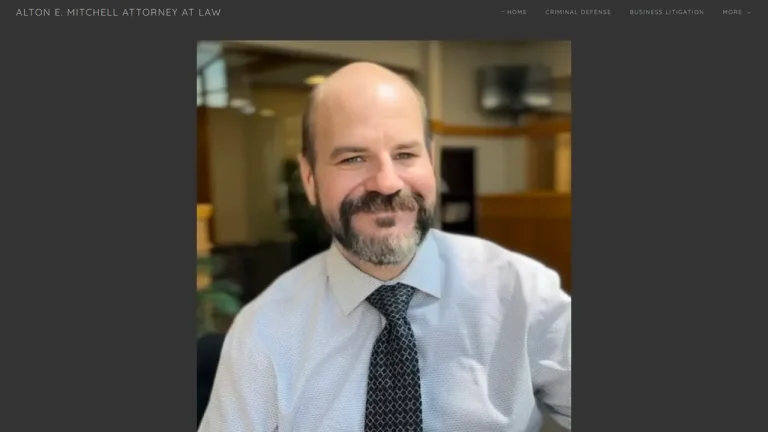
Alton E Mitchell, Attorney - Omaha, NE
Benjamin Lee Bramblett LLC - Omaha, NE

Joseph P. Naatz, Attorney at Law - Omaha, NE

Monzón, Guerra & Chipman, Attorneys At Law - LINCOLN, NE
Thompson Law PC LLO - Lincoln, NE
Petersen Criminal Defense Law - Omaha, NE

The Law Offices of Glen D. Witte, PC, LLO - Lincoln, NE

Williams Law, LLC - Omaha, NE
McHenry Haszard Law - Lincoln, NE
Stockmann Law - Omaha, NE
Glasz Law Lincoln, NE
London Law Office P.C., L.L.O. - Lincoln, NE
Poepsel Michael J - Omaha, NE
Federal Public Defender - Omaha, NE
Sopinski Law Office - LINCOLN, NE
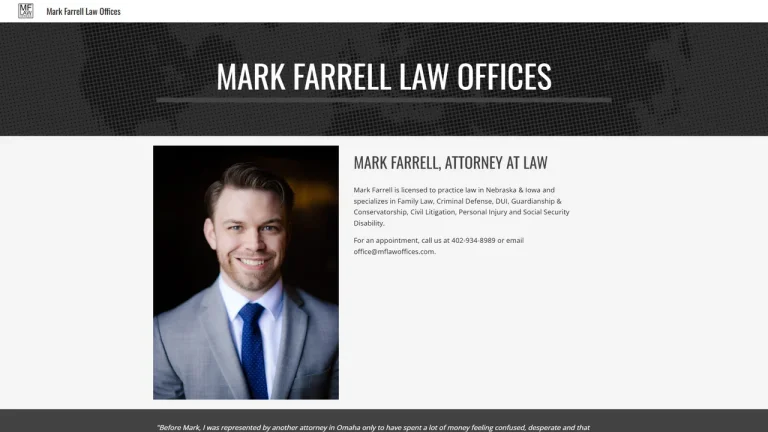
Mark Farrell Law Offices - Omaha, NE

Banwo and Igbokwe Law Firm - Omaha, NE

Whelan Law Office - Omaha, NE
Defending Drunk Driving and Impaired Driving Charges in Nebraska Courts
A DUI arrest in Nebraska sets in motion complex legal proceedings that threaten your driving privileges, financial security, and personal liberty. Impaired driving allegations are adjudicated in Nebraska County Courts across jurisdictions such as Douglas County in Omaha, Lancaster County in Lincoln, Sarpy County in Papillion, and Hall County in Grand Island. Serious repeat offenses or crashes involving serious bodily injury escalate into felony prosecutions litigated before Nebraska District Courts.
In Nebraska, driving under the influence involves dual legal consequences: an administrative license revocation (ALR) process administered by the Nebraska Department of Motor Vehicles (DMV) in Lincoln, and a concurrent criminal prosecution. Retaining a defense attorney admitted to the Nebraska State Bar Association ensures your rights are protected on both fronts. Skilled lawyers examine traffic stop legality, verify compliance with state chemical testing regulations, and advocate for ignition interlock permits or charge amendments to reckless driving that prevent mandatory jail terms.
Nebraska DUI Defense Scenarios and Legal Fee Structures
| Case Scenario | Fee Structure | Estimated Cost (USD) | Key Cost Determinants |
|---|---|---|---|
| First-Offense DUI Defense (BAC 0.08-0.14) | Flat Fee | $1,500 - $4,000 | Chemical testing method (DataMaster breath vs. blood), stop legality, diversion eligibility |
| Aggravated First-Offense DUI Defense (BAC 0.15+) | Flat Fee or Hourly | $2,500 - $6,000 | Mandatory minimum jail exposure, ignition interlock requirements, chemical test refusal |
| Nebraska DMV Administrative License Revocation (ALR) | Flat Fee | $750 - $1,800 | 10-day petition window, arresting officer subpoena, administrative hearing in Lincoln |
| Felony DUI Defense (4th or Subsequent Offense) | Retainer / Hourly ($275 - $550/hr) | $7,500 - $25,000+ | Validity of prior convictions, Department of Corrections prison risk, jury trial length |
Critical Legal Deadlines & Statutes in Nebraska
Navigating a Nebraska DUI requires swift action due to strict administrative deadlines. Following an arrest, law enforcement serves an Administrative License Revocation (ALR) notice that acts as a temporary 30-day driving permit. Under Neb. Rev. Stat. § 60-498.01, a motorist has exactly 10 calendar days from the date of arrest to file a formal petition with the Nebraska Department of Motor Vehicles to request an ALR hearing, or to waive the hearing and apply for an Ignition Interlock Permit (IIP) under Neb. Rev. Stat. § 60-498.02. Missing this 10-day window results in an automatic license revocation.
Criminal DUI charges are codified under Neb. Rev. Stat. § 60-6,196, which makes it unlawful to operate or be in actual physical control of any motor vehicle while under the influence of alcohol or drugs, or with a breath or blood alcohol concentration of 0.08 or greater. Penalties are governed by Neb. Rev. Stat. § 60-6,197.03. A first offense is a Class W misdemeanor carrying mandatory penalties of 7 to 60 days in jail (or probation with a 60-day license revocation and a $500 fine). An alcohol concentration of 0.15 or higher triggers aggravated DUI sentencing, elevating penalties to mandatory jail or a one-year license revocation. Under Neb. Rev. Stat. § 29-110, prosecutions for misdemeanor DUI offenses must be commenced within 18 months of the offense.
Small Claims Limitations vs. Nebraska County Court Defense
Nebraska Small Claims Courts operate under a $7,500 monetary limit pursuant to Neb. Rev. Stat. § 25-2802, and attorneys are explicitly prohibited from participating under Neb. Rev. Stat. § 25-2803. Small claims courts have zero legal jurisdiction over criminal offenses, DUI prosecutions, or administrative driver's license revocations.
Attempting to handle a DUI charge without experienced counsel creates grave legal exposure. Nebraska imposes strict statutory mandatory minimums that judicial officers cannot suspend without probation terms. Dedicated criminal defense counsel reviews the arresting officer's compliance with Title 177 of the Nebraska Administrative Code, which establishes mandatory testing protocols and maintenance rules for breath devices like the DataMaster DMT. An attorney evaluates whether the officer had reasonable articulable suspicion for the initial vehicle stop, challenges field sobriety tests, and petitions the court to preserve essential driving privileges.
Red Flags When Hiring a Nebraska DUI Defense Lawyer
- Missing the Strict 10-Day DMV Hearing Deadline: If an attorney does not immediately address the 10-day ALR filing deadline under Neb. Rev. Stat. § 60-498.01, your license will be automatically revoked.
- Promising Guaranteed Dismissals: Unethical attorneys guarantee case dismissals; ethical counsel analyzes the calibration logs of testing equipment and offers candid assessments of your options.
- Unfamiliarity with Title 177 Testing Regulations: Ensure your attorney understands the Nebraska Department of Health and Human Services (DHHS) Title 177 rules governing chemical testing validity.
- Failing to Explore Ignition Interlock Permits: A competent lawyer should explain how to maintain legal driving status using an Ignition Interlock Permit under Neb. Rev. Stat. § 60-498.02.
Frequently Asked Questions
What is the legal blood alcohol limit in Nebraska?
Under Nebraska law, the legal limit for non-commercial drivers aged 21 and older is 0.08 grams of alcohol per 100 milliliters of blood or 210 liters of breath. For commercial drivers, the limit is 0.04, and drivers under 21 are subject to Nebraska's zero-tolerance standard of 0.02.
What is the deadline to save my driver's license after a Nebraska DUI arrest?
You have exactly 10 calendar days from the date of your arrest to file a petition for an administrative hearing with the Nebraska Department of Motor Vehicles (DMV) to challenge the revocation, or to waive the hearing and apply for an Ignition Interlock Permit.
What is an Aggravated DUI in Nebraska?
An Aggravated DUI occurs when a driver has a blood or breath alcohol concentration of 0.15 or higher. It carries enhanced statutory penalties under Nebraska law, including longer license revocations and mandatory ignition interlock installation, even for a first-time offense.
Can I get a work permit if my license is revoked for a DUI in Nebraska?
Nebraska does not issue traditional occupational or work-only permits for DUI suspensions. However, eligible drivers may obtain an Ignition Interlock Permit (IIP) from the Nebraska DMV, which permits driving at any time provided the vehicle is equipped with an approved breath alcohol ignition interlock device.
What happens if I refuse a chemical breath or blood test in Nebraska?
Refusing a chemical test in Nebraska triggers an immediate one-year Administrative License Revocation by the DMV. Additionally, chemical test refusal is a separate criminal offense under state statutes, carrying penalties equal to or greater than an aggravated DUI conviction.